


Speed Ovens in Brazil: The Coxinha Case
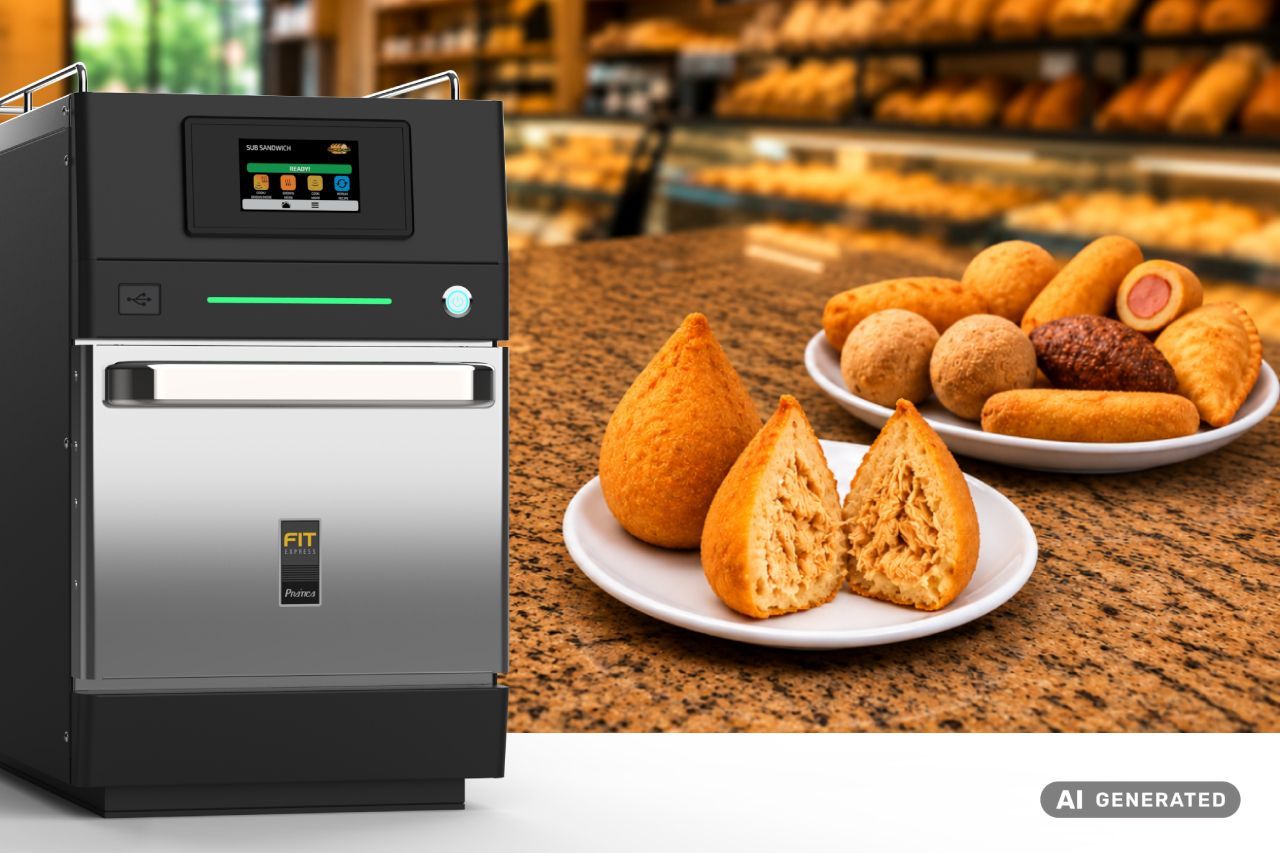
In Brazil, a golden, teardrop-shaped chicken snack called coxinha is a familiar sight in bakeries, cafés and petrol station convenience stores.
Made with cooked wheat flour dough, seasoned shredded chicken and a crispy breadcrumb coating, it is one of the country's most recognisable savoury foods, with a particularly strong presence on social media.
Its popularity is cultural, but its structure also makes it an interesting example of accelerated cooking technology.
A refrigerated coxinha presents a demanding combination: dense dough, a moist filling and a fried exterior that should remain crisp when served.
Prática Speed Ovens can regenerate suitable pre-cooked snacks on demand, combining rapid internal heating with controlled surface finishing.
This application is part of Prática's experience with thousands of foodservice customers in Brazil, including major petrol station convenience store networks.
The company has spent 16 years developing its Speed Oven technology, originally created at its factory in Pouso Alegre, Minas Gerais.
Although Brazilian savoury snacks differ from European panini, toasties, sausage rolls and puff pastries, their heating requirements reveal useful similarities.
The connection is not about transferring one country's food culture to another, but understanding how the same technology works with different products.
Brazilian Savoury Snacks and the Coxinha
Known locally as salgados , Brazilian savoury snacks are consumed throughout the day, from morning coffee breaks to quick meals during travel.
They are sold in bakeries, snack bars, cafés, convenience stores, airports, bus terminals and metro stations.
The category includes fried and baked products with different types of dough and fillings.
Coxinhas and rissoles commonly use cooked wheat flour dough, while other snacks, such as esfihas , filled bread rolls and individual pies, are made with fermented dough or pastry.
These differences matter when food is prepared in advance and finished shortly before serving.
How is a coxinha made?
The preparation begins by cooking wheat flour with liquid, often chicken stock, until a firm, smooth dough forms.
After cooling sufficiently for handling, the dough is divided into portions and shaped around seasoned shredded chicken.
Some recipes also include soft cheese.
The shaped snacks are coated in breadcrumbs and deep-fried until golden.
A finished coxinha has three distinct layers:
- Crispy exterior: a breadcrumb coating that provides colour and crunch.
- Cooked wheat flour dough: a relatively dense layer surrounding the filling.
- Moist chicken filling: seasoned shredded chicken that must reach the appropriate temperature before serving.
The contrast between these layers is central to the product's appeal.
It also explains why reheating a coxinha requires careful control of both internal temperature and external texture.
Why Is the Coxinha Challenging to Reheat?
The coxinha's dense structure makes it particularly interesting from a food heating perspective.
Its weight, dimensions, dough thickness and filling composition influence the energy required to heat the centre.
When refrigerated, the filling and surrounding dough must be heated without excessively drying the exterior.
Frozen products introduce additional requirements related to their initial temperature and condition.
At the same time, the breadcrumb coating should retain the crispness associated with a freshly finished fried snack.
Internal heating and external finishing
Prática Speed Ovens combine microwave energy with high-velocity hot air impingement.
Depending on the model, high-power configurations with dual magnetrons provide microwave energy for rapid heating.
The microwave system contributes to heating the dough and chicken filling, while impinged hot air supports surface heating, colour and crispness.
These technologies work together within a programmed cycle.
The balance is important because increasing heating time alone does not necessarily improve the result. Excessive exposure may dry the dough or compromise the coating.
A successful programme must account for the product's density, moisture, weight, initial temperature and required finish.
What makes European pastries different?
Many European bakery products have lighter structures than Brazilian fried snacks made with cooked dough.
A puff pastry, for example, contains laminated layers designed to produce a flaky texture.
A panini may use bread with a relatively open crumb, while a filled croissant combines laminated dough with a savoury filling.
These characteristics can allow shorter regeneration cycles than those required for a dense coxinha of comparable size.
However, heating performance also depends on portion weight, filling, moisture content and initial temperature.
Different foods therefore require different programmes, even when they share the need for a hot centre and an appealing exterior.
For a detailed explanation of recipe development, read How to Program a Speed Oven Recipe.
Recipes developed for different foods
Brazilian savoury snacks vary considerably in weight, dough composition, filling and shape.
A cheese ball does not require the same programme as a large chicken-filled coxinha. Likewise, a baked pastry behaves differently from a breaded, fried product.
Prática Speed Ovens allow heating parameters to be programmed according to the food being prepared.
Depending on the equipment, these include microwave application, hot air speed, temperature, time and multiple cooking stages.
Once a recipe has been tested and validated, employees can select it from the oven's interface.
This reduces variations caused by manual adjustments and supports repeatable preparation across different shifts.
The Prática Speed Oven range provides equipment and accessories for different foodservice applications, from savoury snacks to sandwiches and bakery products.
How Does On-Demand Regeneration Work?
One of the most relevant applications observed by Prática in Brazil is the adoption of a service system based on frozen supply, controlled storage and regeneration when an order is placed.
The Speed Oven is one component of this process.
Instead of preparing every snack in the store, operators can receive pre-cooked products from suppliers or central production facilities.
This model is especially useful for businesses that need menu variety without maintaining a full production kitchen.
From frozen supply to refrigerated display
The workflow begins when prepared products arrive frozen.
They remain in frozen storage until required for service.
According to anticipated demand, selected quantities can be transferred to refrigerated storage for controlled thawing, following the supplier's instructions.
Suitable products are then presented in chilled display cabinets.
When a customer places an order, the employee removes the selected portion, loads it into the Speed Oven and activates its programmed cycle.
The snack is served immediately after finishing.
In stores where the oven is positioned near the counter, customers can watch their food being heated shortly before receiving it.
A different approach to hot holding
Heated display cabinets are useful in foodservice, particularly when demand is predictable and products can maintain their intended quality during a defined holding period.
The challenge arises when snacks remain exposed for extended periods.
Fried coatings may lose crispness, baked dough can become dry and fillings may undergo undesirable changes in moisture or texture.
Products held under unsuitable temperature conditions can also create food safety risks.
On-demand regeneration reduces the need to heat large quantities before customers order them.
For a comparison of these service models, see Hot Holding vs On-Demand: Food Safety, Quality and Waste.
Food Quality, Waste Reduction and Safety
Prática has observed growing interest among Brazilian customers in refrigerated, on-demand service as operators seek to address food waste and complaints about products held hot for too long.
The main operational difference is straightforward: only the portions ordered need to undergo the final heating cycle.
Unheated products remain under controlled storage conditions, within their established shelf life.
How does the system reduce food waste?
Consider a convenience store offering coxinhas, cheese balls and baked pastries.
With a hot display model, employees must estimate how many portions of each product customers will purchase during the next service period.
If demand is lower than expected, unsold products may eventually need to be discarded.
With refrigerated storage and on-demand regeneration, the business can keep selected products available without heating every portion in advance.
This reduces waste associated with unsold hot food and allows the store to respond to actual orders.
It does not eliminate losses caused by expired stock, poor rotation or inadequate storage.
Those factors still require appropriate inventory management.
How is food quality preserved?
The interval between final heating and consumption can affect the sensory quality of many snacks.
A coxinha served shortly after a suitable regeneration cycle can retain a crisp coating, soft dough and hot chicken filling.
For baked products, the objective may be a flaky pastry, toasted bread or a warm filling without excessive drying.
By completing the final heating stage close to service, operators reduce the exposure that can compromise these characteristics during prolonged hot holding.
What about food safety?
Refrigeration helps maintain perishable foods under controlled conditions before service, but food safety depends on the complete process.
Cooling, frozen storage, thawing, refrigeration, handling and reheating must follow the product's validated procedures and applicable legislation.
A coxinha may have a hot, golden exterior while its chicken filling remains below the required temperature.
Heating programmes must therefore be validated for the actual product, including its dimensions and starting condition.
Employees also need appropriate hygiene and food handling training.
For European operations, the workflow must comply with relevant national requirements and HACCP-based food safety procedures.
From Coxinhas to European Panini and Pastries
Brazilian and European foodservice have distinct culinary preferences.
In Brazil, fried and baked savoury snacks are deeply embedded in everyday consumption.
Hot sandwiches are also popular, frequently prepared on flat-top griddles or contact sandwich presses.
The misto quente , made with bread, ham and cheese, is a familiar example.
Italian-style panini are available in Brazil, but coxinhas and other local savoury snacks occupy a particularly prominent place in the country's bakery and convenience culture.
Across Europe, panini, toasties, filled baguettes, focaccia, sausage rolls and puff pastries are familiar food-to-go options, with preferences varying between markets.
Their preparation requirements provide several applications for accelerated cooking.
Panini and toasted sandwiches
Panini need a toasted bread surface and appropriately heated fillings.
Speed Ovens combine microwave heating and impinged hot air to achieve these results through programmed cycles.
Compared with conventional contact grills, the process can reduce preparation time and manual involvement, depending on the product.
Compatible accessories can also help operators achieve specific surface finishes.
For a closer look at this application, read How to Make Panini Faster with Speed Ovens.
Puff pastries and sausage rolls
Puff pastries require careful heating to preserve their laminated structure and flaky exterior.
When filled with cheese, meat or vegetables, the programme must also account for the centre of the product.
Sausage rolls and individual savoury pies present similar requirements involving filling temperature and pastry finish.
Although these foods differ from Brazilian coxinhas, the combination of internal heating and controlled surface treatment remains relevant.
Filled croissants, focaccia and pizza
Filled croissants, focaccia sandwiches and pizza slices are additional applications for suitable Speed Oven programmes.
Their lighter structures, different moisture levels and surface characteristics require individual heating settings.
Equipment such as the Prática Forza STi can support pizza applications, while other models accommodate sandwiches and bakery snacks.
The technology can serve different food categories without requiring every product to be prepared using the same method.
Speed Ovens in Petrol Station Convenience Stores
Petrol station convenience stores are an important part of Prática's experience in Brazil.
The company works with major networks serving customers throughout the day, often in locations with limited preparation space and fluctuating demand.
These operations may offer coxinhas, cheese balls, baked pastries, sandwiches, pizzas and other ready-to-eat foods.
The refrigerated, on-demand system allows stores to manage this variety while limiting the quantity of food kept hot before purchase.
Why is this model suitable for convenience retail?
Customer traffic at petrol stations can change considerably between morning, afternoon and evening.
Busy periods require rapid service, while quieter intervals make it difficult to predict how many portions should be prepared.
Speed Ovens help operators respond to these changes through programmed heating cycles and compact preparation equipment.
Employees can load the selected product, activate its recipe and attend to other service activities while the cycle runs.
This reduces dependence on continuous manual control, which is generally required when using griddles or sandwich presses.
The connection with European petrol stations
European forecourt convenience stores face comparable challenges involving labour availability, service speed, product quality, menu variety and space.
Their menus may focus on panini, toasties, sausage rolls, filled baguettes and other familiar European products.
The same operating principle can be adapted to these foods, provided the products and preparation programmes are suitable.
The Brazilian application is therefore an example of how accelerated cooking can support convenience foodservice in different markets, without requiring changes to local culinary preferences.
Standardisation, Labour and Remote Management
Speed Ovens can help businesses maintain consistent preparation across employees, shifts and locations.
Unlike a conventional griddle, which requires continuous attention to timing and surface contact, a programmed Speed Oven follows established heating parameters.
Employees load the product, select the recipe and remove it when the cycle is complete. This simplifies routine tasks and reduces variation associated with manual adjustments.
For businesses operating multiple locations, compatible connected equipment also supports centralised recipe management.
Prática's IoK platform allows authorised teams to manage and distribute cooking programmes across compatible ovens, helping coordinate menu changes and equipment settings.
Training remains necessary for correct handling, hygiene and operation, but employees do not need to make every heating decision independently.
To explore these benefits in greater detail, read How Speed Ovens Help Foodservice Managers Save Time.
Adopting an On-Demand Foodservice System
The Brazilian application demonstrates how accelerated cooking technology can support a service model based on prepared products, controlled storage and finishing at the moment of purchase.
For European operators, the starting point is to select foods compatible with Speed Oven regeneration and organise their supply, refrigeration and preparation.
Panini, toasties, savoury pastries, sausage rolls and other familiar products can be assessed according to their formulation, portion size, initial temperature and desired serving characteristics.
Each menu item requires an appropriate heating programme, supported by product testing, employee training and food safety procedures.
The objective is not to reproduce Brazilian eating habits, but to apply the technology to the foods customers already enjoy.
For Prática, experience with Brazilian savoury snacks has contributed to an understanding of how different products respond to accelerated heating and how the equipment fits into busy foodservice operations.
For European cafés, bakeries and convenience stores, this provides a useful perspective on serving hot food according to customer demand while managing quality, preparation time and avoidable waste.
To explore another application of this operating model, read How Speed Ovens Improve Foodservice in Petrol Stations .
16 Years of Speed Oven Development in Brazil
Prática began developing its Speed Oven technology in Brazil 16 years ago.
The equipment was created from the ground up at the company's manufacturing facility in Pouso Alegre, Minas Gerais, by its own engineering and technical professionals.
Members of the original development team remain with Prática and continue contributing to new generations of Speed Ovens.
This continuity connects the company's initial engineering work with knowledge accumulated through product development, testing and commercial applications.
Over the years, Prática has supplied equipment to thousands of foodservice customers across different segments, including bakeries, cafés, quick-service establishments, convenience stores, petrol station networks and transport facilities.
The variety of foods and operating environments has provided extensive knowledge of accelerated heating, recipe programming and service requirements.