




How Speed Ovens Help Foodservice Managers Save Time
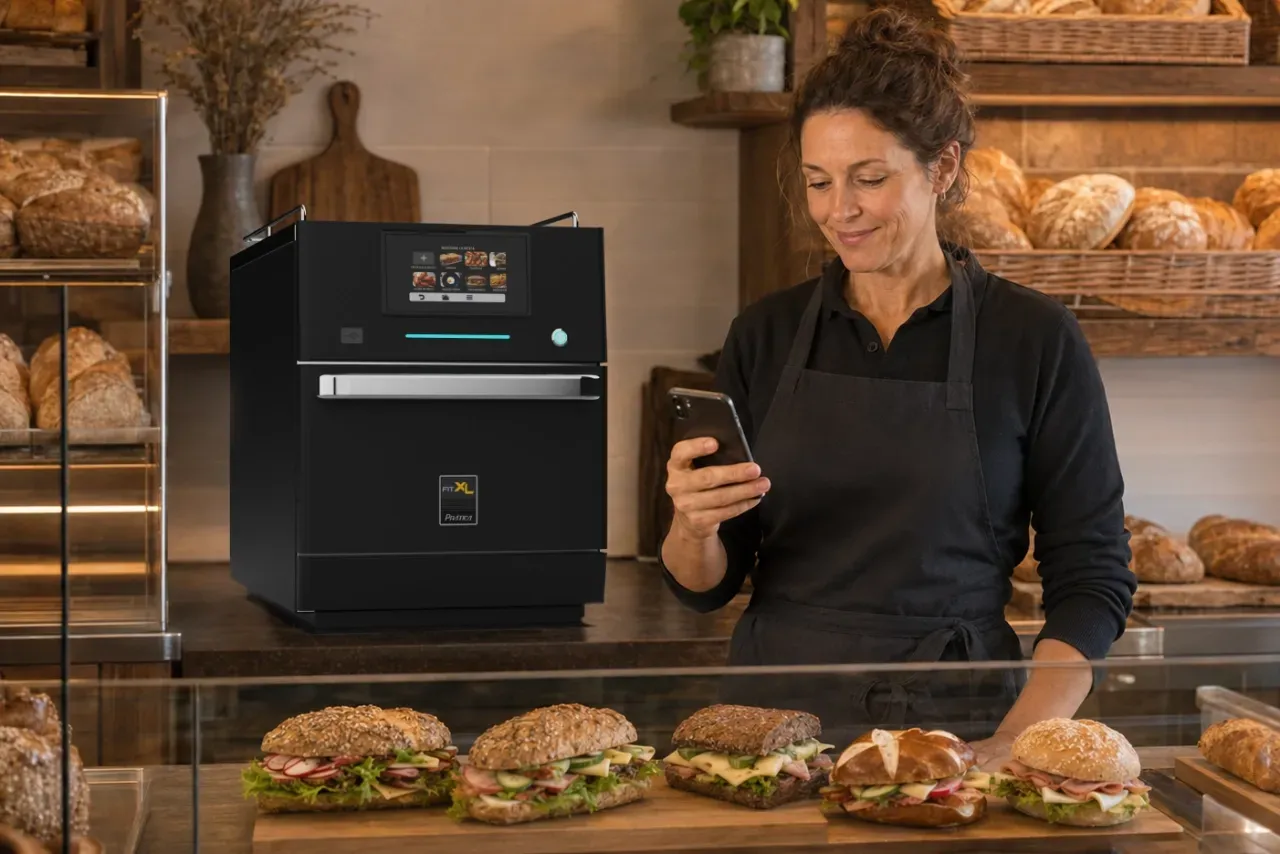
Managing a foodservice operation requires constant coordination between people, products, equipment and service standards.
In a multi-site business, managers must also ensure that every location follows the same approved preparation methods.
Different oven settings, outdated recipes, frequent employee turnover and delayed menu updates can cause variations between stores.
Correcting them often means contacting each team separately, checking locally entered data or travelling between sites.
Prática Speed Ovens and the IoK, Internet of Kitchen, platform provide a connected system for selected preparation processes.
Authorised users can create, edit, organise and distribute cooking programmes to compatible ovens through Wi-Fi.
A validated profile may include cooking parameters, a product photograph and a clear position within the touchscreen menu.
For managers, operations leaders and business owners, the principal benefit is control.
Remote recipe management reduces repeated programming, coordinates menu changes and creates a documented reference across locations.
Why multi-site Speed Oven management is difficult
A foodservice manager may oversee staffing, stock, product quality, customer service, equipment availability and operational performance during the same working day. Across several sites, these demands involve different service volumes, employees and levels of training.
When ovens are managed independently, one location may use a revised profile while another retains an earlier version.
Names, photographs and touchscreen groups can also diverge.
This creates recurring problems:
- Cooking parameters entered differently at each unit
- Obsolete programmes remaining available
- Similar products stored under unclear names
- Employees selecting the wrong profile
- Menu changes reaching stores at different times
- New locations waiting for equipment configuration
- Site visits made solely to programme an oven
- Validated settings depending on one employee’s memory
Every discrepancy requires communication, verification and follow-up.
Connected Speed Ovens provide a common structure for defined cooking processes, while IoK allows authorised users to coordinate them remotely.
What foodservice managers can control with IoK
IoK is Prática’s cloud-based platform for compatible connected equipment.
Managers can access available functions from a computer, tablet or smartphone without being physically present at each oven.
Within the platform, authorised users can:
- Create, edit, remove and organise cooking programmes
- Arrange recipes into touchscreen groups
- Add photographs or recognisable icons
- Select the ovens that should receive a programme
- Distribute recipes, groups or complete menus across locations
- Prepare connected equipment for a menu rollout or new opening
- Access available oven data remotely
- Send compatible software, interface and display updates
A cooking programme may contain the time, temperature, microwave power and impinged air settings required for a suitable item.
Once it reaches the selected oven, the operator chooses the product on the touchscreen and starts the stored sequence.
This division of responsibility is clear. Managers oversee recipe approval, menu organisation and distribution.
Local employees remain responsible for product identification, storage, loading, final checks, cleaning and customer service.
Available monitoring data and update functions depend on the Speed Oven model, software version and IoK configuration.
These details should be confirmed before deployment.
Speed Ovens and IoK support single-site operations
Maintaining preparation standards can be difficult, even in one location.
Each shift may develop different routines. Staff turnover, menu changes and manual adjustments can also affect cooking settings and final results.
Prática Speed Ovens store validated profiles for suitable menu items.
Employees select the product on the touchscreen and start the programmed cycle.
They do not need to adjust time, temperature, microwave power or airflow for each order.
Product images and organised recipe groups also help teams find the correct programme during busy periods.
Reduce repeated programming and management travel
Programming one oven may take only a short time, but repeating the task across ten, twenty or fifty units creates a substantial administrative workload.
Each location needs the correct name, image, group and cooking parameters, followed by a check that every field was copied accurately.
With IoK, the responsible manager validates the profile once and sends it to the selected connected ovens.
Local teams still need instructions about the product, service procedure and quality standard, but they do not need to recreate the equipment configuration.
Remote distribution can reduce:
- Repeated data entry across several units
- Detailed programming instructions sent to every store
- Local typing and configuration errors
- Delays between recipe approval and implementation
- Journeys made only to add or revise a programme
- Dependence on one person visiting every location
Managers can then use site visits for activities that require direct observation, including employee development, product assessment, maintenance coordination and service flow reviews. Installation, training, quality checks and technical work still require local attention.
Coordinate menu rollouts across locations
Launching or changing a menu requires products, prices, training materials and preparation methods to reach each site at the correct time.
Local oven programming can delay implementation or leave units working with different parameters.
IoK allows the responsible team to coordinate the equipment stage through a defined sequence:
- Test the product in the selected Speed Oven.
- Validate its portion, initial condition, accessory and loading method.
- Enter the approved cooking parameters.
- Assign a clear name and current photograph.
- Place the recipe in the relevant touchscreen group.
- Distribute the programme to compatible connected ovens.
- Verify the finished result under local operating conditions.
If testing identifies a required change, an authorised user can edit and redistribute the profile. Individual stores do not need to alter each setting separately.
This workflow applies to permanent menu changes, seasonal offers, supplier substitutions and new openings.
A new unit can receive an existing recipe library before service begins, followed by local verification.
Keep approved cooking settings consistent
Customers expect comparable colour, texture and serving temperature when ordering the same item from different locations.
A few extra seconds, another microwave power level or an incorrect impinged air setting may alter the result.
IoK limits this source of variation by sending the same validated profile to compatible ovens.
It also provides managers with a documented reference, instead of requiring every store to interpret written instructions and enter technical settings independently.
Central distribution alone does not guarantee uniform results.
Managers must also control:
- Supplier and product specifications
- Portion weight and dimensions
- Chilled or frozen storage
- Cold-chain conditions
- Initial product temperature
- Quantity and position inside the oven
- Approved accessories and loading methods
- Allergen procedures and food safety
- Final product assessment
If a supplier, product, portion or storage condition changes, the profile may need further testing.
IoK controls the oven programme, while the business remains responsible for the complete operating process.
This distinction also helps managers identify whether a problem originates in the equipment settings or elsewhere in the workflow.
Make programmes easier to identify
As a digital recipe library grows, similar names, unexplained abbreviations and outdated labels can slow selection or lead employees to choose the wrong cycle.
IoK allows managers to add photographs of the products sold by the business and arrange recipes in groups that match the operation.
A café may use breakfast, sandwiches, wraps and ready meals. A hotel may divide its library into breakfast, lounge service and late-night orders.
Visual identification is particularly useful for:
- New employees
- Multilingual teams
- Locations with frequent staff changes
- Large digital recipe libraries
- Similar items with different settings
- Employees working across several units
- Teams operating under time pressure
A shared touchscreen structure helps employees moving between locations because they encounter familiar names, groups and images.
Visual references should be reviewed whenever a product changes, since an obsolete photograph can cause errors even when the associated parameters remain correct.
Simplify training and retain preparation knowledge
Speed Ovens store the validated time, temperature, microwave power and airflow required for suitable products.
Instead of adjusting these settings during every order, the employee selects the approved item and starts the programme.
This narrows equipment training and allows managers to concentrate on tasks that still require employee attention:
- Confirming product identity and storage condition
- Using the approved portion
- Loading the oven correctly
- Following allergen and food safety procedures
- Assessing colour, texture and temperature
- Completing the cleaning sequence
- Finishing and serving the order correctly
Employees remain essential.
They handle products, assess quality and respond to operating issues.
The programmed profile removes the need to remember or adjust several technical parameters during service.
Connected management also protects selected preparation knowledge when employees leave or move between stores.
Validated settings, names, photographs and menu groups remain available in a central system instead of depending on memory, handwritten notes or messages. Incoming managers and new units receive a defined reference, subject to product and equipment validation.
Support lean teams and on-demand preparation
Prática Speed Ovens combine microwave energy with impinged hot air to heat, regenerate, toast and finish suitable chilled, frozen or pre-prepared foods.
Depending on the model, available functions may also include direct radiation, gratinating or defrosting.
Programmed cycles reduce manual adjustments during service, while short preparation times allow suitable portions to be finished when ordered.
This can help managers align output with changing demand instead of holding large batches of hot food.
Any reduction in waste still depends on forecasting, purchasing, stock rotation, portion control and storage.
The oven provides speed for on-demand preparation, while management controls the wider production and inventory decisions.
Commercial Speed Ovens are not intended for raw fermented dough or bakery production.
Restrictions may also apply to raw fatty proteins in Ventless equipment.
Every application must be tested for the selected model and approved according to manufacturer guidance.
Assign responsibility for connected management
The business should determine who can test products, approve profiles, edit settings, maintain photographs, organise groups and distribute menu updates.
Controlled access helps prevent unapproved programmes from reaching connected ovens.
A named owner should also review the library, remove obsolete items and arrange new tests after changes in ingredients, suppliers, portions or operating conditions.
Without this responsibility, a central platform can accumulate outdated profiles and inconsistent labels.
IoK also provides remote access to available oven data and distributes system improvements to compatible equipment.
Updates may include new functions, interface changes and display configurations, reducing the need to update each machine individually.
The IoK Cookbook offers recipe suggestions developed by Prática chefs, while platform chat provides a support channel.
Every suggested item still requires validation with the business’s ingredients, portions, selected model and operating conditions.
What managers should assess before adoption
Remote connectivity creates value when it addresses a measured management need.
A business with several locations, frequent menu changes or repeated programming work may benefit differently from a single unit with a small, fixed menu.
Managers and owners should assess:
- Number and location of stores and connected ovens
- Frequency of recipe and menu changes
- Programming time and travel required for updates
- Differences in settings between locations
- Staff turnover and training demands
- Size and complexity of the recipe library
- Plans for new openings
- Suitability of menu items for Speed Oven preparation
- Required throughput during peak periods
- Counter space, electrical supply and Wi-Fi reliability
- Cleaning, maintenance and technical support requirements
- Expected equipment utilisation
Programming hours, update-related journeys, configuration errors and the time between approval and store implementation provide a useful basis for evaluation.
Before wider deployment, each item must be tested in the selected oven with the same portion, initial condition, accessory, storage and loading method expected at the operating locations.
A connected programme should distribute a validated process, not an untested setting.
Frequently asked questions
How does IoK save foodservice managers time?
IoK reduces repeated local programming.
Managers can create or update a cooking programme remotely and distribute it to compatible connected Prática Speed Ovens instead of entering the same settings at every location.
Can managers update several Speed Ovens at once?
Yes. IoK can distribute recipes, groups and complete menus through Wi-Fi to selected compatible ovens.
Managers can also maintain product photographs and touchscreen organisation from a computer.
Can remote Speed Oven management reduce travel?
It can reduce journeys made only to programme or update an oven.
Local visits remain necessary for installation, employee training, maintenance, product checks and workflow assessment.
How does IoK support new store openings?
Managers can distribute approved names, photographs, groups and cooking parameters to compatible equipment at a new location.
Local teams must still verify products, loading methods and finished results before service.
How does IoK help when employees leave?
Validated parameters and visual references remain in the connected system instead of depending on one person’s memory.
New employees still require instruction in product handling, loading, allergens, food safety, cleaning and final checks.
Does IoK guarantee consistency between locations?
No. IoK gives compatible ovens the same approved cooking profile.
Consistency also depends on product specifications, portions, storage, initial condition, loading and final quality controls at each location.
Are Speed Ovens suitable for every menu item?
No. They are intended mainly to heat, regenerate, toast and finish suitable chilled, frozen or pre-prepared foods.
They are not designed for raw fermented dough or bakery production. Every item must be validated for the selected model.
Connected control without repeated programming
Speed Ovens and IoK connect preparation at the point of service with central recipe management.
Authorised managers can organise validated programmes, maintain product photographs and distribute menus to selected locations without configuring every oven in person.
Local employees continue to control product handling, loading, cleaning, food safety and final quality.
Managers gain a documented method for coordinating approved oven settings, retaining preparation knowledge and reducing repetitive administrative work across compatible connected equipment.
Learn how Speed Ovens can help improve service speed and customer satisfaction.