




How Speed Ovens Improve Customer Service in Foodservice
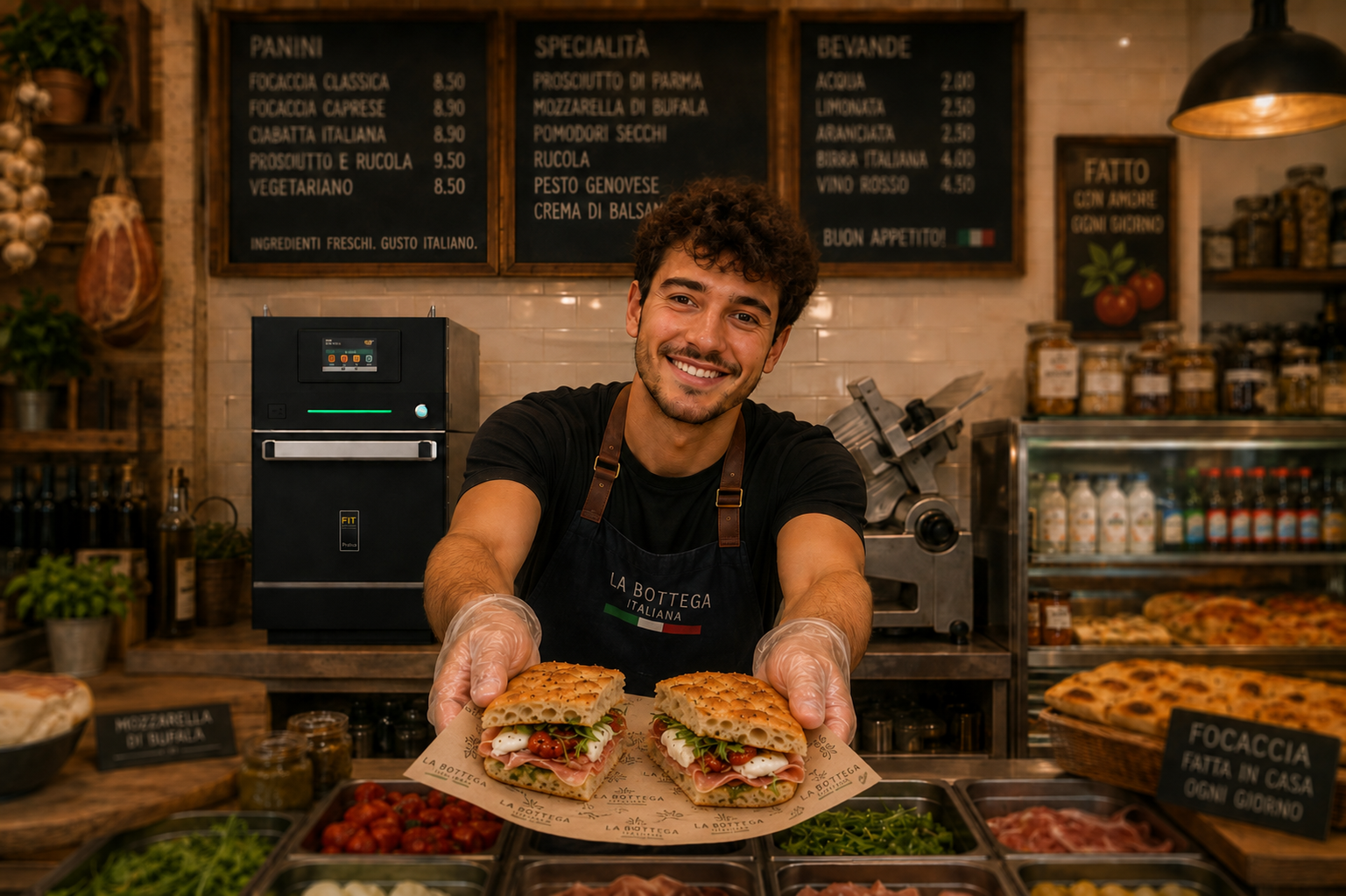
Customer service has become one of the main competitive advantages in European foodservice.
Whether visiting a coffee shop, hotel, bakery, convenience store or quick-service restaurant, customers expect fast service, freshly finished food and consistent quality.
Long queues, slow preparation and products served cold or without the expected texture can negatively influence purchasing decisions and customer loyalty.
At the same time, operators face increasing labour costs, staff shortages, limited kitchen space and growing pressure to improve productivity.
Expanding kitchen teams is not always practical or financially viable.
For many businesses, improving customer service is no longer about employing more people.
It is about creating workflows that allow employees to prepare food efficiently while dedicating more attention to customers.
Commercial Speed Ovens support this approach by simplifying the final preparation of menu items, helping businesses serve hot, freshly finished food while reducing waiting times and allowing front-of-house teams to focus on delivering a better customer experience.
Why Customer Experience Starts Behind the Counter
Every interaction at the counter shapes how customers perceive a foodservice business.
While food quality remains essential, the speed of service, queue length and the ability to receive a hot meal prepared on demand have become equally important.
Customers often judge an operation before taking the first bite, based on how quickly they are welcomed, how efficiently orders are processed and how fresh their food appears when served.
This expectation is particularly relevant in cafés, bakeries, hotel outlets and grab-and-go concepts, where purchasing decisions are often made within minutes and customers have limited time to wait.
Many foodservice operators across Europe continue to work with small teams while facing increasing customer expectations.
Employees frequently alternate between preparing food, assembling orders, processing payments, replenishing displays and answering customer questions.
When food preparation becomes time-consuming, customer service naturally receives less attention.
Creating a smoother workflow allows employees to focus on people rather than processes.
Shorter preparation times help reduce operational pressure during busy periods and create opportunities for more attentive, personalised service.
Why Hot Food Changes Customer Perception
Temperature and texture play a significant role in how customers evaluate food quality.
A toasted sandwich with crisp bread, melted cheese and a freshly finished appearance creates a completely different perception from the same sandwich served cold from a refrigerated display.
Similarly, pastries, breakfast items and savoury snacks often become more appealing when warmed immediately before serving.
Regeneration enhances aroma, texture and visual presentation, creating an impression of freshness without requiring food to be prepared entirely from scratch.
For many businesses, this represents an opportunity to increase the perceived value of existing menu items. Instead of expanding the menu or introducing more complex production processes, operators can improve the presentation of products they already sell.
This approach is especially valuable for cafés, hotel lobby bars, bakery cafés, convenience stores and travel foodservice operations, where customers expect quick service without compromising food quality.
Serving food hot and with the right texture also encourages repeat purchases.
Customers are more likely to return when they consistently receive products that meet their expectations for freshness, appearance and flavour.
Why Waiting Time Influences Customer Satisfaction
Queues are a visible measure of operational efficiency.
During breakfast, lunch and afternoon service, demand often increases rapidly.
If employees need several minutes to prepare each order, waiting times grow, queues become longer and customer satisfaction begins to decline.
Long preparation times also affect staff performance.
Employees must divide their attention between cooking, handling payments, assembling orders and interacting with customers.
As pressure increases, mistakes become more likely and service quality may suffer.
Reducing the time required to finish each order improves the entire service flow.
Customers move through the counter more quickly, employees experience fewer interruptions and businesses can serve more people during peak periods without increasing staffing levels.
Higher throughput not only improves operational efficiency but also creates additional sales opportunities.
Shorter queues reduce the likelihood of abandoned purchases while allowing more customers to be served during the busiest hours of the day.
Rather than focusing exclusively on cooking faster, successful operations focus on creating a workflow that supports both productivity and customer service.
The Role of Speed Ovens
Commercial Speed Ovens support this operational model by simplifying the final preparation of food.
Instead of replacing production equipment, these ovens are designed to regenerate prepared menu items immediately before serving.
Using a combination of microwave energy, impinged air and convection, they rapidly heat, brown and crisp products while maintaining consistent quality.
This technology enables businesses to serve hot food with the appearance and texture of freshly prepared meals, even when products have previously been chilled or frozen as part of a controlled production process.
For many European foodservice operations, this flexibility creates new possibilities.
Products may be prepared in a central production kitchen or sourced from specialised manufacturers and qualified foodservice suppliers before being regenerated on demand at the point of service.
As preparation becomes simpler and more predictable, employees spend less time operating equipment and more time welcoming customers, answering questions, recommending products and maintaining efficient service throughout the day.
Typical applications include:
- Toasted sandwiches
- Paninis
- Baguettes
- Croissants
- Breakfast sandwiches
- Flatbreads
- Pizza slices
- Wraps
- Savoury pastries
- Individual desserts
- Grab-and-go meals
Commercial Speed Ovens are intended for finishing prepared products rather than replacing production equipment such as combi ovens, deck ovens, rack ovens or convection ovens used for large-scale cooking and baking.
Applications Across European Foodservice
Commercial Speed Ovens support a wide range of foodservice businesses, each with different service models and operational requirements.
Rather than adapting menus to fit kitchen limitations, operators can prepare or regenerate menu items quickly at the point of service while maintaining consistent quality and improving customer flow.
Coffee Shops and Bakery Cafés
Coffee shops and bakery cafés often experience concentrated demand during breakfast, lunch and afternoon coffee breaks.
Customers expect premium coffee to be served alongside hot sandwiches, toasted baguettes, pastries and savoury snacks without long waiting times.
Regenerating products on demand allows businesses to offer warm, freshly finished food while keeping displays stocked with chilled products that are finished only when ordered.
This reduces waste, improves product quality and increases opportunities for additional sales through meal combinations and impulse purchases.
Hotels
Hotels operate multiple foodservice outlets throughout the day, including breakfast restaurants, lobby cafés, bars, executive lounges, room service and grab-and-go concepts.
Not every outlet requires a complete production kitchen.
Commercial Speed Ovens allow prepared menu items to be regenerated wherever customers are served, helping hotels maintain consistent quality across different locations while making better use of available space and labour.
This flexibility also supports late-night service and periods when smaller teams are responsible for multiple foodservice areas.
Convenience Stores and Service Stations
Convenience retail continues to expand its fresh food offering worldwide.
Customers increasingly expect hot meals, toasted sandwiches, pizzas and breakfast products alongside traditional grab-and-go options.
Finishing products on demand allows retailers to improve food quality without increasing operational complexity.
Short preparation times also encourage customers to choose freshly heated meals instead of pre-packaged alternatives.
Supermarkets
Many supermarkets have expanded their ready-to-eat and food-to-go ranges.
Prepared meals, sandwiches, pizzas and bakery products can be regenerated immediately before serving, creating a more attractive offer for customers seeking convenient meal solutions.
The ability to finish products only when ordered also helps reduce unnecessary waste while maintaining product quality throughout the day.
Universities and Healthcare Facilities
Universities and healthcare facilities frequently experience sharp increases in demand during specific service periods.
Students, staff, visitors and healthcare professionals often have limited time for meals.
Rapid regeneration allows operators to maintain efficient service during these peak periods while delivering hot meals with consistent quality.
Travel Foodservice
Airports, railway stations and motorway service areas require efficient operations capable of serving large numbers of customers within short timeframes.
Preparation systems that simplify workflows help businesses increase service capacity while maintaining food quality despite fluctuating demand throughout the day.
Operational Benefits Beyond Speed
Although preparation time is an important advantage, faster cooking is only one part of the overall operational impact.
The greatest value comes from improving the entire customer journey, from placing an order to receiving a freshly finished meal.
Businesses adopting this workflow often experience benefits such as:
- shorter queues during busy periods;
- improved order turnaround;
- greater labour productivity;
- better utilisation of kitchen space;
- consistent menu execution;
- reduced food waste through on-demand finishing;
- simplified staff training;
- higher customer satisfaction;
- greater operational flexibility across multiple locations.
Together, these improvements create a more efficient operation while allowing employees to dedicate more attention to customer service.
Supporting Front-of-House and Back-of-House Operations
Successful foodservice operations depend on effective coordination between front-of-house and back-of-house teams.
When kitchen processes become overly complex, front-of-house employees often spend valuable time preparing food instead of assisting customers.
Simplifying the final preparation stage allows responsibilities to be distributed more efficiently.
Back-of-house teams can focus on production, food safety and inventory management, while front-of-house employees concentrate on customer interaction, product recommendations and efficient order fulfilment.
This separation of responsibilities creates smoother workflows and contributes to a more consistent service experience.
For businesses operating multiple locations, the same approach also simplifies standardisation by allowing central production teams to prepare menu items while satellite outlets focus on customer service.
Technology That Supports Better Customer Service
Excellent customer service depends on people, processes and the right technology working together.
Commercial Speed Ovens are not simply designed to prepare food more quickly.
They support a workflow that helps businesses serve hot, freshly finished menu items while reducing waiting times, simplifying daily operations and allowing employees to spend more time engaging with customers.
Whether food is prepared in a central production kitchen, supplied by a specialised manufacturer or partially prepared on site, rapid regeneration at the point of service allows businesses to combine operational efficiency with high-quality food presentation.
For operators across Europe facing labour shortages, rising operating costs and increasing customer expectations, this approach offers a practical way to improve productivity without compromising the guest experience.
Businesses that remove unnecessary preparation steps can serve more customers, maintain consistent quality across multiple locations and create a faster, more enjoyable service experience.
Ultimately, the most successful foodservice operations are not necessarily those with the largest kitchens or the biggest teams.
They are the ones that design efficient workflows, empower employees with intuitive technology and consistently deliver the level of quality and service customers expect.
FAQ
How do Commercial Speed Ovens improve customer service?
They simplify the final preparation of menu items, allowing employees to serve customers more quickly while delivering hot, freshly finished food with consistent quality.
Can Speed Ovens help reduce queues?
Yes. Faster finishing times improve order turnaround and increase throughput, allowing businesses to serve more customers during peak periods without increasing staffing levels.
Why do customers prefer hot sandwiches to cold ones?
Hot sandwiches offer improved aroma, texture and appearance. Toasted bread, melted fillings and freshly finished products create a stronger perception of quality and freshness.
Are Commercial Speed Ovens suitable for coffee shops and bakeries?
Yes. They are widely used to regenerate sandwiches, baguettes, croissants, pastries, pizzas, breakfast items and other prepared products served throughout the day.
Can one employee prepare multiple orders more efficiently?
Yes. Programmable recipes automate the cooking process, allowing employees to prepare food while simultaneously serving customers, preparing drinks or processing payments.
Can chilled and frozen products be regenerated?
Yes. Products prepared in central kitchens or supplied by qualified manufacturers can be regenerated on demand, helping maintain quality while supporting food safety and reducing waste.
Do programmable recipes improve consistency?
Yes. Automatic cooking programmes standardise preparation across different employees and locations, helping businesses maintain consistent product quality.
Can Commercial Speed Ovens replace production ovens?
No. They are designed for finishing prepared menu items.
Large-scale cooking, roasting and baking raw fermented doughs still require production equipment such as combi ovens, convection ovens, deck ovens or rack ovens.