




How Speed Ovens Improve Hotel Food Service Operations
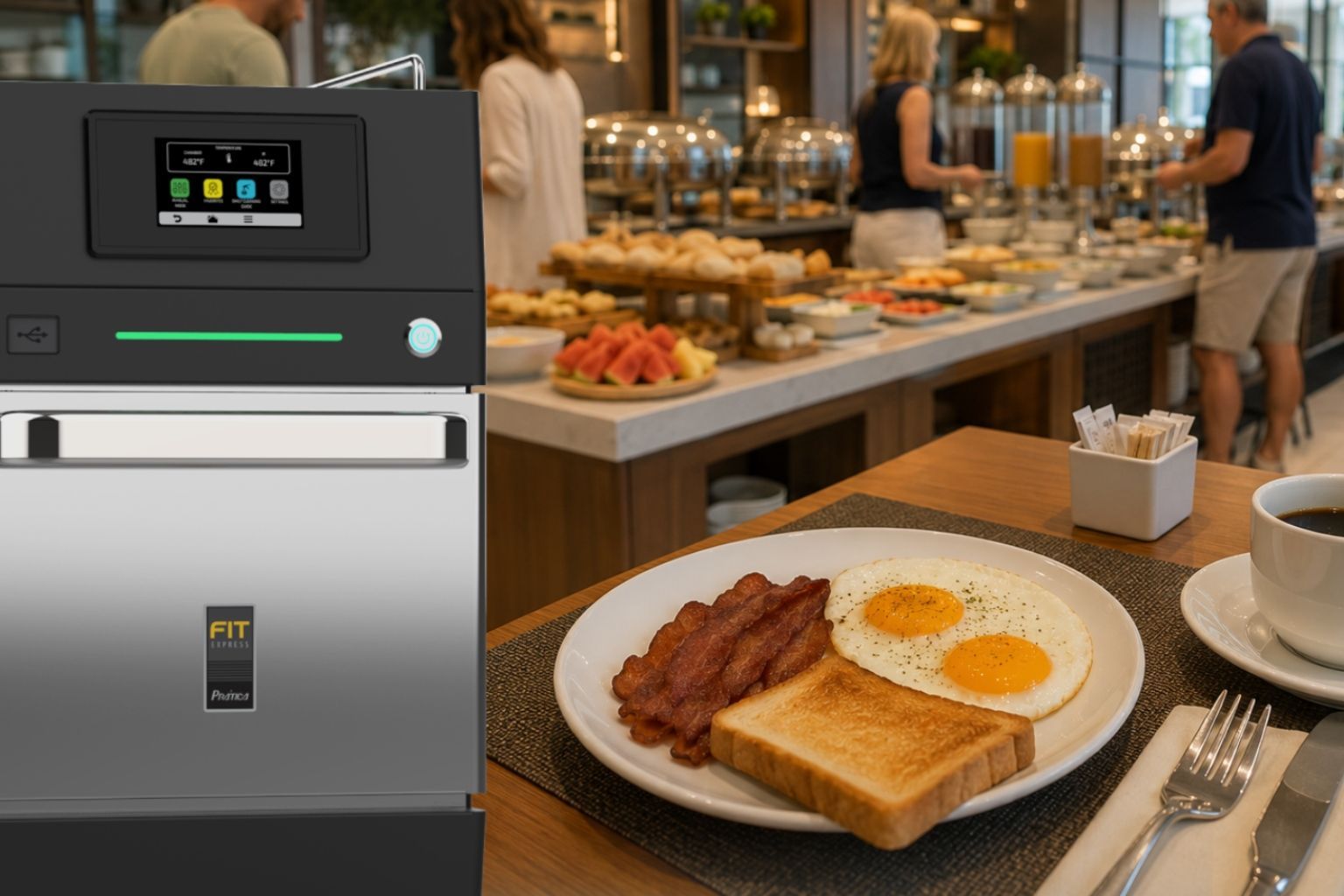
Hotels are expected to provide high quality food throughout the day, from breakfast buffets and room service to lobby cafés, meeting breaks, banquets, and restaurant service.
Every outlet contributes to guest satisfaction and shapes the overall perception of the property.
Meeting these expectations has become increasingly challenging.
Hospitality businesses are operating with tighter labor markets, rising operating costs, limited kitchen space, and growing demand for faster service without compromising food quality.
Large hotel groups often operate central production kitchens supported by dedicated teams and specialized equipment.
However, this model is rarely practical for boutique hotels, business hotels, independent properties, or small hotel chains.
Replicating a fully equipped commercial kitchen for every food outlet requires substantial investment in infrastructure, ventilation, utilities, maintenance, and staffing.
As a result, many hotels are redesigning their food and beverage operations around centralized production and decentralized food finishing.
Why hotel food service is changing
Modern hotel operations typically include multiple food service points operating simultaneously:
- Breakfast buffet
- Hotel restaurant
- Room service
- Lobby café
- Grab-and-go stations
- Executive lounge
- Conference catering
- Banquet service
- Pool or rooftop bar
Each outlet has different service periods, production volumes, and menu requirements.
Preparing every meal from scratch in every location creates operational complexity, increases labor requirements, and reduces overall kitchen productivity.
Instead, many hospitality businesses prepare menu components in a central kitchen and complete the final cooking stage close to the point of service.
Food finishing has become a key operational model
Food finishing allows hotels to prepare products in advance while serving meals with the appearance, texture, and temperature guests expect.
Instead of fully cooking every item immediately before service, operators standardize production, store products under controlled conditions, and complete the final stage only when an order is placed.
This workflow supports:
- Faster ticket times
- Consistent menu quality
- Better kitchen workflow
- Higher labor efficiency
- Lower food waste
- Improved production planning
The result is a more flexible operation that adapts to varying demand throughout the day without expanding kitchen infrastructure.
Why speed ovens are well suited for hotels
Speed ovens combine multiple heating technologies to regenerate, crisp, brown, and finish food in a matter of minutes.
Their compact footprint and versatility make them particularly valuable for hotel food service operations where available space is often limited.
Typical applications include:
- Breakfast pastries
- Croissants and viennoiserie
- Sandwiches
- Pizzas
- Flatbreads
- Bakery products
- Hot snacks
- Desserts
- Ready-to-serve meals
- Room service menus
By handling a wide variety of menu items in a single piece of equipment, speed ovens help reduce the need for dedicated cooking stations across different hotel outlets.
Expanding food service without building new kitchens
Many hotels want to offer hot food in locations such as cafés, lounges, meeting spaces, or grab-and-go areas.
Creating a complete commercial kitchen for each location is often neither economically viable nor operationally efficient.
Compact finishing stations equipped with speed ovens provide an alternative.
Products prepared in the main kitchen can be finished where they are served, reducing transport times while maintaining food quality and presentation.
This approach enables hotels to expand food service capabilities without duplicating kitchen infrastructure or increasing operational complexity.
Improving consistency across every service
Guests expect the same quality whether they order breakfast early in the morning, lunch from the restaurant, or a late-night room service meal.
Maintaining that consistency across multiple shifts can be challenging, particularly during periods of high staff turnover.
Modern speed ovens equipped with programmable recipes automatically control time, temperature, and cooking parameters, allowing different operators to reproduce the same results with minimal training.
Standardized food finishing also supports menu consistency across multiple properties, making it easier for hotel groups to deliver a uniform guest experience.
Optimizing space and operational efficiency
Kitchen space is one of the most valuable resources in hospitality.
Rather than allocating additional square footage to multiple cooking areas, hotels increasingly invest in multifunctional equipment capable of supporting several food service formats.
Speed ovens allow operators to maximize available space while simplifying kitchen layouts and reducing equipment requirements.
For properties seeking greater operational flexibility, this creates opportunities to introduce new menus, improve service speed, and increase revenue potential without expanding existing facilities.
Technology supporting modern hospitality operations
As guest expectations continue to evolve, hotel food service depends on solutions that combine flexibility, consistency, and operational efficiency.
Speed ovens support this transition by enabling standardized food finishing, reducing reliance on multiple full-service kitchens, and helping hotels optimize kitchen workflow across breakfast service, room service, restaurants, cafés, conferences, and banquet operations.
For many hospitality businesses, food finishing is no longer simply the final stage of production. It has become an essential component of delivering consistent quality while making better use of available space, labor, and equipment.
Frequently Asked Questions
What is food finishing in hotel operations?
Food finishing is the process of completing the final cooking stage just before serving. Products are prepared in advance and then regenerated, browned, or crisped to achieve the desired quality at the point of service.
Why are hotels using speed ovens?
Speed ovens help hotels serve hot food quickly while maintaining consistency. They also reduce the need for multiple cooking stations and support efficient use of kitchen space.
Can a speed oven replace a full commercial kitchen?
Speed ovens are designed to complement hotel kitchens by handling the final preparation stage.
They are particularly effective in satellite service areas such as cafés, lounges, room service stations, and conference facilities.
Which hotel departments benefit most from speed ovens?
Speed ovens are commonly used to support breakfast service, room service, hotel restaurants, lobby cafés, executive lounges, banquet operations, conference catering, and grab-and-go food outlets.
Why is food finishing becoming more common in hospitality?
Hotels need to balance guest expectations with labor availability, operational costs, and limited space. Food finishing allows centralized production while maintaining consistent quality across multiple service points.