




Hot Holding vs On-Demand: Food Safety, Quality and Waste
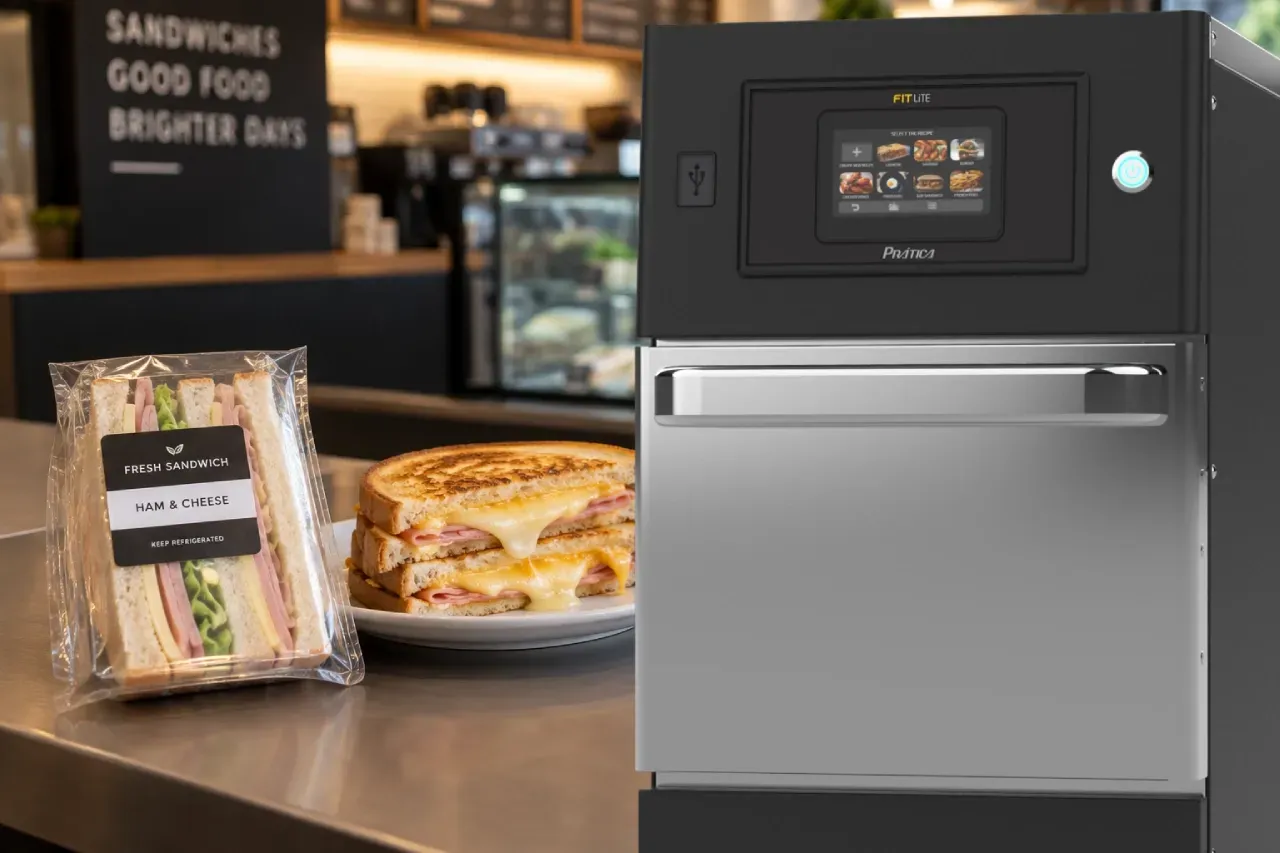
Commercial kitchens do not always need to keep food hot while waiting for customers.
Depending on the menu and service model, businesses can use hot holding, keeping prepared food at a controlled temperature until service, or on-demand preparation, storing selected portions chilled and heating or finishing them after an order is placed.
Speed Ovens can support the on-demand model by heating or finishing selected foods quickly after an order is placed, reducing the need to keep every menu item hot throughout the service period.
Both methods can work safely when supported by appropriate time and temperature control, storage, handling and HACCP-based procedures.
The right approach depends on the menu and operating conditions.
What is hot holding?
Hot holding means keeping cooked or reheated food hot until it is served.
It is commonly used in:
- buffets;
- canteens;
- hotel breakfast service;
- self-service restaurants;
- catering;
- cafeterias;
- prepared food counters.
This system works well when demand is predictable and many portions of the same item need to be available within a defined service period.
Suitable holding equipment maintains temperature after cooking or reheating. It is not intended to replace equipment used for those thermal processes.
What is the cold chain in foodservice?
The cold chain is the controlled temperature system used to keep perishable food within appropriate conditions during stages such as storage, transport and handling.
In foodservice, maintaining this chain helps prevent food from remaining at temperatures that may allow harmful microorganisms to grow.
For an on-demand workflow, temperature control does not begin when a portion enters the Speed Oven.
Chilled ingredients and prepared foods need appropriate conditions throughout the preceding stages, from cooling and refrigerated storage to handling before final heating.
EU food hygiene legislation requires the cold chain to be maintained where necessary, while specific temperature requirements must follow the rules applicable in each country.
What is on-demand food preparation?
On-demand preparation moves the final heating or finishing stage closer to service.
Depending on the menu item and production system, a typical flow can be:
Preparation → controlled cooling → chilled storage → order → heating or finishing → service
Instead of keeping several options hot for an extended period, a business can refrigerate prepared portions and process them as orders arrive.
This model can suit coffee shops, bakeries, supermarkets, petrol stations, convenience stores and other food-to-go operations where customer traffic and menu choices vary throughout the day.
Food safety depends on the entire process
Neither method is inherently safer.
Food safety depends on controlling hazards throughout preparation, storage and service.
EU Regulation (EC) No 852/2004 provides the main hygiene framework for food businesses.
It covers temperature control, maintenance of the cold chain where necessary and hygienic handling.
It also addresses the cooling of food intended to be held or served chilled and requires procedures based on HACCP principles.
Specific temperature limits and operational requirements may vary between countries. Businesses should therefore follow the rules applicable in each market.
Food safety controls may include:
- cooking and reheating;
- cooling;
- chilled storage;
- hot holding;
- thawing;
- temperature monitoring;
- contamination prevention;
- cleaning;
- employee procedures.
What temperature should hot food be held at?
There is no single numerical hot holding limit that should be treated as a universal rule for every European country.
National requirements must be checked.
In the United Kingdom, for example, Food Standards Agency guidance states that hot food should generally be held at 63°C or above, subject to specified exceptions.
The FSA also advises businesses to preheat holding equipment before loading it.
Food should already be thoroughly cooked or reheated before entering the unit because hot holding equipment is designed to maintain temperature, not perform the cooking or reheating process.
Temperature checks should follow the procedures defined by the food business.
Appropriate thermometers, probes, equipment displays and records may form part of that control system.
How does hot holding affect food quality?
Meeting a required holding temperature addresses only one part of the operation.
Food characteristics can continue changing while an item remains hot.
Depending on the dish and holding conditions, extended periods can affect:
- crispness;
- moisture;
- bread texture;
- coatings;
- sauces;
- vegetables;
- proteins;
- appearance.
An item can therefore remain within food safety parameters while gradually losing the characteristics expected by the customer.
Foods that rely on a crisp surface, melted cheese, toasted bread or similar characteristics can be especially sensitive to holding time.
UK Food Standards Agency guidance advises reducing holding time rather than lowering the required temperature when product quality is a concern.
Cooling is critical in chilled workflows
On-demand service often relies on refrigerated portions prepared earlier.
When cooked food is intended for later chilled storage, the cooling stage must also be controlled.
Regulations state that foods intended to be held or served chilled should be cooled as quickly as possible after heat processing, or after final preparation where no heat treatment is applied, to a temperature that does not create a health risk.
The cold chain must then be maintained where required under the same European hygiene framework.
Cooling food too slowly or using an inadequately controlled refrigeration process can create risks before final heating begins.
On-demand preparation should therefore be viewed as a complete production flow, not simply as taking food from refrigeration and heating it after an order.
On-demand preparation can protect food characteristics
Some foods benefit from being served shortly after their final heating or finishing cycle.
This is particularly relevant when the desired result depends on:
- crisp bread;
- toasted surfaces;
- melted cheese;
- browned toppings;
- heated fillings;
- crisp pastry.
Keeping these items hot for extended periods may change texture or moisture.
Completing the final stage close to service reduces the interval between heating and consumption.
Chilled preparation is not suitable for every menu item. The food, validated process, shelf life and storage conditions must all support the selected workflow.
Demand is a major difference between the two models
Hot holding requires a degree of forecasting.
The business needs to estimate how much food should be ready before customers arrive.
This can be efficient when traffic is consistent.
A canteen serving a predictable number of meals during lunch, for example, may benefit from having high-volume dishes ready for immediate service.
Variable traffic creates a different challenge.
Preparing excessive quantities can leave unsold portions, while preparing too little can create gaps in availability.
On-demand preparation reduces the need to keep every selected item hot simultaneously.
Portions can remain refrigerated until required, allowing production to respond more closely to actual orders.
The difference matters when breakfast, lunch, afternoon and evening periods have very different sales patterns.
Hot holding can support high-volume service
Immediate availability is one of the main benefits of hot holding.
It can be valuable when many customers need the same dish within a short period.
Typical examples include:
- canteens;
- buffets;
- institutional foodservice;
- catering lines;
- high-volume breakfast service.
If hundreds of portions need to move through a service line within a limited window, processing every order individually may create a bottleneck.
Hot holding can therefore be appropriate when the food maintains the required quality during the defined period and temperature can be controlled correctly.
On-demand preparation suits variable menus
A different model can work better when customers choose among several items and demand is distributed throughout the day.
Consider a coffee shop offering sandwiches, wraps, pastries and snacks.
Keeping every option hot would require continuous forecasting and could expose slower-selling foods to unnecessary holding time.
With refrigerated portions and sufficiently fast finishing equipment, selected orders can be prepared without maintaining a large hot display.
This model can also help food-to-go and retail businesses add hot menu options. It can be useful where space, staffing or service format does not support a conventional production kitchen.
How can each model affect food waste?
Food waste is influenced by forecasting, portioning, shelf life, stock rotation and demand.
Changing the service model alone does not eliminate losses.
Hot holding can create surplus when the quantity prepared exceeds sales during the planned holding period.
On-demand systems can limit this specific source of waste because fewer portions need to be heated before demand is known.
Chilled foods still have defined shelf lives.
Poor stock rotation, excessive preparation or inadequate planning can simply move waste from the hot service area to refrigerated storage.
Waste reduction therefore depends on matching production volumes and final preparation to actual sales patterns.
How Speed Ovens support on-demand preparation
Speed Ovens can support on-demand service when the menu requires rapid heating or finishing.
The technology combines microwave energy with high-velocity hot air.
Microwave energy contributes to fast internal heating, while hot air supports surface heating, browning and crispness.
Suitable applications can include:
- toasted sandwiches;
- panini;
- wraps;
- bakery products;
- snacks;
- ready meals;
- selected chilled dishes.
The correct cycle depends on the food, portion, initial temperature and required final condition.
Fast equipment does not remove the need for validated food safety procedures.
Storage, cooling, handling, cleaning and temperature controls remain essential.
Programmable cycles can reduce process variation
When several employees prepare the same menu item, manually selecting different times or settings can produce inconsistent results.
Programmable commercial equipment allows parameters to be defined for individual foods.
Employees can select the corresponding recipe instead of determining the cycle independently for every order.
This supports repeatability across shifts and, where equipment and operating systems permit, across multiple locations.
Programming remains only one element of process control. It does not replace HACCP procedures, employee training, correct storage or temperature verification where required.
Can both systems be used in the same operation?
Yes.
Hot holding and on-demand preparation do not need to be competing systems for an entire menu.
A hotel might use hot holding for high-volume breakfast items while finishing selected orders individually.
A supermarket can maintain suitable foods on a hot counter while preparing sandwiches or snacks after purchase.
A canteen may hold its highest-volume dishes while processing less frequently ordered options separately.
The balance can also change according to the daypart.
How to choose between hot holding and on-demand
The decision should be based on the actual operating conditions of each menu item.
Consider:
- expected sales volume;
- variation in demand;
- required service time;
- texture after holding;
- chilled shelf life;
- cooling requirements;
- available refrigerated storage;
- batch size;
- equipment capacity;
- staffing;
- food waste;
- HACCP procedures;
- national food safety requirements.
Predictable, concentrated demand can favour hot holding.
Variable traffic, diverse menus and foods that are best served soon after final heating can favour on-demand preparation.
Many commercial kitchens can use both according to the menu and service period.
FAQ about hot holding and on-demand preparation
How long can food stay in hot holding?
There is no universal holding time that applies to every food or European market.
Businesses must follow national requirements and their validated food safety procedures.
Product quality may also determine a shorter useful holding period even when the required temperature is maintained.
Can hot holding equipment reheat food?
Hot holding equipment is designed to maintain food that has already been properly cooked or reheated.
UK Food Standards Agency guidance states that it should not be used to cook or reheat food.
What is the difference between reheating and hot holding?
Reheating raises previously cooked food to the required serving condition using an appropriate thermal process.
Hot holding maintains food at the required temperature after cooking or reheating and before service.
Is on-demand preparation safer than hot holding?
Not automatically. Both can support food safety when correctly managed.
Hot holding depends on appropriate holding temperatures and controls, while chilled on-demand workflows require controlled cooling, cold-chain management, storage, final heating and hygienic handling.
Does on-demand preparation reduce food waste?
It can reduce waste caused by heating excessive quantities before demand is known.
It does not prevent losses caused by overproduction, expired chilled stock, poor rotation or inadequate storage.
Waste reduction depends on managing the complete production and inventory flow.