




How Speed Ovens solve key challenges in food hall operations
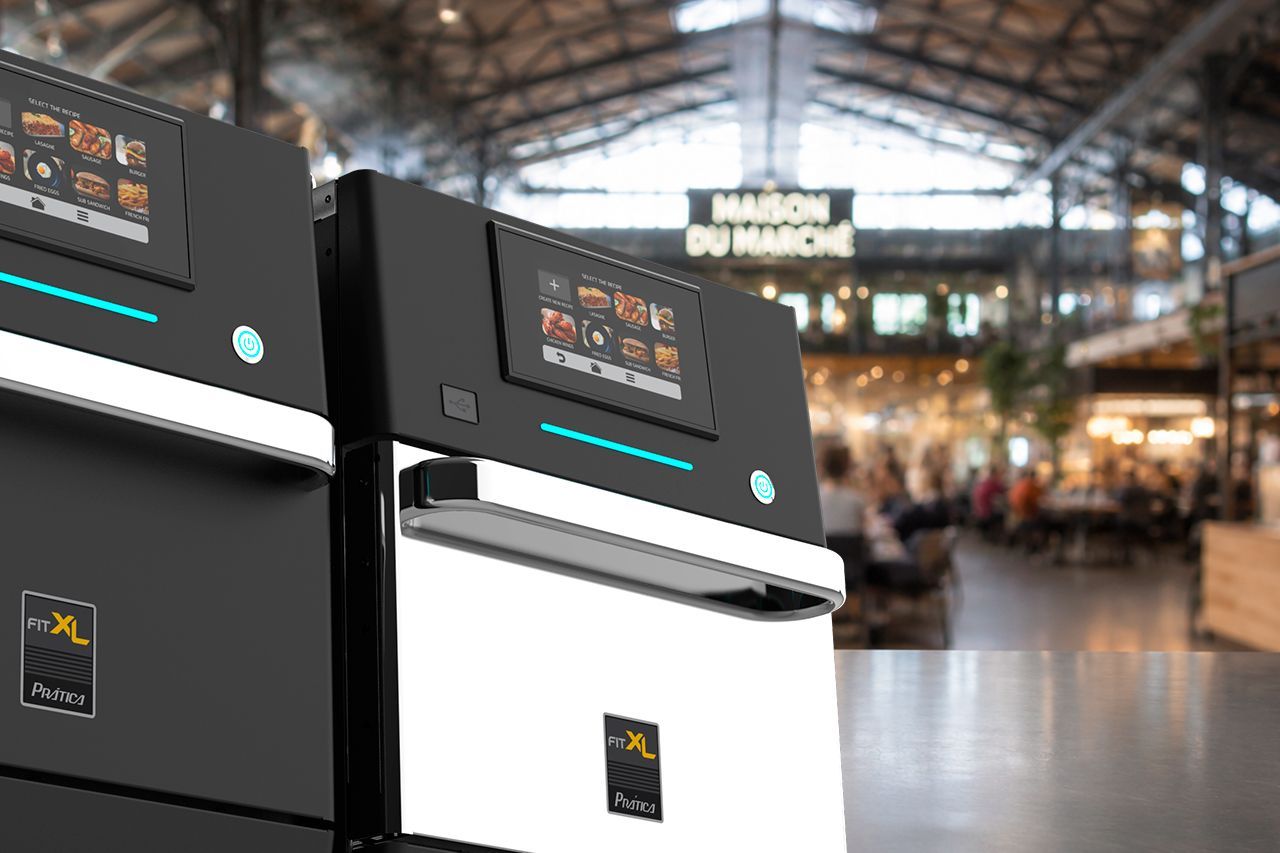
Food halls have become one of the fastest-growing foodservice formats.
Combining independent food operators, curated culinary concepts and vibrant social spaces, they offer consumers variety, flexibility and quality within a single destination.
From Lisbon and London to Milan and Rotterdam, food halls have become prominent features of urban regeneration projects and mixed-use developments across Europe.
Many destinations that once served primarily retail or commercial functions now integrate curated dining concepts as part of broader city-centre revitalisation initiatives.
The growth of food halls is creating new operational demands for vendors and venue managers alike.
Operators must deliver high-quality food quickly while maintaining consistency, food safety and profitability.
This is where Speed Ovens are becoming an increasingly valuable component of modern food hall operations.
What is a food hall?
A food hall is a curated dining destination that brings together multiple independent foodservice concepts within a shared environment.
Unlike conventional food courts, food halls typically focus on high-quality culinary offerings, distinctive design, local identity and social interaction.
Most food halls include:
- Shared seating areas
- Individual vendor spaces
- Artisan bakeries and cafés
- Bars and beverage concepts
- Cultural and culinary events
- Distinct architectural character
Consumers are attracted by the opportunity to enjoy different cuisines within a single visit.
Friends, families and colleagues can choose completely different meals while sharing the same dining space, creating a level of flexibility that has become one of the format's greatest strengths.
Why food halls continue to grow across Europe
Several factors have contributed to the expansion of food halls throughout European cities.
Changing urban lifestyles
Consumers increasingly seek destinations that combine dining, leisure and social interaction.
Food halls provide environments where people can eat, meet friends, work remotely and discover new culinary concepts within a single location.
Demand for variety
Modern consumers value choice.
Food halls allow visitors to enjoy regional specialities, international cuisines, artisan bakery products and premium grab-and-go options without travelling between multiple venues.
Lower barriers for food entrepreneurs
Opening within a food hall often requires less investment than launching a standalone restaurant.
This creates opportunities for independent operators to test concepts, build awareness and establish customer loyalty.
Food tourism
Many food halls have become attractions in their own right.
Destinations such as Time Out Market Lisbon, Mercado de San Miguel in Madrid and Mercato Centrale in Italy attract residents and tourists seeking authentic local food.
Growth has been particularly visible in major UK food halls, where operators increasingly occupy regenerated markets, transport hubs and mixed-use destinations.
Similar patterns can be observed across the wider European foodservice market, where consumers continue to seek flexible dining environments that combine convenience, variety and social interaction.
The operational challenge behind the experience
While food halls offer an attractive customer proposition, they also present unique operational challenges.
Most businesses work within limited footprints where every square metre must be used efficiently.
Peak periods can generate significant surges in demand across multiple vendors simultaneously, creating pressure on kitchen workflows and service speed.
Food hall management teams must also ensure that operators maintain consistent standards for food safety, hygiene and service quality.
Balancing speed, consistency and operational simplicity is therefore critical.
Why traditional kitchens are not always suitable for food halls
Food halls are fundamentally built around quick service food.
Unlike traditional restaurants, most businesses cannot rely on large commercial kitchens equipped with extensive cooking lines, multiple preparation stations and complex production systems.
Many food hall units operate within compact kitchens, while some concepts have little or no dedicated back-of-house space.
In certain formats, preparation takes place directly in front of customers.
This makes equipment footprint a critical consideration.
Every piece of equipment must justify the space it occupies while supporting speed, food safety and operational efficiency.
Large cooking suites, extensive extraction systems and conventional kitchen infrastructures are often difficult to install or economically impractical in food hall environments.
Food hall management requires operational standardisation
Managing a food hall involves coordinating multiple operators that may offer completely different products and service models.
Within a single venue, businesses may range from artisan bakeries and speciality coffee shops to pizza concepts, international street food vendors and premium grab-and-go operations.
This diversity creates challenges related to food safety, workflow coordination, customer flow and service consistency.
As a result, many food halls increasingly favour production systems built around cold-chain food distribution and frozen-to-fresh models.
Products are prepared centrally, distributed through controlled supply chains and finished on demand at the point of sale.
This approach simplifies operations while maintaining quality and operational control.
What is a Speed Oven?
A Speed Oven is an advanced cooking solution that combines microwave energy and impingement technology to cook food significantly faster than conventional ovens.
Microwave energy heats food internally, while impingement technology uses high-velocity hot air directed onto the food surface to create browning, crispness and texture.
This microwave combination cooking process enables accelerated cooking and high-speed cooking while maintaining food quality.
Why Speed Ovens are a natural fit for food halls
Space limitations are among the most common challenges in food halls.
Many businesses cannot dedicate large areas to traditional cooking equipment, extraction systems or extensive back-of-house operations.
Speed Ovens provide a practical solution by combining rapid cooking, compact dimensions and operational flexibility.
One of their most important advantages is ventless technology.
Many food hall developments face restrictions related to extraction infrastructure. Installing traditional hood systems, ductwork and exhaust solutions can be technically complex, costly or physically impossible depending on the building.
Ventless Speed Ovens help overcome these limitations by reducing or eliminating the need for conventional extraction systems.
Their compact equipment footprint also enables operators to maximise productive space while maintaining menu flexibility.
For food hall businesses, this creates several advantages:
- Faster service during peak periods
- Reduced waiting times
- Consistent product quality
- Simplified workflows
- Efficient use of limited space
- Greater menu flexibility
- Easier installation
- Reduced infrastructure requirements
Accelerated cooking in high-volume foodservice environments
Food halls are a classic example of high-volume foodservice operations.
Large numbers of customers often arrive simultaneously during lunch periods, evenings, weekends and special events.
Businesses must therefore serve food quickly while maintaining consistency and food safety.
Speed Ovens support this requirement through accelerated cooking systems powered by microwave combination cooking and impingement technology.
Many models use dual magnetrons combined with precisely controlled high-velocity airflow. This combination enables true high-speed cooking performance while maintaining product quality.
The result is significantly increased kitchen throughput, allowing businesses to serve more customers during peak periods without expanding kitchen space.
Supporting a wide range of food concepts
One factor driving the adoption of Speed Ovens within food halls is their versatility.
A single venue may include businesses serving:
- Pizza by the slice
- Premium sandwiches
- Artisan bakery products
- Grab-and-go meals
- Toasted snacks
- International street food
- Breakfast items
- Sweet bakery products
Speed Ovens allow many of these concepts to prepare food quickly while maintaining attractive texture, temperature and presentation.
This is particularly valuable in environments where multiple vendors compete for customer attention.
Improving kitchen efficiency with foodservice technology
Speed Ovens represent one of the most practical examples of modern foodservice technology.
Because they combine multiple cooking methods within a single unit, businesses can often replace several pieces of equipment with one compact solution.
This contributes directly to kitchen efficiency by reducing production steps, simplifying workflows and optimising available space.
For businesses working in compact kitchens, these benefits can have a substantial impact on daily operations and profitability.
Supporting labour efficiency and staff training
Workforce availability remains a challenge for many foodservice businesses across Europe.
Recruiting and retaining experienced kitchen staff remains difficult in several markets.
Speed Ovens help address this issue through programmable cooking profiles and standardised preparation processes.
Recipes can be preconfigured with precise cooking parameters, reducing the need for extensive culinary expertise and minimising operational variability.
This simplifies staff training and allows new employees to become productive more quickly.
The result is improved menu consistency, fewer preparation errors and reliable performance even when teams are lean.
Production capacity and return on investment
Many food hall concepts increasingly rely on central production facilities and frozen-to-fresh systems.
Instead of preparing products entirely on site, businesses receive prepared or partially prepared foods through a controlled cold chain and complete the final cooking stage when orders are placed.
This approach increases production capacity because preparation and service are separated.
Speed Ovens play a central role in this process by enabling rapid finishing and regeneration directly at the point of sale.
The combination of reduced labour requirements, improved consistency, increased kitchen throughput, smaller equipment footprint and lower food waste can contribute positively to return on investment (ROI).
For many businesses, the benefits extend beyond cooking performance and influence the overall profitability of the operation.
Energy efficiency in modern food hall operations
Energy efficiency has moved from a secondary consideration to a purchasing criterion for many foodservice businesses across Europe.
Modern Speed Ovens are designed to retain heat efficiently within the cooking chamber through advanced insulation systems and precise temperature controls.
Unlike many conventional cooking appliances that continuously release heat into the surrounding environment, Speed Ovens concentrate energy where it is needed most.
Their insulated chambers, controlled airflow systems and accelerated cooking technologies help minimise unnecessary heat loss while maintaining cooking performance.
This approach supports efficient energy use and contributes to improved operational performance.
The future of food hall operations
Food halls now occupy a significant position within the European foodservice market, particularly in cities where mixed-use developments and urban regeneration projects continue to reshape consumer destinations.
The next phase of food hall development will place greater emphasis on operational efficiency, space optimisation and consistent execution.
Technologies that deliver speed, consistency, food safety, operational flexibility and efficient use of space are likely to attract greater investment from operators and developers.
For many businesses, Speed Ovens are emerging as a key technology for meeting the demands of modern food hall environments.
FAQ
What is a Speed Oven?
A Speed Oven is a high-speed cooking solution that combines microwave energy and impingement technology to cook food significantly faster than conventional ovens while maintaining food quality.
Why are Speed Ovens suitable for food halls?
Speed Ovens require minimal space, support rapid service, help maintain food safety and often operate without complex extraction systems.
What is ventless technology?
Ventless technology allows certain cooking equipment to operate without traditional hood and exhaust systems, simplifying installation in space-constrained environments.
How do Speed Ovens improve kitchen throughput?
By combining microwave energy and impingement cooking, Speed Ovens reduce cooking times and allow businesses to serve more customers during peak periods.
Can Speed Ovens help address labour shortages?
Yes. Programmable recipes and standardised cooking processes simplify staff training and help businesses maintain consistency with smaller teams.
Are Speed Ovens energy efficient?
Modern Speed Ovens use insulated cooking chambers, precise temperature controls and accelerated cooking systems that help minimise heat loss and optimise energy consumption.
Learn how delis use Speed Ovens to prepare hot sandwiches with speed, consistency and quality.