




How Speed Ovens Upgrade the Modern Supermarket Deli Experience
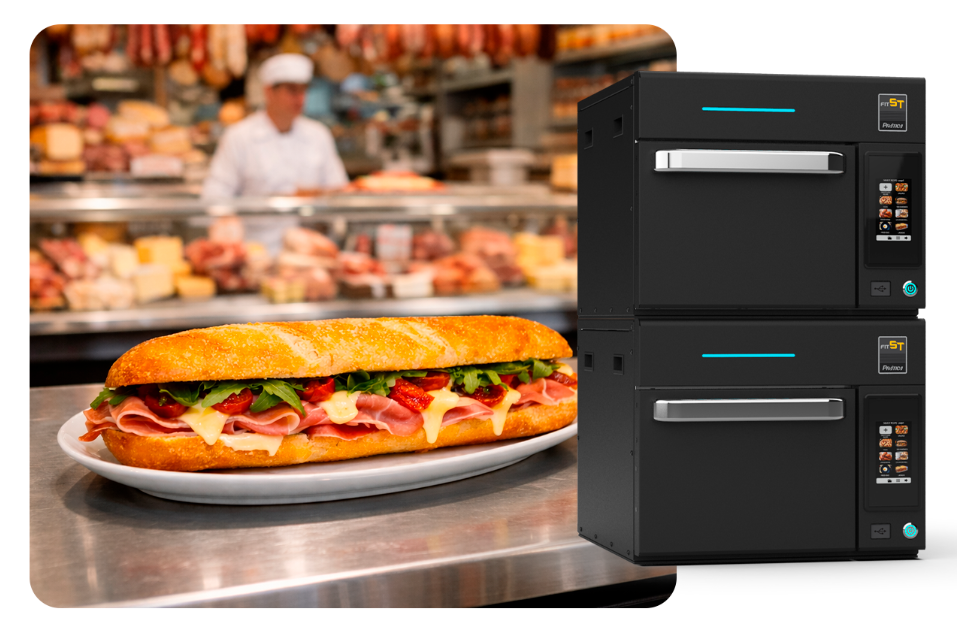
Supermarket delis have evolved far beyond a counter for sliced meats and chilled salads.
Today, they operate between retail and foodservice.
In many stores, they serve as a culinary reference point for customers and the local community.
Across Europe, delis attract customers not only to buy products but to explore regional delicacies, charcuterie, cheeses and specialities that reflect local cuisine.
They are destinations for chefs, cooks and food enthusiasts seeking distinctive flavours and authentic ingredients.
In many countries, traditional delis represent identity, craftsmanship and culinary heritage.
A supermarket deli can assume a similar role.
It can become a recognised source for local produce and curated selections.
By doing so, it moves beyond packaged items and becomes a space that represents food culture within the retail environment.
From Ingredient Reference to Ready-to-Eat Excellence
The appreciation of gastronomy goes beyond eating.
It includes selecting ingredients, understanding their origin and enjoying food immediately.
Supermarkets that embrace this perspective increase both relevance and revenue.
When the deli reflects local food culture, it creates value beyond sliced cuts and chilled items.
Customers may arrive planning to cook at home, yet choose to enjoy ready-to-eat options during their visit.
This transition does not require a full commercial kitchen.
With High Speed Ovens such as Speed Ovens, supermarket delis can prepare high-quality snacks, hot sandwiches and finished dishes efficiently.
All of this is possible without complex infrastructure.
Expanding from Cold to Hot Without a Grill
Cold sandwiches remain essential in most supermarket delis.
However, introducing hot sandwiches traditionally requires grills, ventilation systems and dedicated staff.
These elements increase operational complexity and cost.
The conventional grilling model presents clear challenges:
- Continuous energy or gas consumption
- Large equipment footprint
- Dependence on skilled operators
- Inconsistent product outcomes
Speed Ovens remove the need for a traditional grill.
With pre-programmed recipes and rapid heating cycles, operators can prepare hot sandwiches quickly and consistently.
Equipment does not need to remain heated throughout the day.
This allows delis to introduce toasted paninis, melts, breakfast rolls and hot subs while preserving space and simplifying workflow.
Crispy and Well-Toasted Finishes That Drive Sales
Visual cues strongly influence purchasing decisions.
Colour and texture often determine whether a customer proceeds with a purchase.
Speed Ovens combine microwave energy with impinged air technology.
This combination delivers:
- Crisp bread surfaces
- Even browning
- Golden finishes
- Controlled internal heating
A well-coloured sandwich signals freshness and quality.
In a supermarket setting, where decisions are made quickly, visual appeal increases conversion and encourages impulse purchases.
Faster Service and Reduced Queues
Queues remain a challenge in retail foodservice.
Long waiting times discourage spontaneous purchases and disrupt store flow.
Rapid cook technology significantly reduces preparation time.
Instead of waiting several minutes for grilling, sandwiches can be heated and finished in a short, controlled cycle.
Operational advantages include:
- Higher throughput during peak periods
- Improved customer flow near service counters
- Predictable preparation times
- Reduced operational pressure on staff
For front-of-store installations, speed is critical.
Visible and rapid preparation increases perceived efficiency and supports higher sales volumes.
Lower Labour Dependency and Greater Consistency
Preparing a sandwich correctly on a grill requires experience and attention.
In environments with high staff turnover, maintaining consistent results can be difficult.
With Speed Ovens, recipes are programmed in advance.
Operators select the product on a touchscreen and initiate the cycle.
The outcome remains consistent across shifts and locations.
This enables:
- Reduced reliance on specialised cooking skills
- Standardised results
- Simplified staff training
- Improved quality control
For supermarket chains operating multiple sites, this consistency supports brand reliability and operational stability.
Energy Efficiency and Space Optimisation
Traditional grilling equipment often remains heated throughout trading hours.
This results in continuous energy consumption, even during slower periods.
Speed Ovens operate on demand.
Energy is used only during active cycles.
Combined heating systems and effective insulation help control overall energy use.
Their compact footprint allows installation:
- In small back-of-house areas
- Directly at service counters
- Within front-of-store zones
This flexibility enables expansion of hot food offerings without sacrificing valuable retail space.
Aggregating Value Through Hot Food
When supermarket delis position themselves as culinary references and integrate rapid cook technology, they unlock additional revenue streams.
They can:
- Showcase local ingredients in ready-to-eat formats
- Encourage tasting and immediate consumption
- Increase basket value through complementary purchases
- Compete effectively with cafés and quick-service outlets
Importantly, this expansion does not require a full-scale kitchen.
High Speed Ovens make it possible to deliver premium snacks and hot sandwiches in a compact and controlled environment.
A Modern Role for the Supermarket Deli
European delis have long represented the culinary identity of their regions.
Supermarket delis can adopt this position within contemporary retail.
They can combine curated ingredients with high-quality ready-to-eat options.
By integrating Speed Ovens into their operations, they gain the ability to serve crisp, golden and well-toasted sandwiches rapidly.
They reduce queues, optimise labour use and manage space efficiently.
The supermarket deli then becomes more than a place to purchase ingredients. It becomes a destination for immediate enjoyment and quality food within modern retail.