




How Speed Ovens Reduce Food Waste
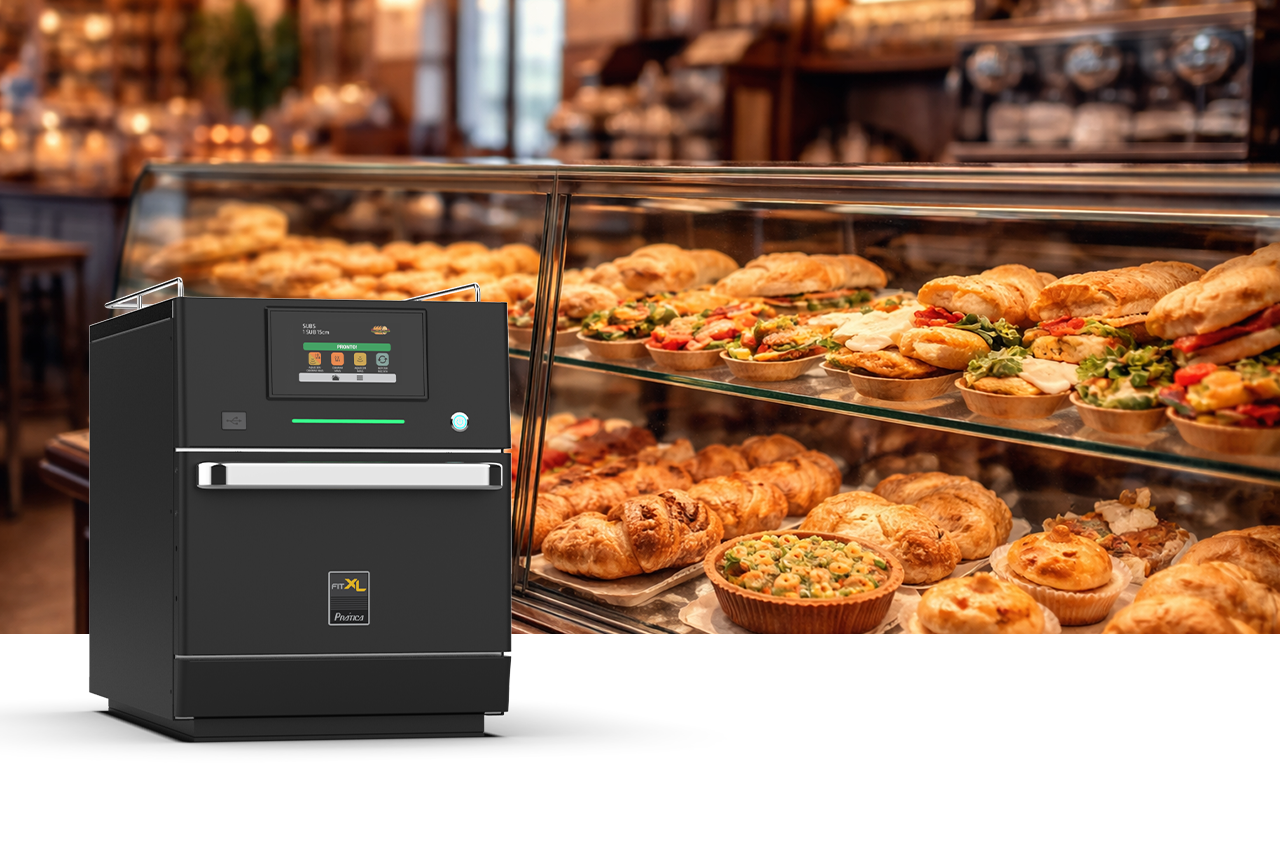
Sustainability has become one of the central priorities of the European food industry.
Food producers, manufacturers and foodservice operators are increasingly adopting practices that reduce environmental impact, improve energy efficiency and minimise food waste across the supply chain.
In Europe, the food and drink sector is the largest manufacturing industry, generating around €1.5 trillion in turnover and employing approximately 4.8 million people.
This scale highlights both the importance of the sector and its responsibility to operate in a more sustainable way.
At the same time, sustainability solutions are emerging across the entire food system, from agricultural production and food processing to logistics, retail and foodservice operations.
According to the GDI European Food Trends Report, building a sustainable food system requires coordinated action throughout the food chain, including restaurants, retailers and manufacturers.
For many operators, sustainability is increasingly connected to improving sustainable foodservice operations, where efficiency, resource management and waste reduction become essential parts of daily kitchen management.
Among the many challenges facing the industry, food waste remains one of the most significant.
Food waste as a major sustainability challenge
Estimates suggest that nearly one fifth of the food available for consumption in Europe is wasted.
This means that the land, water, energy and labour used to produce that food are also wasted.
For many operators, reducing food waste in restaurants has become a critical objective.
Waste often occurs when food is prepared in advance but not sold.
Fresh production models that require daily preparation of large quantities of food frequently lead to unsold products being discarded at the end of the day.
Reducing waste therefore requires a shift in operational models.
Many restaurants, cafés and foodservice operators are moving toward demand-based preparation systems, where food is finished only when an order is placed.
This operational approach plays an important role in improving sustainable foodservice practices.
Demand-based preparation and waste reduction
One effective approach to reducing waste is to prepare food in advance and store it under controlled conditions, either chilled or frozen, before finishing it on demand.
Instead of preparing fresh products in large batches every day, operators can store food safely and complete the final heating step only when an order is placed.
This model significantly improves sustainable foodservice operations, because food is prepared only when it is needed.
Speed Ovens support this operational model particularly well.
By combining microwave energy and impinged air technology, they allow operators to finish or regenerate food quickly while maintaining consistent quality.
This makes it possible to prepare food according to demand rather than anticipation, which helps reduce food waste in restaurants and other foodservice environments.
Efficient heating and improved food quality
Another common cause of waste in foodservice is inconsistent heating.
Food that is not heated properly may be perceived as cold or poorly prepared by customers, leading to rejected meals and unnecessary waste.
Speed Ovens address this challenge through high-power microwave technology combined with high-speed air circulation.
The use of multiple magnetrons ensures efficient energy distribution and faster heating.
As a result, food reaches the correct serving temperature quickly and evenly.
Customers perceive the food as properly heated, which improves satisfaction and reduces the likelihood of discarded products.
Faster service and reduced operational waste
Speed also plays an important role in reducing waste.
When service is slow, food prepared in advance may lose quality while waiting to be served.
In busy environments such as cafés, bakery chains and quick service restaurants, delays can result in food being discarded before it is sold.
Speed Ovens enable rapid preparation through the combination of high-power microwave energy and impinged air technology.
Food can be heated, toasted or finished in seconds.
This rapid service improves customer satisfaction while also contributing to more sustainable foodservice operations.
Energy efficiency in commercial kitchens
Energy consumption is a major concern in professional kitchens.
As sustainability becomes a priority, many operators are investing in energy efficient commercial kitchens that reduce both operational costs and environmental impact.
Traditional electric ovens often remain constantly active, maintaining heating elements at high temperatures throughout the day.
This continuous heating consumes energy even when the oven is not actively cooking.
Speed Ovens operate differently.
Their thermal insulation helps retain heat within the cooking chamber, preventing unnecessary heat loss to the surrounding environment.
In addition, the oven activates its heating elements only when necessary to recover the required temperature.
The thermal mass of the chamber helps maintain heat between cooking cycles, reducing the need for continuous energy consumption.
This approach improves energy efficiency and supports the development of energy efficient commercial kitchens.
Intelligent heat distribution
Heat distribution also plays a role in energy efficiency.
Many conventional ovens heat food from a single point within the chamber, which can lead to uneven heating and longer cooking times.
Speed Ovens use forced air circulation inside the cooking chamber, which distributes heat evenly around the product.
This technology improves heat transfer, reduces cooking times and helps minimise unnecessary energy use.
These innovations are part of a broader movement toward sustainable kitchen technology, where equipment design focuses on efficiency, performance and reduced environmental impact.
Standardisation and process reliability
Operational mistakes are another source of food waste in foodservice environments.
Incorrect cooking times, inconsistent heating or poor preparation techniques can result in products that do not meet quality standards and must be discarded.
Speed Ovens help reduce this risk through programmable recipes stored in the control panel.
Operators can select a recipe with a single touch, ensuring that time, power level and temperature remain consistent.
In addition, connected kitchen platforms such as IoK (Internet of Kitchen) allow operators to manage recipes remotely and maintain standardised processes across multiple locations.
These features help reduce operational errors while supporting more efficient and sustainable kitchen workflows.
Sustainability through smarter kitchen operations
Reducing food waste and improving energy efficiency are now key priorities for foodservice businesses across Europe.
While sustainability initiatives often focus on sourcing and packaging, kitchen operations also play a crucial role in reducing environmental impact.
Technologies that enable demand-based preparation, efficient heating and process standardisation are becoming essential tools for operators seeking to improve sustainability.
Speed Ovens represent an example of sustainable kitchen technology that supports these objectives.
By allowing operators to prepare food quickly, reduce waste and optimise energy use, they contribute to more sustainable and efficient foodservice operations.
As sustainability continues to shape the future of the European food industry, solutions that combine operational efficiency with environmental responsibility will become increasingly important for foodservice businesses.
See how snacks can keep your business active even during quieter periods and create additional sales opportunities in another of our content.