




Speed Ovens for Food-to-Go and QSR in Europe
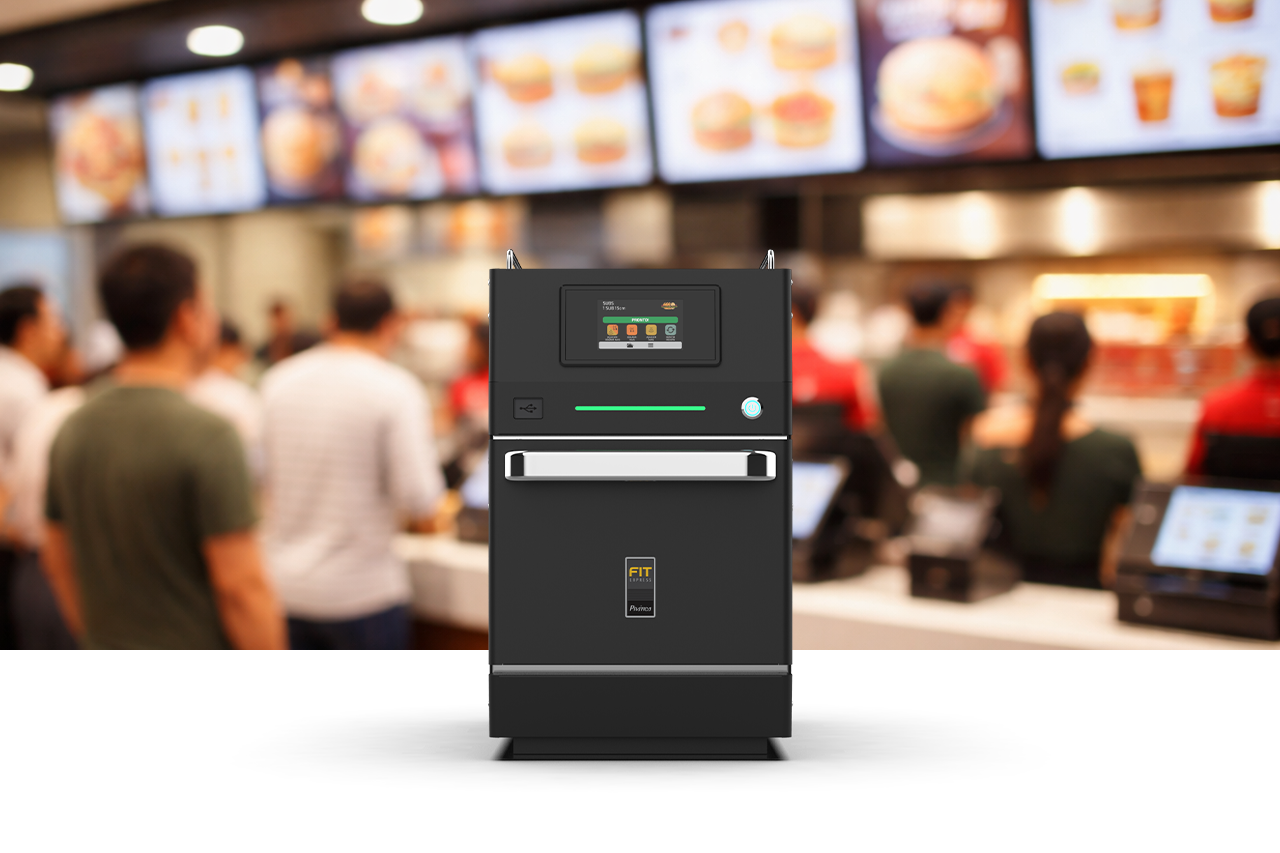
Convenience and on-the-go consumption are influencing the European foodservice industry.
Urban lifestyles, busy routines and post-pandemic behavioural changes are pushing consumers toward faster and more practical meal options.
Consumers increasingly expect food that is quick to prepare, easy to carry and ready to eat immediately.
As a result, foodservice operators are adapting their kitchens, menus and workflows to meet these expectations.
For operators, this transformation goes beyond menu design.
It requires operational models and kitchen equipment capable of delivering speed, consistency and efficiency, particularly in environments where customers expect food in seconds.
Across cafés, bakery chains, convenience retail locations, fast casual restaurants and Quick Service Restaurants, kitchens must support rapid service without compromising food quality.
Growing demand for convenient food options
Consumers are increasingly prioritising speed and practicality when choosing where and how to eat.
Urban professionals, commuters and students often prefer meals that can be consumed quickly or taken away.
Industry reports show that this behavioural shift is transforming the foodservice sector.
Demand for convenient dining solutions is one of the key drivers of this growth.
Grab-and-go meals, takeaway formats and delivery services continue to expand across the region.
Consumers are integrating food consumption into fast-paced daily routines, which increases the importance of efficient kitchen workflows and rapid food preparation.
As a result, many operators are investing in high-speed cooking equipment and compact kitchen technologies that enable fast preparation while maintaining consistent quality.
What is the food-to-go concept
Food-to-go refers to meals and snacks prepared for immediate consumption outside the place of purchase.
These products prioritise convenience, portability and minimal waiting time.
Typical food-to-go products include:
• toasted sandwiches and paninis
• bakery items and pastries
• hot snacks
• wraps and salads
• ready-to-eat meals
• breakfast items and snack portions
The concept is strongly connected to urban mobility.
Consumers frequently purchase food-to-go items in locations such as:
• convenience stores
• coffee chains and cafés
• bakery outlets
• petrol stations
• supermarket deli counters
• fast casual restaurants
Retail foodservice environments increasingly incorporate grab-and-go food displays and quick finishing stations to meet customer demand.
For operators, this model requires production systems capable of delivering hot food quickly and consistently, often in less than one minute.
Speed Ovens support this model by allowing chilled or pre-prepared foods to be regenerated or finished rapidly, making them ideal for high-volume convenience operations.
Snacking and ready-to-eat foods as key drivers
Snacking behaviour and ready-to-eat foods are major drivers of the convenience trend.
Many European consumers now replace traditional meals with smaller portions consumed throughout the day.
This shift has encouraged restaurants, bakeries and retail foodservice operators to expand their snack menus.
Popular items include hot sandwiches, toasted wraps, savoury pastries, bakery snacks and small meal portions.
Speed Ovens align directly with these operational needs.
These ovens combine microwave energy with high-speed impinged air, allowing operators to cook or finish food rapidly while maintaining crisp textures and consistent results.
As a result, operators can prepare snacks, sandwiches, bakery products and ready-to-eat meals in seconds, improving service speed in high-traffic environments.
What are Quick Service Restaurants (QSR)
Quick Service Restaurants, commonly known as QSR, are foodservice establishments designed for fast preparation and high customer turnover.
These restaurants typically feature:
• simplified menus
• rapid food preparation
• counter service or digital ordering
• takeaway and delivery options
• standardised production systems
Examples include fast-food chains, sandwich shops, coffee chains and quick-service bakery concepts.
QSR operations rely heavily on efficient kitchen workflows and high-speed cooking equipment.
Staff must prepare food quickly while maintaining consistent quality across all service periods.
Speed Ovens support this environment through programmable recipes that allow staff to prepare menu items with a single touch.
This approach reduces training requirements while maintaining consistent results across multiple locations.
Expansion of Quick Service Restaurants in Europe
The convenience trend also drives the expansion of Quick Service Restaurants across Europe.
This growth reflects increasing demand for quick meal formats and efficient service models.
In these environments, Speed Ovens support operations by enabling:
• rapid sandwich and panini preparation
• fast regeneration of chilled foods
• consistent heating of bakery products
• quick finishing of snack items
• simplified workflows with pre-programmed menus
Because recipes can be stored digitally, staff can execute them instantly.
This capability improves operational efficiency and helps maintain consistent food quality during peak service periods.
Speed Ovens in food-to-go and QSR operations
Speed Ovens are increasingly used in modern convenience foodservice environments because they combine multiple cooking technologies in one compact unit.
These ovens use microwave energy and impinged air circulation to cook and finish food rapidly.
The combination enables operators to produce crispy textures while significantly reducing preparation time.
In practical terms, Speed Ovens allow operators to:
• finish chilled foods in seconds
• toast sandwiches and bakery items quickly
• regenerate prepared meals efficiently
• deliver consistent results with automated recipes
• prepare food directly at the point of sale
This capability improves kitchen throughput and reduces customer waiting times.
Because Speed Ovens are compact and ventless in many configurations, they can be installed close to the service area.
This makes them particularly useful for convenience stores, supermarket delis, cafés, bakery chains and fast casual restaurants.
In these environments, operators can prepare hot sandwiches, toasted snacks, pastries and ready-to-eat meals without the need for large traditional kitchen equipment.
Technology enabling faster service
Technology plays a central role in the evolution of convenience foodservice.
Digital ordering systems, mobile payment platforms and delivery applications are transforming how consumers interact with restaurants.
Companies that adopt efficient food preparation systems and digital ordering solutions gain a competitive advantage in the European market.
Within this technological ecosystem, Speed Ovens support high production flow.
Their rapid cooking capability allows kitchens to maintain efficiency during busy service periods.
In addition, connected kitchen technologies such as IoK (Internet of Kitchen) allow operators to monitor equipment performance, update recipes remotely and standardise production processes across multiple locations.
Implications for modern foodservice concepts
The growing demand for convenience is transforming restaurant layouts, kitchen workflows and menu development.
Operators increasingly look for solutions that combine:
• rapid preparation
• consistent food quality
• compact equipment footprint
• simple operation
• menu flexibility
• efficient kitchen throughput
Speed Ovens address these needs effectively.
Their compact design allows installation close to the service counter, enabling operators to prepare hot food directly at the point of sale.
This approach improves service speed and enhances the overall customer experience.
Operational advantages in convenience foodservice
In practice, Speed Ovens help operators respond to the convenience and on-the-go trend by enabling them to:
• regenerate chilled foods quickly
• prepare grab-and-go menu items efficiently
• expand menus without increasing kitchen space
• maintain consistent food quality across locations
• simplify kitchen operations for staff
These advantages are particularly valuable in environments where speed, reliability and space efficiency are essential.
As the European foodservice market continues to grow, technologies that support high-speed cooking, compact kitchens and efficient service models will become increasingly important for operators seeking to meet consumer expectations.