




Why Convenience Stores Lose Customers Without Hot Food
Convenience stores have become an essential part of daily routines across Europe.
Many shoppers stop by before work, during lunch breaks, while travelling or on the way home expecting to find something quick, satisfying and ready to eat.
This shift has changed what customers expect from convenience retail.
Packaged products remain important, but they are no longer enough to meet every purchasing occasion.
A growing share of visits is driven by immediate consumption, creating new opportunities for stores that can serve fresh, warm food within minutes.
For operators, the challenge is balancing these expectations with limited space, small teams and efficient operations.
Compact cooking technologies are helping convenience stores expand their foodservice offer without the infrastructure of a traditional commercial kitchen.
Why packaged food alone is no longer enough
Many convenience stores still rely primarily on refrigerated sandwiches, chilled ready meals, frozen pizzas and packaged snacks.
These products offer convenience and simplify inventory management, but they often require customers to finish preparing the meal elsewhere.
That additional step can influence purchasing decisions, particularly when someone wants lunch now rather than groceries for later.
A customer stopping during a lunch break, for example, is usually looking for a complete meal that can be eaten immediately.
If only cold products are available, the purchase may become less appealing or the customer may decide to visit another retailer.
As food-to-go becomes a larger part of convenience retail, warm food is increasingly expected alongside packaged products rather than treated as an optional extra.
What customers expect during food-to-go occasions
Food-to-go is about more than speed. Customers also expect freshness, texture, appearance and convenience.
Someone buying breakfast before work may look for a warm pastry and coffee.
A commuter stopping on the way home may prefer a hot pizza instead of taking a frozen one home to prepare later.
Travellers visiting a service station often want a meal they can consume immediately before continuing their journey.
These occasions represent different customer missions, but they share one expectation: food that is ready to enjoy when purchased.
Purchase decisions are influenced by the complete meal experience
Temperature changes how customers perceive food quality.
A toasted sandwich with melted cheese, a freshly baked pastry or a crisp pizza communicates freshness in a way that refrigerated packaging cannot achieve on its own.
The objective is not to replace chilled or frozen products. Instead, it is to transform them into meals that are ready for immediate consumption.
This creates additional value from products that may already be part of the store's assortment.
Warm food encourages larger purchases
Serving food hot influences purchasing behaviour beyond the main meal.
A refrigerated sandwich may be viewed as something to eat later, while a freshly toasted sandwich naturally encourages immediate consumption.
Once customers decide to eat straight away, they frequently add complementary products such as coffee, cold beverages, desserts or bakery items.
Warm meals also stimulate impulse purchases because they are perceived differently from cold packaged food displayed on shelves.
Rather than increasing product assortment, convenience stores can increase the value of each customer visit by creating complete meal solutions that combine food and beverages.
Practical examples of how hot food changes the customer journey
The impact of hot food can be understood through everyday situations commonly found in convenience retail.
Refrigerated sandwiches
A convenience store sells only pre-packed refrigerated sandwiches.
Customers who want a quick lunch have two choices: purchase the sandwich cold or leave without buying.
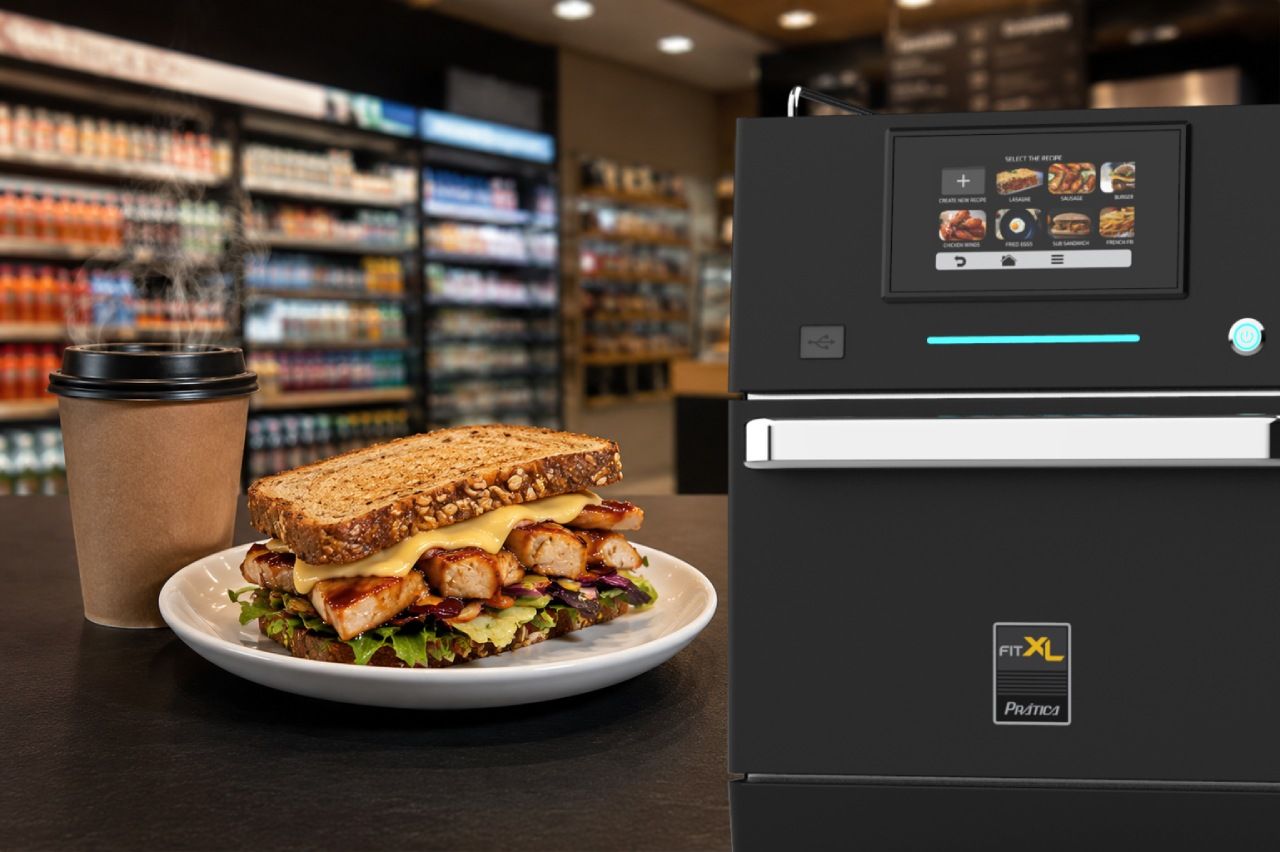
Using a Speed Oven, the same sandwich can be served within minutes with a toasted exterior, melted cheese and a crisp texture created by the combination of microwave energy and impinged hot air.
The product itself has not changed.
The customer experience has.
Chilled or frozen ready meals
Many stores offer refrigerated or frozen ready meals intended to be heated at home, in a hotel or in temporary accommodation.
Not every customer has access to suitable cooking equipment after leaving the store.
Preparing these meals on-site allows customers to enjoy them immediately, making the convenience store a destination for lunch or dinner rather than simply a place to purchase food for later.
Frozen or partially baked pizzas
Frozen pizzas and partially baked pizzas are common products in convenience retail.
Without in-store preparation, customers must complete the cooking process elsewhere.
Using a speed oven makes it possible to serve pizzas with browned cheese, crisp crusts and an evenly finished appearance in just a few minutes.
The combination of microwave technology and impinged hot air creates browning and crispness that conventional domestic microwave ovens cannot produce.
Expanding foodservice without building a traditional kitchen
One of the biggest barriers to foodservice expansion is operational complexity.
Convenience stores rarely have space for large kitchen installations.
Many operate with lean teams responsible for serving customers, replenishing shelves, receiving deliveries and managing checkout at the same time.
For this reason, operators often look for equipment that can:
- prepare food quickly
- support multiple menu categories
- simplify daily workflows
- deliver repeatable cooking results
- fit into compact retail environments
Speed Ovens combine microwave energy and impinged hot air inside a single cooking chamber, allowing retailers to prepare different menu items using programmable cooking cycles instead of multiple appliances.
Adding value instead of only reselling products
Many convenience stores generate a significant share of their sales from products that arrive ready for retail display, such as refrigerated sandwiches, chilled meals, frozen pizzas and bakery products.
While these items are easy to merchandise, they are typically sold as packaged products with limited opportunities to create additional value.
Serving those same products hot changes the customer proposition.
A refrigerated sandwich can be toasted with a crisp exterior and melted cheese, a chilled pasta dish can be served ready to eat, and a frozen pizza can be transformed into a freshly prepared meal within minutes.
The products themselves do not change, but the customer experience does.
Instead of purchasing food to prepare later, customers receive a meal that is ready to enjoy immediately.
For retailers, this approach creates opportunities to generate additional revenue from the existing product range while expanding the foodservice offer without significantly increasing operational complexity.
Which menu categories can convenience stores develop?
The ideal menu depends on each store's location, customer profile and product assortment.
Some operators focus on grab-and-go food, while others introduce premium meal solutions designed to increase average basket value.
Examples include:
- artisan pizzas
- personalised sandwiches
- paninis
- breakfast sandwiches
- wraps
- savoury pastries
- bakery products
- croissants
- sausage rolls
- toasties
- pasta dishes
- rice bowls
- ready meals
- chicken snacks
- baked potatoes
- warm cookies
- brownies
- seasonal menu items
A flexible menu also allows stores to adapt their offer throughout the year without significantly changing their operation.
Foodservice creates more purchasing occasions throughout the day
A broader menu allows convenience stores to participate in different eating occasions instead of relying on a single customer mission.
Morning visitors may choose breakfast sandwiches, pastries and coffee.
Lunch customers often look for toasted sandwiches, pasta dishes or pizza.
Afternoon purchases frequently combine warm bakery products with hot beverages.
Evening shoppers may prefer ready meals that are already heated and ready to eat.
Serving different meal occasions throughout the day increases opportunities to attract repeat visits while generating additional sales from existing products.
Helping teams work efficiently
Labour shortages continue to affect foodservice businesses across many markets.
Hiring experienced kitchen staff is not always practical for convenience stores operating with compact teams.
Programmable cooking cycles simplify food preparation by reducing the number of manual decisions required during service.
Employees follow predefined cooking programmes instead of relying on advanced culinary experience, helping maintain consistent food quality across different shifts.
Consistency supports customer confidence
Customers expect similar quality every time they purchase the same menu item.
Programmable cooking cycles help standardise cooking times and heating profiles, reducing unnecessary variation in temperature, appearance and texture.
For retailers operating several locations, this also simplifies staff training and supports operational consistency across stores.
Supporting food safety during food preparation
Expanding foodservice also requires careful attention to food safety.
Standardised cooking procedures help operators prepare products according to predefined settings, reducing unnecessary variation during service.
Combined with appropriate storage, handling and hygiene procedures, consistent cooking processes contribute to reliable food quality while supporting food safety across daily operations.
Retail foodservice is becoming a question of differentiation
Many convenience retailers offer similar assortments of refrigerated meals, frozen pizzas, bakery products and ready meals.
What increasingly sets them apart is not the product itself, but how it is prepared and presented to customers.
Consider two convenience stores selling the same frozen pasta dish.
In the first store, customers buy it frozen and prepare it later at home, in a hotel or wherever cooking facilities are available.
In the second store, the same pasta is heated in a speed oven, finished with a gratinated cheese topping and served hot within minutes.
Instead of taking food away to prepare later, customers leave with a meal ready to eat.
This simple difference changes the value of the product.
One retailer sells packaged food for future consumption, while the other delivers an immediate meal solution that responds to food-to-go demand.
The same approach can be applied to refrigerated sandwiches, chilled ready meals, frozen pizzas, pastries and many other products already found in convenience stores.
Rather than expanding the assortment, retailers can create additional value by serving these products hot and ready to eat.
This allows convenience stores to differentiate their foodservice offer, participate in more meal occasions throughout the day and create additional revenue opportunities without completely changing their existing product portfolio.
Return on investment starts with customer demand
The return on investment of any foodservice equipment depends on its ability to generate additional sales.
Simply installing equipment does not create profitability.
Return comes from attracting more customers, serving additional meal occasions, increasing average basket value and creating greater value from products already available in the store.
The more frequently customers choose freshly prepared meals instead of packaged products alone, the greater the opportunity to generate additional revenue from the existing assortment.
Looking ahead
Convenience retail continues to evolve as consumers seek practical meal solutions throughout the day rather than only packaged groceries.
Stores that can transform refrigerated, chilled or frozen products into attractive hot meals are able to participate in breakfast, lunch, snack and evening dining occasions using the same retail space.
Within this evolution of foodservice, speed ovens provide one practical option for expanding menu possibilities, simplifying daily operations and serving warm food without the complexity of a traditional commercial kitchen.
Frequently asked questions
Why are hot food options becoming more important in convenience stores?
Many customers visit convenience stores looking for meals they can eat immediately.
Warm food helps stores serve breakfast, lunch, snack and evening meal occasions while creating additional purchasing opportunities throughout the day.
How can hot food increase average basket value?
Customers purchasing a freshly prepared meal frequently add coffee, cold beverages, desserts or bakery products.
Combining food and drinks naturally increases the value of each transaction.
Can hot food improve convenience store profitability?
Preparing products for immediate consumption adds value beyond selling packaged food alone.
Depending on pricing and customer demand, retailers may create additional revenue opportunities using products that are already part of their existing assortment.
Which foods work well in speed ovens?
Depending on the menu, operators can prepare pizzas, sandwiches, wraps, pastries, bakery products, breakfast items, ready meals, pasta dishes and many other food-to-go products using programmable cooking cycles.
Are speed ovens suitable for stores with limited space?
Yes. Their compact footprint makes them suitable for convenience stores that want to expand foodservice without building a traditional commercial kitchen.
Do speed ovens require experienced kitchen staff?
Modern speed ovens use programmable cooking cycles that simplify food preparation.
Staff members follow predefined recipes, helping stores prepare consistent food without requiring advanced culinary training.
How do speed ovens differ from domestic microwave ovens?
Domestic microwave ovens primarily heat food. Speed ovens combine microwave energy with impinged hot air, allowing products to heat quickly while also developing browning, crispness and texture that conventional microwave ovens cannot achieve.