




How Speed Ovens Help Solve Product Shortages in Foodservice
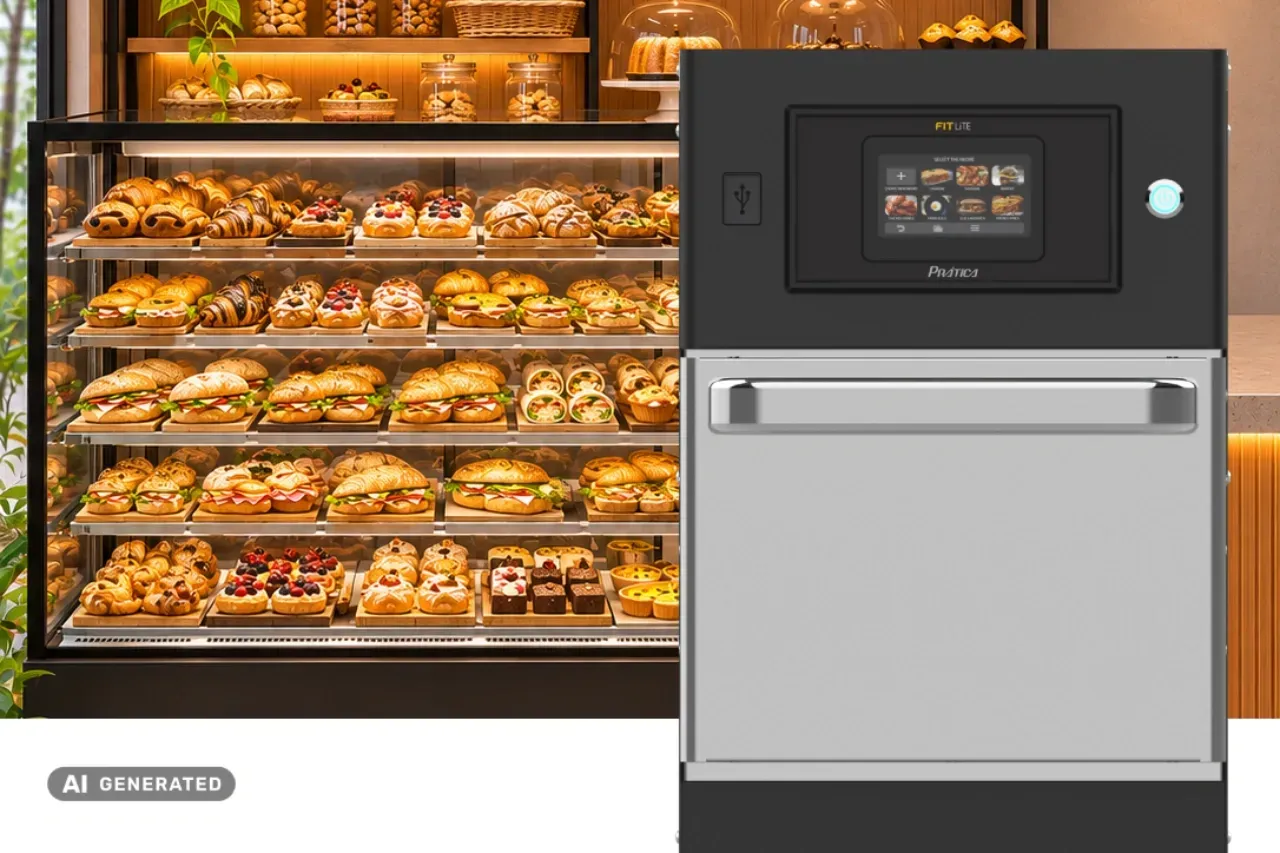
A customer walks into a café just after opening and orders a hot sandwich. The employee apologises: it is not ready yet. The customer leaves without buying anything.
The same situation occurs during busy periods, when popular snacks sell out, or towards closing time, when businesses stop preparing food to avoid leftovers.
But what if the sandwich is already available in chilled or frozen storage? The product exists, yet the business cannot finish it quickly enough to complete the sale.
Speed Ovens help solve this problem by allowing foodservice businesses to finish suitable products on demand, rather than relying entirely on food prepared in advance.
This approach can help cafés, bakeries, petrol stations, convenience stores and hotels maintain a wider selection of hot food throughout the day, even when kitchen space, staffing and demand are limited.
The important distinction is between having food in stock and being able to serve it when customers want to eat.
How Do Speed Ovens Keep Products Available?
In many foodservice establishments, the display counter determines what customers can purchase immediately.
When the last sandwich or savoury pastry disappears from the display, employees must prepare another portion or batch. If this takes too long, the customer may leave.
Speed Ovens allow businesses to organise service differently.
Instead of preparing every product before customers arrive, suitable food can remain chilled or frozen until an order is placed.
The employee retrieves the selected item, places it in the oven and activates its programmed finishing cycle.
The process connects three elements:
- Prepared food: products made in advance by the establishment, a central kitchen or a specialist supplier.
- Controlled storage: suitable chilled or frozen stock maintained under appropriate conditions.
- Rapid finishing: a Speed Oven heats and finishes the product when the customer orders it.
This system allows businesses to respond to actual demand without maintaining every menu item hot throughout the day.
The display becomes a selling tool
Under this model, the display is no longer necessarily the main source of ready-to-serve food.
Its primary role can be to show customers what is available, while refrigerated storage supplies the orders.
A café, for example, might present filled croissants, panini and savoury pastries in a suitable chilled cabinet. Customers choose their preferred products, which are finished immediately before serving.
There is no need to keep every variety in a heated display for extended periods.
Conventional hot holding remains useful for products and businesses where demand is predictable. Both service models can coexist.
How Do Speed Ovens Help at Different Service Times?
Product availability is particularly challenging at the beginning and end of the working day, as well as during unexpected peaks in customer traffic.
At opening: serving customers from the first order
A café may open before its first batch of hot snacks is ready. Customers arriving early have limited choices, even though prepared products are available in storage.
With a Speed Oven, suitable refrigerated items can be finished individually as orders arrive.
A customer requesting a toasted sandwich shortly after opening does not necessarily need to wait for an entire batch to be prepared.
The business can begin serving selected hot foods without completing extensive on-site production first.
During peak hours: responding to unexpected demand
Busy periods can empty displays faster than employees can replenish them.
Speed Ovens help reduce the time between retrieving a prepared product and serving it, allowing staff to respond to additional orders without starting the entire preparation process again.
Programmed cycles also reduce the need for continuous manual attention during heating.
For higher-volume operations, larger chambers, multiple ovens or suitable stacked configurations can increase the number of portions finished within a given period.
Actual throughput depends on product size, cycle duration, chamber capacity and the organisation of service.
Before closing: maintaining choice without overproduction
Businesses often reduce production towards the end of the day to avoid unsold food.
Although this limits waste, it can also leave late customers without the products they want.
On-demand finishing allows suitable stock to remain under controlled refrigeration or freezing until required.
If no customer orders a particular snack, there is no need to complete its final heating cycle.
This can help maintain menu availability closer to closing time without preparing unnecessary portions.
How Do Speed Ovens Finish Food So Quickly?
Speed Ovens combine microwave energy with high-velocity hot air to heat and finish suitable foods in short programmed cycles.
Microwave energy contributes to heating the product, while impinged hot air supports surface heating, browning and crispness.
These technologies work together to produce results that conventional microwave-only heating may not achieve, particularly when the food requires a toasted or crisp exterior.
The outcome depends on the product's composition, weight, dimensions, moisture content and initial temperature.
Can Speed Ovens finish chilled and frozen products?
Yes, provided the food and equipment are suitable for the intended application.
Chilled products generally require shorter cycles because they begin at a higher temperature.
Frozen stock offers additional flexibility when refrigerated quantities are insufficient or demand is difficult to predict.
For example, a product requiring approximately 90 seconds from chilled might take around three minutes from frozen, depending on its characteristics and the validated programme.
These are illustrative times, not standard settings for all foods.
Some products require controlled thawing before finishing. Others can be heated directly from frozen when the recipe and equipment have been tested for that method.
How do programmed recipes help employees?
Compatible Speed Ovens allow businesses to store individual finishing programmes for different menu items.
The touchscreen interfaces can display customised product images, helping employees select the correct recipe.
Once a programme has been tested and validated, staff can reproduce the established heating cycle without manually adjusting the settings for every order.
This simplifies routine service and helps maintain consistent results across shifts.
Employees still need appropriate instruction in food handling, product identification and safe equipment operation.
Can Speed Ovens Help Businesses Offer More Variety?
Maintaining a broad selection of hot food can be difficult when every product must be prepared in advance.
A café offering several types of filled croissants, sandwiches and savoury pastries must estimate demand for each variety.
Preparing too many portions increases the risk of leftovers. Preparing too few means customers may not find what they want.
Speed Ovens allow suitable products to remain in refrigerated or frozen storage until ordered.
This can make it easier to offer different flavours, fillings and portion sizes without keeping every option ready to serve.
Does the food have to be made on site?
No. One of the main advantages of this operating model is the possibility of separating production from final preparation.
Products can be developed and prepared by skilled professionals in dedicated kitchens, production facilities or specialist suppliers.
They can then be distributed under appropriate temperature-controlled conditions and finished at the point of sale.
This does not diminish the value of conventional food preparation, which remains an excellent choice for many establishments.
Instead, it allows businesses to decide where each production stage can be performed most effectively.
For locations without sufficient space for a complete kitchen, this distinction can be particularly important.
Can Speed Ovens Reduce Food Waste and Lost Sales?
Food prepared in advance must be sold within the period in which it maintains the required quality and food safety conditions.
When demand is lower than expected, unsold portions may need to be discarded.
With on-demand finishing, only the products ordered undergo the final heating stage.
Consider a convenience store offering six varieties of savoury snacks. Instead of heating several portions of each variety before customers arrive, employees can retrieve and finish individual products as required.
This reduces the need to predict exactly how many hot portions of each item will sell during a particular period.
It can also help avoid lost sales when a product is absent from the hot display but remains available in suitable storage.
However, a Speed Oven does not eliminate waste automatically. Stock rotation, purchasing quantities, shelf life, temperature control and employee training remain essential.
The benefits depend on the complete system, not simply on installing faster equipment.
For further information, read How Speed Ovens Reduce Food Waste.
Where Can Speed Ovens Improve Product Availability?
The applications vary according to the menu, available facilities and customer demand.
Cafés and bakeries
Speed Ovens can help cafés serve toasted sandwiches, filled croissants, panini and savoury pastries without preparing every portion before opening.
For bakeries, on-demand finishing can complement existing production by keeping selected hot snacks available between baking cycles or during quieter periods.
The model is particularly relevant where customers expect a freshly finished product but the establishment cannot predict which items will sell.
Petrol stations and convenience stores
Customer traffic at petrol stations can fluctuate considerably throughout the day.
A traveller may arrive during a quiet afternoon or late in the evening, when maintaining a full hot food display would generate unnecessary leftovers.
With suitable prepared stock and a Speed Oven, employees can finish sandwiches, sausage rolls, pastries and other snacks when requested.
This helps businesses maintain a hot food offer without relying exclusively on products held ready for sale.
Hotels and accommodation businesses
Hotels may receive requests for hot food outside their restaurant's normal operating hours.
Maintaining a complete kitchen team throughout the night is not feasible for every property.
A suitable selection of prepared meals and snacks, combined with refrigerated storage and rapid finishing equipment, can provide another service option.
This may be useful for late arrivals, early departures and lobby convenience stores, provided the property has appropriate food handling facilities and trained employees.
Kiosks and small retail locations
Compact foodservice outlets often have limited room for preparation and cooking equipment.
Speed Ovens can help these businesses offer selected hot foods without installing all the facilities required for extensive on-site production.
The available electrical supply, oven dimensions, ventilation conditions and expected demand must still be assessed before installation.
How Do You Choose a Speed Oven for Your Business?
Choosing equipment begins with the menu and the number of orders the establishment expects to serve.
A small café working mainly with chilled sandwiches has different requirements from a busy petrol station offering several frozen and refrigerated snacks.
Prática's FIT Line of Speed Ovens includes configurations designed for different foodservice requirements.
FIT Lite, for example, offers a compact configuration for suitable snack-led applications, with a 230 V single-phase electrical supply.
FIT Express is designed for operations requiring greater speed during peak demand, while FIT XL offers a larger chamber for bigger products or multiple portions.
Equipment selection should consider:
- The types, dimensions and starting temperatures of the products.
- The number of portions required during peak periods.
- Available counter space and electrical capacity.
- Storage facilities and the distance between refrigeration and service.
- Recipe programming, employee training and cleaning requirements.
Businesses with particularly high demand may benefit from multiple ovens rather than relying on a single chamber.
The objective is to match finishing capacity to the actual service requirements.
What Makes On-Demand Finishing Successful?
Speed Ovens can make food available quickly, but the quality of the final product begins long before it enters the chamber.
Ingredients, formulation, portion size, production methods, chilling, freezing and storage conditions all influence the result.
Products must be developed and tested for the intended finishing method. A poorly formulated or incorrectly stored food will not automatically improve because it is heated in a Speed Oven.
Food safety also depends on the complete process. Businesses must follow applicable requirements for storage temperatures, shelf life, thawing, handling and final heating, supported by appropriate HACCP-based procedures.
When these elements are properly organised, the equipment becomes part of a reliable system connecting prepared food with customer orders.
From Stored Food to Food Ready to Serve
The challenge for many foodservice businesses is not necessarily producing enough food. It is making the right products available at the moment customers want them.
Conventional preparation remains valuable, but limited kitchen space, staffing constraints and unpredictable demand can make it difficult to prepare every item on site throughout the day.
Speed Ovens provide an alternative by allowing suitable chilled or frozen products to be finished rapidly when ordered.
For cafés, bakeries, petrol stations, hotels and convenience stores, this can mean fewer missed sales, greater menu flexibility and less food prepared unnecessarily in advance.
The equipment works best when supported by appropriate products, controlled storage and well-organised service.
To understand how this model compares with keeping food hot before sale, read Hot Holding vs On-Demand: Food Safety, Quality and Waste.