




Why office canteens are adopting Speed Ovens
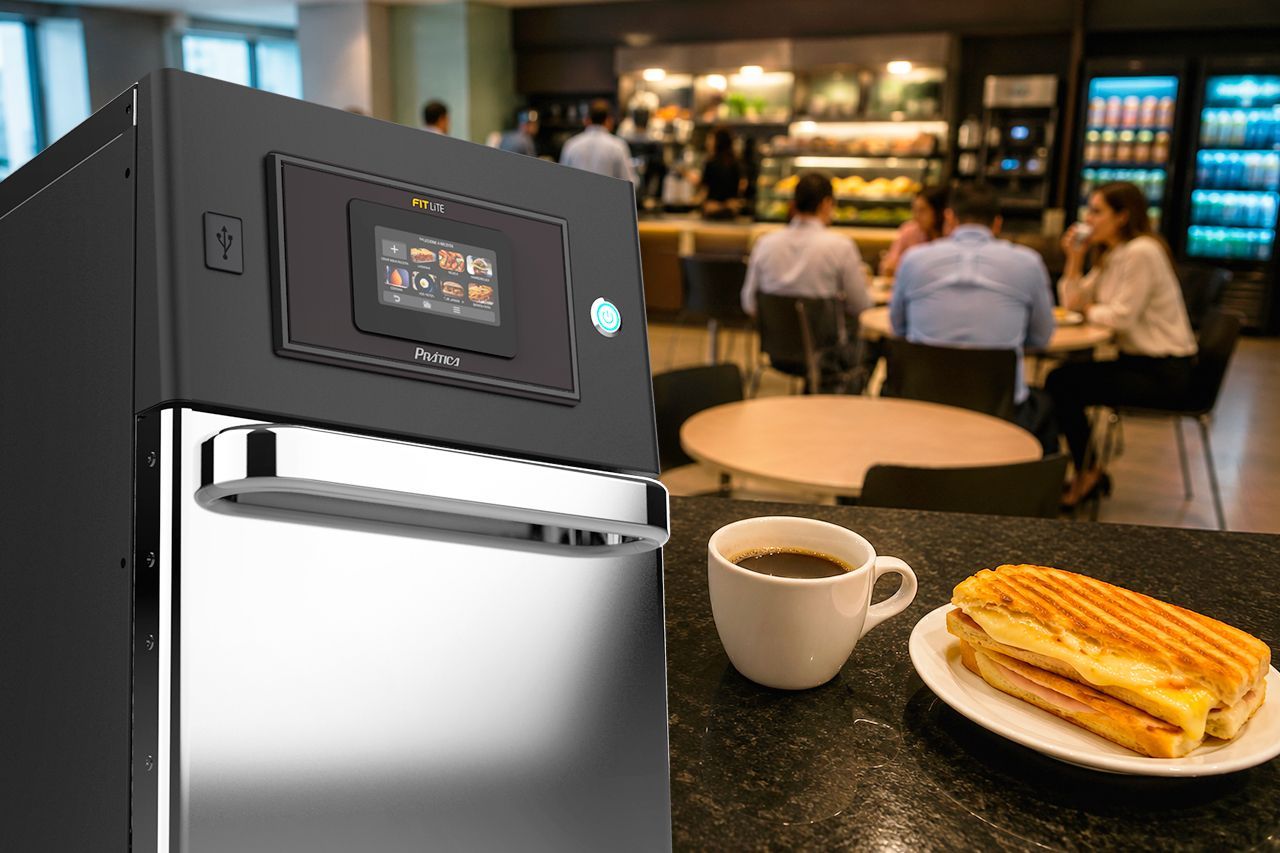
The role of the corporate foodservice is changing.
Traditionally, organisations approached it through scheduled meal periods, often centred on breakfast, lunch or dinner.
Today, many companies are adopting a different approach, creating flexible food hubs that provide access to food throughout the day rather than only at fixed times.
An office canteen is increasingly becoming a workplace convenience food destination where staff can access hot meals, fresh sandwiches, bakery products, snacks and beverages whenever they need them.
These environments support modern working patterns, accommodate changing schedules and help organisations improve the overall employee experience.
This evolution is being driven by changing workforce expectations, hybrid working models, extended operating hours and growing interest in workplace amenities that support wellbeing, productivity and convenience.
At the centre of this transformation is the need to provide quality food quickly, safely and efficiently. This is where Prática Speed Ovens are becoming an increasingly valuable solution.
What is a modern office canteen?
A modern office canteen is a dedicated foodservice area designed to provide convenient access to food and beverages throughout the working day.
Unlike large corporate cafeterias or staff restaurants focused on serving hundreds of meals during specific service periods, these environments prioritise flexibility, accessibility and speed.
People can purchase food whenever required, whether during a mid-morning break, an afternoon meeting, an extended shift or a late working session.
Many modern food hubs combine elements of:
- Workplace convenience food
- Workplace retail
- Office pantry solutions
- Employee refreshment areas
- Self-service food stations
- Convenience food at work
- Workplace snack stations
- Hybrid workplace dining
The result is a more adaptable foodservice model aligned with the realities of contemporary corporate environments.
Why people need access to food beyond traditional meal periods
Most organisations continue to structure daily schedules around conventional meal times.
However, appetite rarely follows a timetable.
Office workers frequently need access to food:
- Between breakfast and lunch
- During the afternoon
- Before commuting home
- During overtime
- During evening shifts
- Before or after meetings
- During intensive project periods
In many situations, individuals are not looking for a full meal.
They simply want a high-quality option that can be obtained quickly without disrupting their day.
This growing demand is accelerating interest in workplace convenience food concepts capable of providing nutritious and satisfying options whenever required.
The hidden challenge of bringing food from home
For many members of the workforce, eating during the day requires considerable planning.
Preparing sandwiches, meals or snacks at home often means dedicating time before or after work to shopping, cooking, packaging and transportation.
This routine may involve:
- Preparing food the night before
- Waking earlier to organise meals
- Carrying containers and insulated bags
- Managing storage throughout the day
- Reheating products using shared equipment
While common, this approach can be inconvenient and restrictive.
It also limits flexibility.
A person may not know in advance whether additional meetings, unexpected tasks or overtime will create the need for extra food later in the day.
Providing convenient on-site food options reduces this dependency while offering greater freedom and convenience.
Why employers face challenges as well
The issue extends beyond individual convenience.
When large numbers of personnel bring food into company facilities, organisations often encounter operational challenges associated with storage, shared amenities and food management.
Pressure on shared facilities
Many offices rely on communal refrigerators, microwaves and kitchen areas.
As occupancy increases, these facilities can become congested, creating queues, limiting available storage and increasing maintenance requirements.
Food safety considerations
Shared food storage environments introduce challenges related to food hygiene, temperature control and food handling practices.
Professionally managed foodservice solutions create a more controlled environment that supports food safety objectives.
Productivity interruptions
When food is unavailable on-site, team members may need to leave the premises to purchase refreshments or meals.
This can increase break times and reduce convenience, particularly when the objective is simply to purchase a sandwich, coffee or light meal.
Beyond vending machines and traditional snack areas
Modern food hubs are very different from the vending machine areas traditionally associated with office foodservice.
Rather than relying primarily on highly processed snacks, sugary products and soft drinks, many organisations are creating environments that offer fresh, nutritious and satisfying alternatives.
These locations may provide:
- Fresh sandwiches
- Paninis
- Wraps
- Protein-rich snacks
- Bakery products
- Soups
- Ready meals
- Salads
- Speciality coffees
- Tea selections
- Hot beverages
- Refreshing cold drinks
The objective is not simply to provide food. It is to support wellbeing, satisfaction and convenience through better choices.
The growth of workplace retail
One of the most significant developments in corporate foodservice is the rise of workplace retail.
Many professionals have limited time available for shopping before or after work.
Commuting schedules, family commitments and demanding workloads can make routine purchases difficult.
As a result, organisations are increasingly bringing retail-style food services directly into company facilities.
A business with 800 people on-site effectively has access to 800 potential customers every day.
Many foodservice businesses would welcome that level of predictable daily demand.
By integrating workplace retail concepts into food hubs, organisations can provide convenient access to food and beverages exactly where demand already exists.
How micro markets are evolving
Micro markets have become increasingly popular within corporate environments.
However, the concept is moving far beyond simple self-service shelves stocked with packaged snacks and soft drinks.
Modern workplace food destinations combine fresh food, hot food, beverage programmes and foodservice technology within a single location.
Available products may include:
- Fresh sandwiches
- Bakery products
- Protein-based meals
- Ready meals
- Premium coffee programmes
- Healthy snacks
- Chilled beverages
- Fresh food prepared on demand
This creates a far more complete solution than a traditional mini market while maintaining speed and convenience.
Self-service food stations support faster service
Self-service food stations are becoming an important element of modern foodservice environments.
People increasingly value the ability to select products, complete payment and continue with their day without waiting for traditional service processes.
Food can be displayed, selected, purchased and consumed quickly, supporting the fast-paced nature of modern business environments.
This model becomes even more effective when combined with technology capable of preparing hot food in minutes.
Understanding unattended retail
Unattended retail is a model in which customers independently select products and complete purchases using automated payment systems.
Within business environments, this creates a convenient and efficient purchasing experience.
However, unattended retail does not eliminate operational management.
Foodservice teams remain responsible for:
- Stock replenishment
- Food preparation
- Sandwich assembly
- Merchandising
- Cleaning
- Food safety procedures
When integrated into modern food hubs, unattended retail systems improve accessibility while maintaining operational oversight.
From office pantry solutions to food destinations
Office pantry solutions have evolved significantly over the past decade.
What was once a simple break room containing a refrigerator, microwave and coffee machine is increasingly becoming a dedicated food destination.
These environments serve:
* Personnel
* Visitors
* Contractors
* Temporary workers
Many combine workplace convenience food, self-service food stations and automated retail systems to create flexible foodservice ecosystems operating throughout the day.
The result is a more complete solution that supports comfort, convenience and operational efficiency.
Employee refreshment areas support wellbeing
Food is only one part of the equation.
Employee refreshment areas also provide spaces where people can pause, recharge, socialise or simply take a short break during demanding working days.
These environments contribute to:
- Employee satisfaction
- Employee engagement
- Staff retention
- Workplace culture
- Team interaction
- Mental wellbeing
- Workplace experience
As organisations compete for talent, amenities that improve daily life are becoming increasingly valuable.
Hybrid workplace dining requires flexibility
Hybrid working models are changing how companies approach foodservice.
Attendance levels may fluctuate significantly throughout the week, making traditional high-volume catering operations less predictable.
This has increased demand for flexible solutions capable of adapting to changing occupancy levels without generating excessive waste.
Hybrid workplace dining concepts benefit from systems that allow food to be prepared only when required.
Why speed matters
One of the defining characteristics of modern food hubs is the need for rapid service.
People using these facilities are often not taking a full meal break. They may simply want a hot sandwich, bakery item or quick meal before returning to their responsibilities.
Waiting ten or fifteen minutes can undermine the convenience these spaces are designed to provide.
Food must therefore be available quickly without compromising quality, consistency or food safety.
Why Speed Ovens are different from conventional microwaves
Many people assume that a Speed Oven is simply a more powerful microwave.
In reality, the technology is fundamentally different.
Conventional microwave ovens primarily use microwave energy to heat food.
While they can warm products relatively quickly, they do little to improve texture, appearance or overall eating quality.
As a result, sandwiches, bakery products and snacks often become soft, unevenly heated or visually unappealing.
Prática Speed Ovens combine microwave and impingement cooking technologies.
Microwave energy rapidly heats food internally while high-speed impingement airflow creates surface browning, crispness and texture.
This means a sandwich can be served hot, toasted and visually appealing rather than simply warmed.
For workplace convenience food operations, this difference is particularly important because people expect food that resembles café-quality preparation rather than reheated products.
Accelerated cooking and rapid food preparation
One of the biggest challenges in modern food destinations is balancing speed and quality.
Domestic microwave ovens commonly found in office environments typically contain a single magnetron and are designed primarily for reheating food.
Prática Speed Ovens use accelerated cooking technology that combines multiple cooking methods to dramatically reduce preparation times.
This allows sandwiches, wraps, paninis, bakery products and ready meals to be prepared in a fraction of the time required by conventional equipment.
For busy organisations, this supports faster service, shorter waiting times and greater convenience.
Ventless technology simplifies installation
A common obstacle when introducing foodservice into business environments is the need for extraction systems.
Traditional cooking equipment often requires hoods, ventilation infrastructure and costly building modifications.
Many Prática Speed Ovens feature ventless technology, allowing operation without conventional extraction systems.
This simplifies installation and expands the number of locations where food preparation can take place.
For office pantry solutions, refreshment hubs and workplace retail concepts, ventless technology helps transform previously unsuitable areas into viable foodservice spaces.
It also reduces complexity, installation costs and operational barriers.
On-demand food preparation reduces waste
One of the most valuable advantages of Speed Ovens is their ability to support on-demand food preparation.
Rather than preparing large batches in advance, products remain safely stored under refrigeration until the moment they are required.
For example, a sandwich can remain chilled in a refrigerator and only be heated, toasted and finished when a customer is ready to consume it.
This approach delivers several benefits:
- Reduced food waste
- Improved food quality
- Better inventory management
- Greater menu flexibility
- Consistent food safety standards
For organisations operating workplace retail concepts, self-service food stations or convenience food hubs, on-demand preparation provides a practical way to offer hot food while avoiding the waste associated with traditional batch production.
Why Prática Speed Ovens are ideal for modern food hubs
Prática Speed Ovens enable organisations to transform compact food points into highly effective foodservice operations.
By supporting fresh food preparation on demand, they allow businesses to move beyond traditional vending machines and basic snack stations.
All while maintaining speed, consistency and operational simplicity.
For organisations seeking to improve wellbeing, enhance amenities and create modern foodservice environments, Speed Ovens provide a practical solution aligned with the evolving role of the office canteen.
The future of office canteens
The future of office canteens is not centred on larger cafeterias or more extensive restaurant operations.
Instead, organisations are increasingly investing in flexible food hubs that combine workplace convenience food, workplace retail, self-service food stations, employee refreshment areas and modern office pantry solutions.
These environments provide convenient access to quality food whenever required while helping employers improve satisfaction, optimise foodservice operations and support food safety objectives.
Prática Speed Ovens play a central role in this evolution by making hot, fresh food available in minutes, helping modern office canteens deliver the speed, flexibility and convenience that today's working environments increasingly demand.
See how petrol stations are using Speed Ovens not just as equipment, but as a business model to increase sales and improve food quality.