




How Speed Ovens improve foodservice in petrol stations
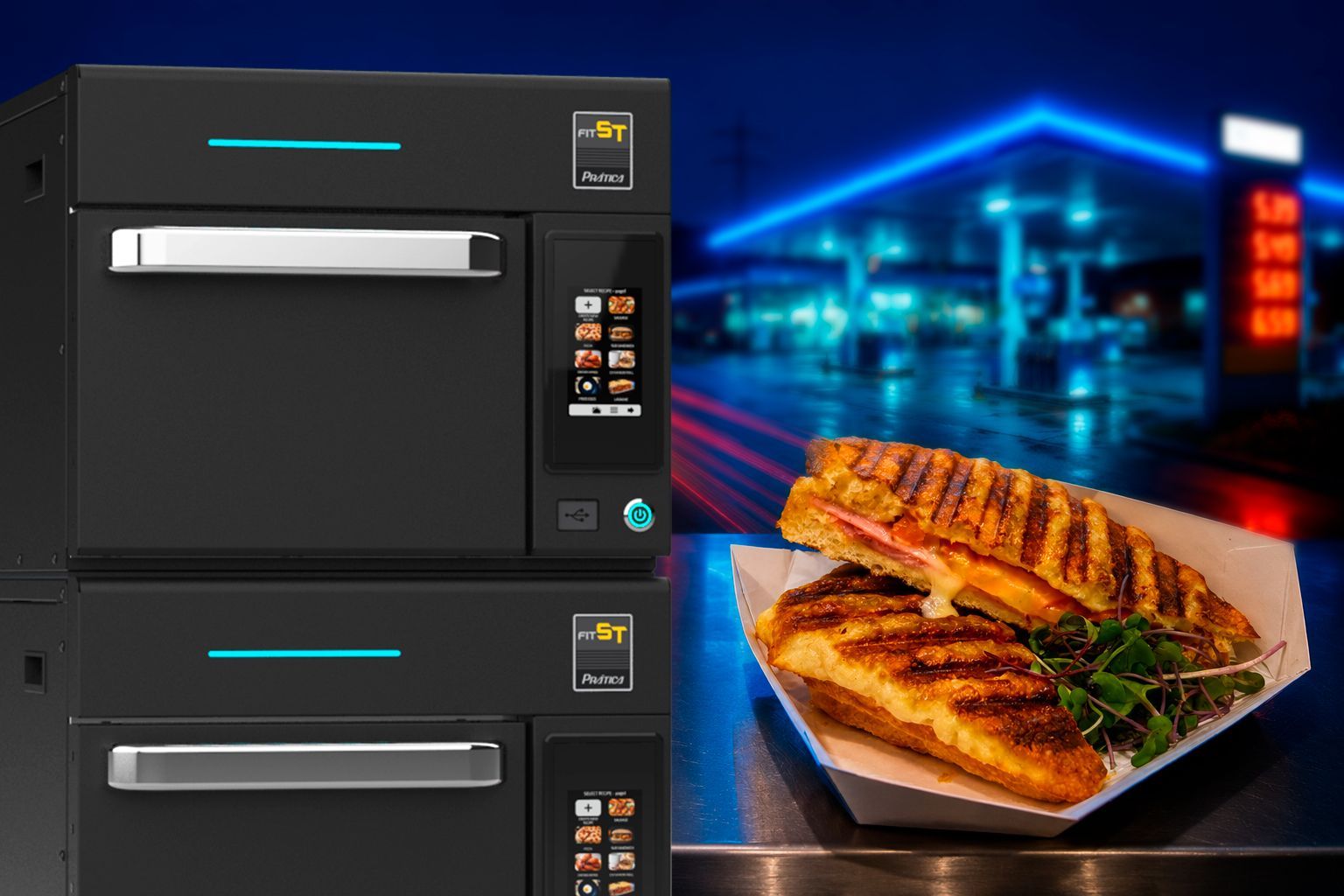
Petrol stations are evolving into multifunctional convenience destinations where mobility, foodservice and retail increasingly operate together.
Across Europe, forecourt operators are expanding their role beyond fuel supply by creating environments designed for quick meals, coffee breaks, grab and go purchases and short travel pauses.
For consumers, stopping at a petrol station is no longer simply a functional activity.
During daily commuting, motorway travel or professional transportation routes, travellers increasingly expect quality food, rapid service, clean environments and dependable convenience solutions.
This transformation is reshaping the operational priorities of petrol station convenience stores.
Foodservice has become one of the most valuable areas of the business, creating opportunities to improve profitability, customer loyalty and average spend while reducing dependence on fuel sales alone.
At the same time, operators face growing pressure to maintain freshness, accelerate service, reduce waste, improve food safety and deliver greater menu variety within compact operational environments.
In this scenario, Speed Ovens are becoming an increasingly relevant solution for modern forecourt foodservice.
Convenience retail is becoming central to petrol stations
Modern petrol stations increasingly integrate convenience retail, bakery products, premium coffee, quick meals, digital purchasing and grab and go solutions within a single environment.
Consumers now expect forecourt locations to support several needs simultaneously, including refuelling, quick food consumption, convenience shopping, mobile connectivity and short recovery breaks during travel.
This behaviour is especially visible in motorway service areas, urban mobility corridors, logistics routes and high traffic metropolitan regions, where time efficiency strongly influences consumer decisions.
As convenience retail becomes more competitive, foodservice quality increasingly shapes customer perception and repeat visits.
Consumers now expect freshness, quality and speed
The perception of petrol station foodservice has changed significantly in recent years.
Travellers no longer accept poor quality travel food as standard.
Instead, convenience operations are now compared directly with cafés, bakeries, quick service restaurants and premium urban convenience stores.
Consumers increasingly expect food that is hot, freshly prepared, visually appealing and available throughout the day.
They also value high quality coffee, healthy alternatives, fast service and hygienic environments that transmit confidence during travel.
Convenience remains essential, but quality perception now plays an equally important role in customer satisfaction.
The operational difficulties many stations still face
Despite the evolution of the sector, many petrol station convenience stores continue to face operational limitations that affect customer perception and profitability.
Consumers frequently encounter cold snacks, dry bakery items, inconsistent regeneration, products exposed too long in heated displays and limited menu variety.
Long queues during peak traffic periods also remain a common frustration.
Products that appear overheated, visually tired or inconsistent in texture immediately reduce trust in the operation.
At the same time, operators often struggle with unpredictable demand, labour shortages, high staff turnover, food waste and limited kitchen infrastructure.
Maintaining operational consistency across multiple shifts, particularly in 24 hour environments, creates additional complexity for forecourt operators trying to balance speed, freshness and efficiency.
Why preparation speed matters in travel convenience foodservice
Consumers stopping during journeys usually want fast and predictable service. In motorway environments and high traffic forecourt locations, purchase decisions often happen within seconds.
Travellers typically prioritise short queues, immediate product availability and food that can be consumed easily while continuing their journey.
If preparation takes too long or products appear compromised, many customers simply leave without purchasing.
This places increasing pressure on operators to deliver fast service without sacrificing food quality, freshness or food safety standards.
How Speed Ovens support modern forecourt operations
Speed Ovens combine accelerated cooking and regeneration technologies capable of preparing food rapidly while maintaining consistency and product quality.
For petrol station convenience stores, this creates important operational advantages.
The technology supports compact kitchens, simplified workflows, rapid regeneration and flexible menu execution within high turnover environments.
This becomes particularly valuable in operations managing continuous customer flow, multiple dayparts, extended operating hours and small service teams.
Faster service during peak traffic periods
Traffic flow at petrol stations can fluctuate considerably depending on commuting patterns, weekends, holidays, motorway congestion and seasonal travel periods.
During busy hours, operational speed becomes critical.
Speed Ovens allow rapid preparation of sandwiches, pizzas, pastries, breakfast items, savoury snacks and grab and go meals without compromising serving consistency.
This helps improve customer flow while reducing waiting times during high demand periods. For travellers, faster service directly improves convenience and overall perception of the stop.
Fresher products with reduced holding time
Freshness perception remains one of the most important elements in convenience foodservice.
Consumers are increasingly sensitive to products that appear dry, overheated or excessively held inside heated displays.
Traditional hot holding methods can negatively affect texture, moisture retention, appearance and serving temperature, particularly during long operating hours.
Speed Ovens allow operators to prepare products closer to the moment of purchase.
This approach improves freshness perception, serving consistency and visual appeal while helping maintain crisp textures and more attractive presentation.
Instead of relying heavily on prolonged display exposure, operators can work with smaller production cycles and faster regeneration according to actual demand.
Reduced food waste and improved operational efficiency
Food waste continues to be one of the biggest operational challenges in convenience foodservice.
Demand at petrol stations often changes according to traffic flow, weather conditions, location, seasonality and time of day.
As a result, overproduction frequently generates expired inventory, disposal losses and unnecessary operational costs.
Speed Ovens support more flexible on demand preparation, allowing operators to align production more closely with real consumption flow.
This contributes to lower waste levels, improved inventory control and better profitability management.
The operational benefits also extend to labour efficiency, since teams can work with simplified preparation routines, reduced manual handling and more predictable workflows.
Greater menu flexibility in compact kitchens
Many petrol station foodservice operations work within limited physical space, making traditional kitchen structures difficult to implement efficiently.
Conventional cooking systems often require multiple appliances, larger preparation areas and extensive ventilation infrastructure. Speed Ovens help simplify kitchen layouts while supporting broader menu offerings.
This creates opportunities to serve hot sandwiches, breakfast products, pizzas, bakery items, desserts and healthier grab and go alternatives throughout the day without significantly increasing operational complexity.
Menu diversification has become increasingly important as consumers expect convenience stores to offer broader food choices comparable to urban foodservice environments.
The Brazilian petrol station model powered by Speed Ovens
Brazil has one of the world’s largest road networks
One of the most interesting examples of this transformation can be seen in Brazil, where petrol station chains have invested heavily in Speed Oven technology to modernise roadside foodservice operations.
Brazil has one of the world’s largest road networks, with approximately 1.7 million kilometres of roads and highways connecting urban centres, logistics corridors and long distance travel routes.
This extensive mobility infrastructure created strong demand for petrol stations capable of offering fast, reliable and attractive foodservice solutions for travellers.
Frozen-to-fresh systems are transforming convenience operations
To improve operational efficiency and food quality, many Brazilian forecourt operators adopted frozen-to-fresh systems supported by Speed Ovens.
In this model, products arrive frozen at the convenience store, are transferred to refrigerated storage and then regenerated on demand according to customer orders.
This approach allows operators to serve food that remains hot, crispy, freshly prepared and visually appealing while maintaining food safety standards.
Instead of exposing products for extended periods in heated displays, operators can prepare food closer to the moment of consumption, improving freshness perception while significantly reducing waste and operational losses.
Speed Ovens support broader menu variety
The Brazilian market also demonstrates how Speed Ovens support broader menu variety within compact convenience environments.
Unlike many European forecourt operations that focus heavily on sandwiches and bakery products, Brazilian petrol station stores frequently serve savoury snacks prepared with cooked doughs, baked products, fried specialities and breaded items with different fillings.
These products are particularly suitable for frozen distribution and rapid regeneration because they maintain texture, flavour and consistency extremely well when prepared in Speed Ovens.
Coxinha became a successful petrol station snack
One of the most successful examples is the “coxinha”, one of Brazil’s most iconic savoury snacks.
Prepared with cooked wheat flour dough, filled with shredded chicken, breaded and fried, the product has a shape visually similar to the Italian arancina.
Its portability, strong flavour profile and ease of consumption made it extremely successful in Brazilian petrol station convenience stores.
When regenerated in Speed Ovens, products such as coxinhas maintain crispy exterior texture, hot filling temperature and consistent serving quality while allowing extremely fast preparation times.
Brazil demonstrates the future of roadside foodservice
The Brazilian example demonstrates how petrol station foodservice can evolve from basic convenience retail into a profitable and modern travel foodservice operation supported by operational consistency, regeneration technology and accelerated cooking systems.
Improved consistency across shifts and locations
Many forecourt convenience operations function 24 hours a day and experience frequent staff rotation, making consistency difficult to maintain.
Programmable Speed Ovens help standardise preparation processes and improve repeatability between shifts, teams and locations.
This contributes to more predictable product quality, serving consistency and operational reliability.
For chain operations and franchise convenience models, consistency directly influences customer confidence and long term brand perception.
Supporting food safety in high turnover operations
Food safety remains a critical priority in all convenience foodservice environments.
Travelling consumers increasingly pay attention to product temperature, hygiene, freshness and overall cleanliness.
Any perception of poor food handling can immediately damage trust in the operation.
Speed Ovens can support food safety management through controlled regeneration cycles, consistent heating performance and standardised preparation routines that reduce excessive handling during service.
This contributes to safer operational processes and greater confidence for consumers stopping during travel.
Simplifying operations for convenience teams
Labour shortages continue affecting foodservice businesses throughout Europe, particularly in high turnover convenience environments.
Petrol station operators increasingly require equipment capable of simplifying workflows while supporting continuous service throughout the day and night.
Speed Ovens help teams operate with simplified preparation routines, fewer manual processes and easier training requirements.
This becomes especially relevant in overnight operations, compact service environments and high traffic forecourt locations where speed and consistency are essential.
Premium convenience is shaping the future of forecourt retail
The convenience sector continues moving toward more premium foodservice positioning.
Consumers increasingly expect specialty coffee, fresh bakery products, healthier snacks and attractive grab and go solutions within modern convenience environments.
Petrol stations capable of delivering dependable food quality can improve customer loyalty, repeat visits, foodservice revenue and average transaction value.
Speed Ovens help operators support these expectations while maintaining agile, efficient and space optimised operations.
The future of petrol station foodservice
Petrol stations are becoming increasingly integrated into modern mobility ecosystems where convenience, retail and foodservice operate together.
Alongside fuel supply, consumers now expect rapid foodservice, quality coffee, convenience retail and efficient purchasing experiences that support modern travel behaviour.
Foodservice now plays a strategic role within the evolution of forecourt operations.
Operators capable of combining freshness, speed, food safety, operational efficiency and menu flexibility will be better positioned to meet the expectations of modern travellers.
Speed Ovens support this transformation by helping petrol station convenience stores improve preparation speed, freshness perception, operational consistency, menu execution, waste reduction and overall profitability.
FAQ
Why are Speed Ovens suitable for petrol station convenience stores?
Speed Ovens help convenience operators prepare food quickly while maintaining quality and consistency in compact, high turnover environments.
How do Speed Ovens help reduce food waste?
The equipment supports on demand preparation, reducing excessive holding times and helping operators produce according to actual consumption flow.
Can Speed Ovens improve food safety?
Yes. Controlled regeneration cycles and standardised preparation routines help improve temperature consistency and reduce excessive handling.
What products can petrol stations prepare with Speed Ovens?
Common applications include sandwiches, bakery items, pizzas, savoury snacks, breakfast products and grab and go meals.
Are Speed Ovens suitable for 24 hour operations?
Yes. Speed Ovens support simplified workflows and rapid preparation, making them suitable for continuous convenience foodservice operations.
How do Speed Ovens improve customer experience?
They help reduce waiting times, improve food freshness and support more consistent product quality during busy travel periods.
See also our article on how paninis prepared in Speed Ovens deliver superior results.