




How Speed Ovens Create Perfect Browning
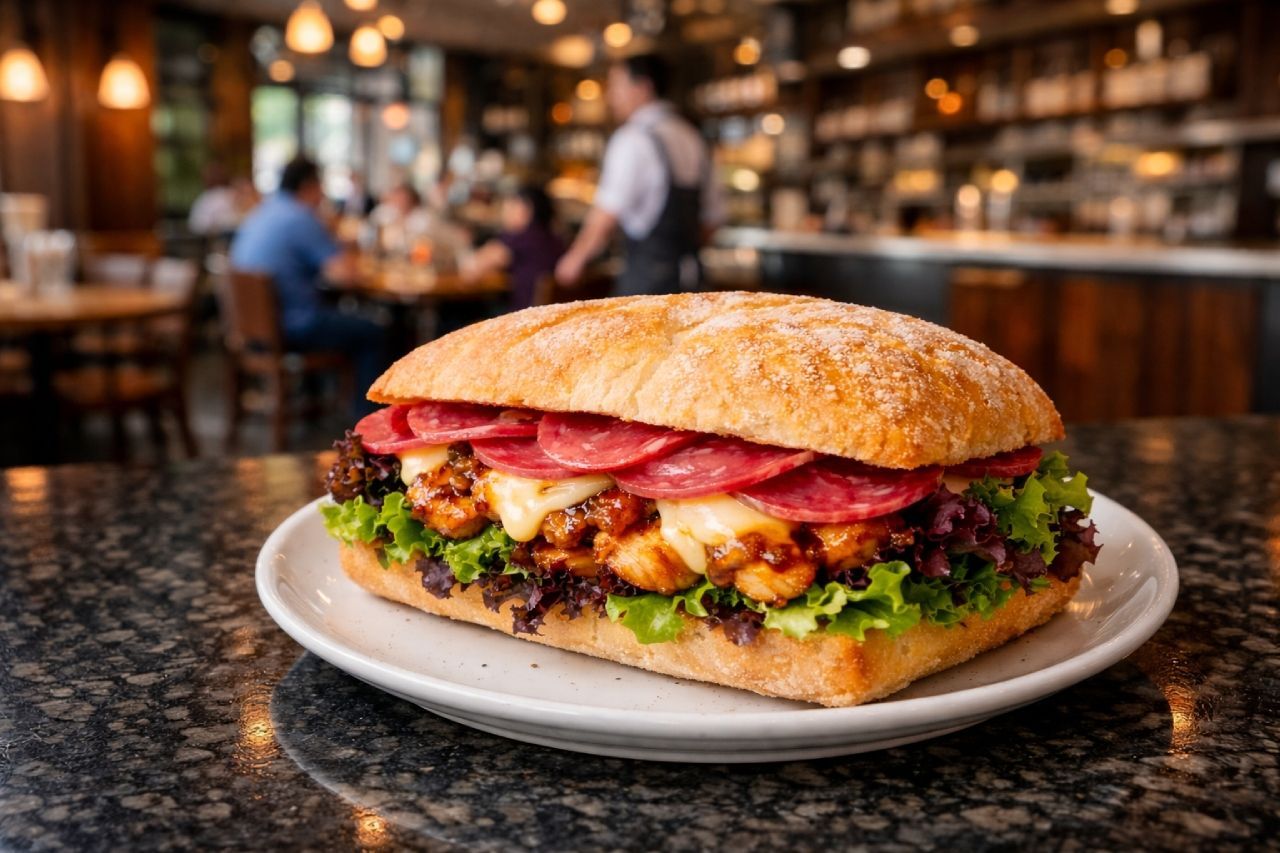
In foodservice, customers judge with their eyes first.
Golden crusts, caramelised tops and crisp edges suggest freshness and flavour.
Pale bread or colourless gratins rarely attract attention or stimulate appetite.
For operators, achieving consistent browning often requires time, space and several pieces of equipment.
Convection ovens, grills and salamanders each perform different tasks.
Together, they demand ventilation, infrastructure and trained staff.
Air impingement cooking offers a faster and more controlled solution.
What Is Air Impingement Cooking?
Air impingement cooking uses high-velocity jets of hot air directed onto the surface of food.
Instead of circulating heat passively, the system concentrates airflow exactly where it is needed.
This accelerates surface reactions such as the Maillard reaction and caramelisation.
These reactions create:
- Golden colour
- Crisp crust formation
- Light surface dehydration
- Aromatic flavour notes
In standard convection ovens, hot air moves around the cavity. In air impingement ovens, airflow is focused and direct.
This improves heat transfer at the surface and speeds up browning.
In Prática’s Speed Ovens, impinged air works together with microwave energy.
The microwave heats the interior of the product.
At the same time, impinged air develops colour and texture on the outside.
Heating and browning happen simultaneously.
This is the key difference between commercial air impingement ovens and domestic appliances.
Why Colour and Texture Drive Sales
Visual appeal influences buying decisions.
In retail bakeries, cafés and supermarket delis, appearance often determines whether a product is selected.
For example:
- A well-coloured croissant suggests flakiness and butter content.
- A gratinated lasagne looks rich and satisfying.
- A properly toasted sandwich signals warmth and freshness.
By contrast, pale products may seem undercooked or reheated, even when food safety standards are met.
For this reason, colour control should form part of quality management in modern Food-to-Go operations across the United Kingdom and Europe.
Precision Control from 10% to 100%
Prática’s Speed Ovens allow adjustable impinged air flow, typically from 10% to 100%.
This gives operators precise control over:
- Level of browning
- Surface crispiness
- Crunch development
- Gratin finishes
If a product lacks colour, airflow or time can be increased.
If the surface browns too quickly, parameters can be reduced.
Microwave power can also be adjusted to balance internal heating and external finish.
This control turns browning into a repeatable process rather than a variable result.
With IoK connectivity, recipes can be updated remotely using a mobile device, tablet or desktop.
For multi-unit businesses, this ensures visual consistency across locations.
Settings can be managed centrally and applied instantly.
Why Conventional Microwaves Do Not Brown Food
Domestic microwave ovens heat food by exciting water molecules.
This process warms the interior efficiently but does not create the dry surface heat required for browning.
As a result:
- Surfaces remain pale
- Texture stays soft
- Colour development is limited
Most domestic microwaves also use a single magnetron, which can lead to uneven heating.
Prática’s Speed Ovens combine dual magnetron systems with impinged air technology.
The interior heats while the exterior browns at the same time.
This reduces service time while improving visual quality.
Restoring Crispiness in Displayed Products
Fresh bread has an appealing crust when it leaves the oven.
Over time, exposure to ambient humidity reduces crispiness in display cabinets.
Impinged air finishing cycles can restore crust texture within seconds without drying the centre.
This works well for:
- Artisan breads
- Baguettes
- Croissants
- Savoury pastries
- Filled bakery items
The result is improved freshness perception and reduced waste during busy trading periods.
Applications Beyond Sandwiches
Air impingement cooking supports a wide range of menu items, not only toasted sandwiches.
Examples include:
- Toasts with even caramelisation
- Lasagne with a gratinated top and hot core
- Wholegrain pasta dishes with improved surface finish
- Savoury snacks with crisp exteriors
- Bakery products requiring revitalisation
In compact kitchens or front-of-store setups, one ventless Speed Oven can replace several traditional appliances.
Operational Efficiency in Food-to-Go Environments
In the UK Food-to-Go sector, equipment must be compact, reliable and easy to use. It must also comply with ventilation and safety requirements.
Air impingement ovens meet these needs by combining heating and browning in one controlled process.
This simplifies workflow and reduces preparation time.
Serving hot, well-coloured products in seconds increases throughput and shortens queues.
In competitive high-street locations, speed and visual quality influence repeat visits.
The Science Behind Faster Browning
The Maillard reaction begins at surface temperatures of around 140°C to 165°C.
To reach these temperatures quickly, food needs dry heat and efficient energy transfer.
Impinged air delivers focused hot airflow directly onto the surface.
This removes moisture and speeds up colour development.
When combined with microwave heating inside the product, cooking time decreases significantly.
The process becomes controlled and predictable.
Standardisation Across Multiple Locations
For chain operators, consistency is essential.
Customers expect the same appearance in every branch.
Programmable recipes and IoK integration allow air impingement settings to be standardised across sites.
Airflow, microwave power and time can be controlled centrally.
This reduces variation caused by staff turnover and supports brand consistency.
Air Impingement vs Convection Ovens
Both technologies use hot air, but their performance differs.
Convection ovens circulate hot air around the cavity.
Air impingement ovens direct concentrated jets onto the product surface.
This results in:
- Faster browning
- Improved crisping
- Shorter cooking cycles
For operators evaluating commercial Speed Ovens, understanding this distinction is important.
A Commercial Advantage
In competitive markets, visual differentiation matters.
Golden, crisp products stand out next to pale reheated alternatives.
Prática’s FIT Line Speed Ovens combine:
- Adjustable impinged air flow
- Dual magnetron heating
- Ventless design
- IoK connectivity
- Compact footprint
This integration allows operators to control colour, texture and service time within a single unit.
For foodservice entrepreneurs, air impingement technology turns browning into a fast, consistent and scalable capability.
Complex recipes do not guarantee better results in Speed Ovens. Simpler programming often delivers faster, more consistent performance.