




Why Efficiency Beats Recipes in Modern Foodservice
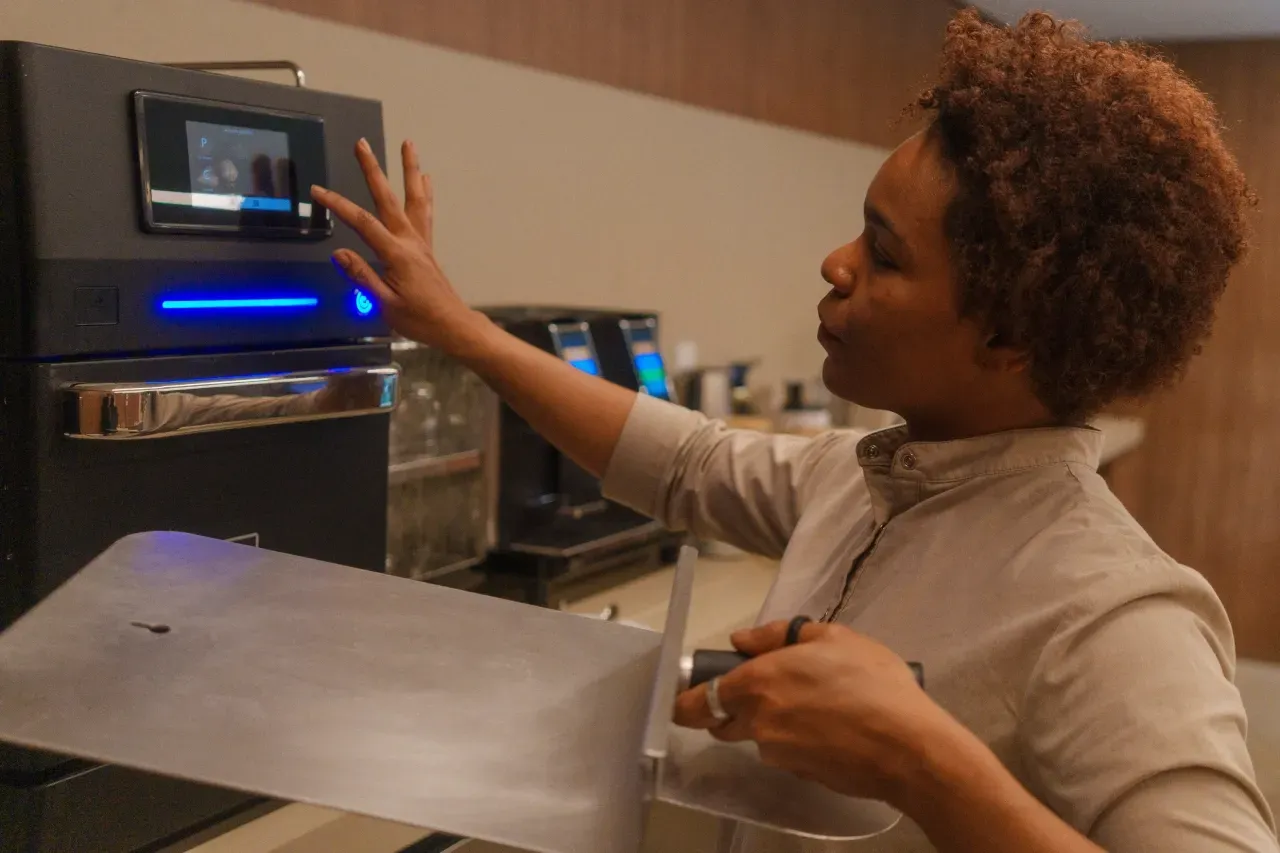
Being fast, accessible, convenient, and consistent is what truly sets a business apart in today’s foodservice market.
A good recipe is not necessarily complex, time-consuming, or made with intricate steps.
Often, a simpler and smarter approach delivers better results—and sells better.
The same logic applies to Speed Ovens.
These ovens combine microwave and impinged air technologies, enabling countless culinary possibilities.
Yet, when designing or adjusting a preparation, it is vital to consider the total preparation time and the amount of product handling involved.
Every extra step—moving items, changing accessories, or manipulating ingredients—adds time and complexity.
Think better, think faster: the less you handle the product, the faster and more consistent your service will become.
This reduces operational errors, ensures repeatable results, and helps maintain quality standards across shifts and locations.
Efficiency Over Complexity
Complex recipes do not necessarily create better products.
In fact, simplicity often aligns better with customer expectations.
Across Europe, it is common to see long queues forming for a simple sandwich, even though a similar or superior product might be available elsewhere—faster, more accessible, and with better cost-benefit balance.
When customers wait too long for an ordinary product, they will eventually leave, and sales are lost.
On the other hand, an excellent product may be overpriced or take too long to prepare, discouraging return visits.
A more strategic approach involves simplifying operations and locating your business where convenience drives sales.
Products that are faster to prepare, easy to handle, wrap, transport, and consume tend to sell more efficiently and generate better margins.
Traditional preparation methods also introduce inconsistency.
Quality may vary depending on who prepares the food, differences in temperature, grilling technique, or handling. Speed Ovens eliminate these deviations by standardising recipes, times, and power settings, ensuring the same quality every time—regardless of the operator’s experience.
Beyond Recipes: Understanding the Technology
One of the most common mistakes when adopting a Speed Oven is focusing too much on recipes and not enough on understanding how the technology actually works.
Once operators understand how microwave and impinged air interact with different ingredients, they can adjust parameters to achieve ideal texture, colour, and moisture balance—creating better results than merely following a pre-set formula.
Microwaves heat food from the inside out, and ingredients absorb this energy differently depending on their composition.
Impinged air, on the other hand, promotes crispness and colour on the surface. High sugar levels, for instance, accelerate browning and can lead to burning if not carefully managed. Dense or thick items require longer cooking times, while pre-cooked, pre-fried, or chilled products speed up service significantly.
Understanding these principles allows professionals to design recipes more effectively, reducing trial and error and ensuring consistent results across all units.
The Creative Process
Creativity plays a central role in product development with Speed Ovens.
These ovens are a means to an end—a tool that turns ideas into results. To unlock their potential, experimentation is essential.
Assemble your product, create a test recipe based on the desired heating and browning levels, and evaluate the outcome.
Use a professional stick thermometer to check the core temperature after cooking and adjust settings accordingly.
Developing new recipes alongside your team not only improves results but also builds technical understanding within your operation.
Avoid relying solely on generic recipes found online. Instead, tailor your own configurations, leveraging your product knowledge and the equipment’s full capabilities.
You can also photograph your finished products and upload the images directly to your Prática Speed Oven interface, organising recipes in visual groups for intuitive access.
Remote Management with IoK
Prática’s IoK (Internet of Kitchen) platform makes this process even simpler.
Available online and free of charge for the Speed Oven line, IoK allows users to upload, edit, organise, and manage recipes remotely from any device—without needing to be physically near the oven.
Once connected to Wi-Fi, recipes can be synchronised directly with your equipment.
You can create a new preparation from your desktop, tablet, or smartphone and have your team test it in-store immediately.
For multi-site or franchised operations, this technology is invaluable.
It centralises recipe management, ensures product consistency across all units, and enables faster innovation cycles without disrupting day-to-day operations.
Efficiency Wins: Turning Ideas into Consistent Results
In foodservice, success depends on how efficiently you transform good ideas into consistent products.
Recipes matter—but operational intelligence, speed, and standardisation matter even more.
By understanding your Speed Oven’s technology, minimising unnecessary steps, and using connectivity tools like IoK, your business gains what truly counts: agility, reliability, and repeatable quality across every location and every shift.