




European Foodservice Growth and Speed Ovens
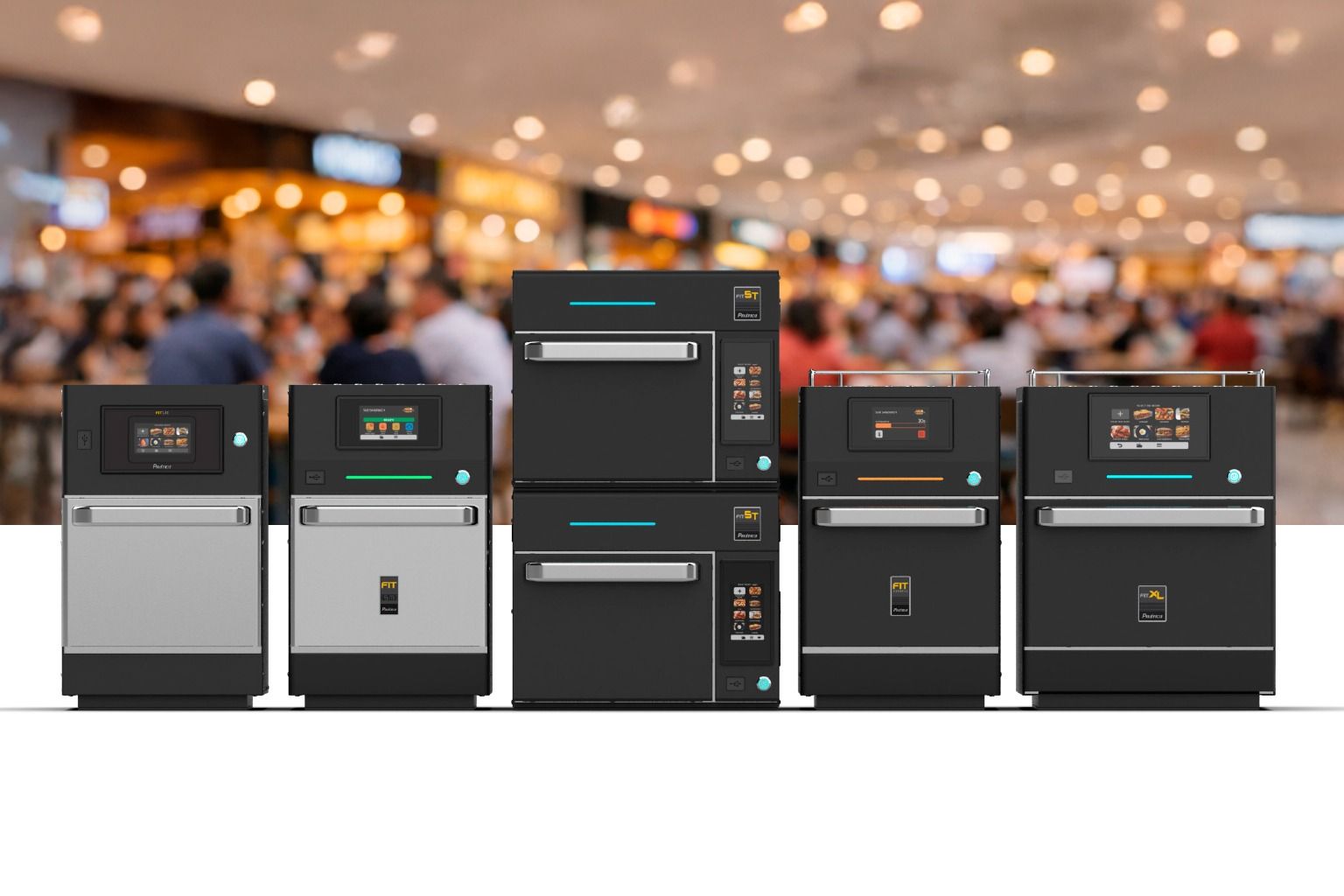
The European foodservice market is back in the spotlight.
It is one of the few sectors where demand can multiply several times within a single day.
Breakfast, lunch, dinner and snacks create recurring consumption cycles that no other retail segment can replicate at the same scale.
Even when consumption patterns shift between eating out and eating at home, foodservice continues to expand its reach.
Ready meals, chilled and frozen solutions, takeaway and delivery platforms blur the line between domestic kitchens and professional operations.
In practical terms, foodservice is no longer limited to restaurant dining rooms. It is present wherever food is prepared for immediate consumption.
This structural dynamic helps explain why analysts continue to project strong expansion across Europe.
Market size confirms structural expansion
Recent industry reports show that the European foodservice market is already worth hundreds of billions of dollars and is expected to grow steadily over the coming years.
According to Mordor Intelligence, the European market is projected to reach approximately USD 1.04 trillion in 2026 and grow to USD 1.61 trillion by 2031, at around 9 percent annually between 2026 and 2031.
Another projection from Fortune Business Insights places the market at around USD 715 billion in 2025, with expectations to rise to USD 1.13 trillion by 2032, growing at roughly 6.7 percent per year between 2025 and 2032.
Technavio estimates growth of about 5.8 percent annually between 2024 and 2029, representing an expansion of more than USD 247 billion over that period.
Other consultancies forecast annual growth close to 5 percent between 2026 and 2032, despite local economic pressures .
Although figures vary depending on methodology and scope, the overall direction is clear.
The sector is expanding and remains one of the most dynamic segments in European economies.
For operators, growth is not just about opportunity.
It also means operational pressure.
Digital adoption and off-premises growth
One of the key drivers behind this expansion is the increased adoption of digital services and delivery platforms.
Reports highlight the acceleration of delivery, takeaway and platform-based ordering as structural growth drivers .
The classical image of dining in a restaurant still holds strong appeal in European markets.
Yet food consumption now extends well beyond physical dining rooms.
Consumers order from home, from the office and from public spaces.
The off-premises segment continues to gain relevance, reshaping kitchen workflows and production logic.
In this context, speed, consistency and operational simplicity become decisive.
How Speed Ovens address these demands
By combining impinged air and microwave technology, they deliver rapid cooking cycles with controlled browning and crispness.
This enables operators to maintain quality standards while reducing preparation time, a critical factor in delivery environments where speed influences customer satisfaction and repeat orders.
Moreover, programmable recipes and digital connectivity through IoK allow centralised control across units.
For chains and multi-site operators, this supports standardisation and operational security, especially in markets experiencing high staff turnover.
Convenience, experience and visual appeal
Another strong growth driver is the preference for convenience and eating out, particularly among urban consumers and younger generations.
Eating out is no longer only about avoiding cooking at home.
It is about enjoyment, social interaction and visual appeal.
Social media trends amplify the demand for products with texture, colour and strong presentation value.
Consumers expect hot, crispy and well-finished items, even in fast or takeaway formats.
How Speed Ovens contribute to this expectation
- Crisp and crunchy surfaces through impinged air
- Uniform colouring and browning
- Rapid regeneration of chilled products
- Consistency across shifts and operators
For businesses, this means fewer quality variations and reduced dependence on highly specialised labour.
The result is an operational model aligned with both efficiency and customer expectations.
Diversification of formats and space constraints
The expansion of cloud kitchens, independent operators and quick-service chains is another defining characteristic of current growth.
Foodservice today resembles a network rather than a single format.
Traditional table service coexists with compact urban kitchens, supermarket delis, travel hubs and hybrid retail environments.
Many of these spaces face strict installation constraints, ventilation requirements and limited square metres.
Where do Speed Ovens enter?
Speed Ovens support this diversification by offering:
- Compact footprints
- Ventless operation with catalytic filtration
- Plug and play installation
- Stackable configurations
- Reduced reliance on multiple pieces of equipment
In practical terms, they allow operators to introduce hot food menus in locations where conventional ovens, grills or gas equipment would be impractical or financially unviable.
Even in established restaurants, a Speed Oven can relieve bottlenecks.
Finishing dishes that would otherwise occupy combi ovens, stoves or grills helps optimise workflow during peak hours.
This is particularly relevant in high-growth environments where demand spikes several times a day.
Tourism, mobility and peak demand pressure
Tourism remains a powerful force across Europe.
Popular destinations often experience intense seasonal peaks, creating operational strain on restaurants and quick-service outlets.
Traditional European dining settings continue to attract visitors.
However, the influx of tourists frequently exceeds seating capacity and kitchen throughput.
Missed service speed can translate into lost revenue.
How front-of-house installation of compact Speed Ovens may help
- Offer hot snacks and fast-finished items near the service counter
- Reduce queue times
- Increase turnover without expanding physical space
- Capture impulse sales during high traffic periods
When growth translates into volume concentration within limited time windows, operational agility becomes essential.
From growth figures to operational capability
Market projections highlight a clear upward trajectory for European foodservice.
Whether annual growth is 5 percent or close to 9 percent, the sector is expanding in value, complexity and consumer expectation.
However, growth alone does not guarantee profitability. Operators must convert demand into efficient output.
Speed Ovens supporting this transition
They combine:
- Fast cooking cycles
- Energy-efficient operation
- Consistent results
- Digital connectivity for standardisation
- Space optimisation
As foodservice continues to multiply its touchpoints across dine-in, takeaway, delivery and hybrid retail formats, equipment that adapts to these realities becomes a strategic asset.
The spotlight on European foodservice is not only about revenue forecasts. It is about readiness.
Operators who align technology with market direction will be better positioned to respond to rising demand, evolving formats and increasingly demanding consumers.
In a market that can multiply its demand several times a day, operational precision is not optional. It is a competitive necessity.