




Speed Ovens for Piadina and Flatbread Sandwiches
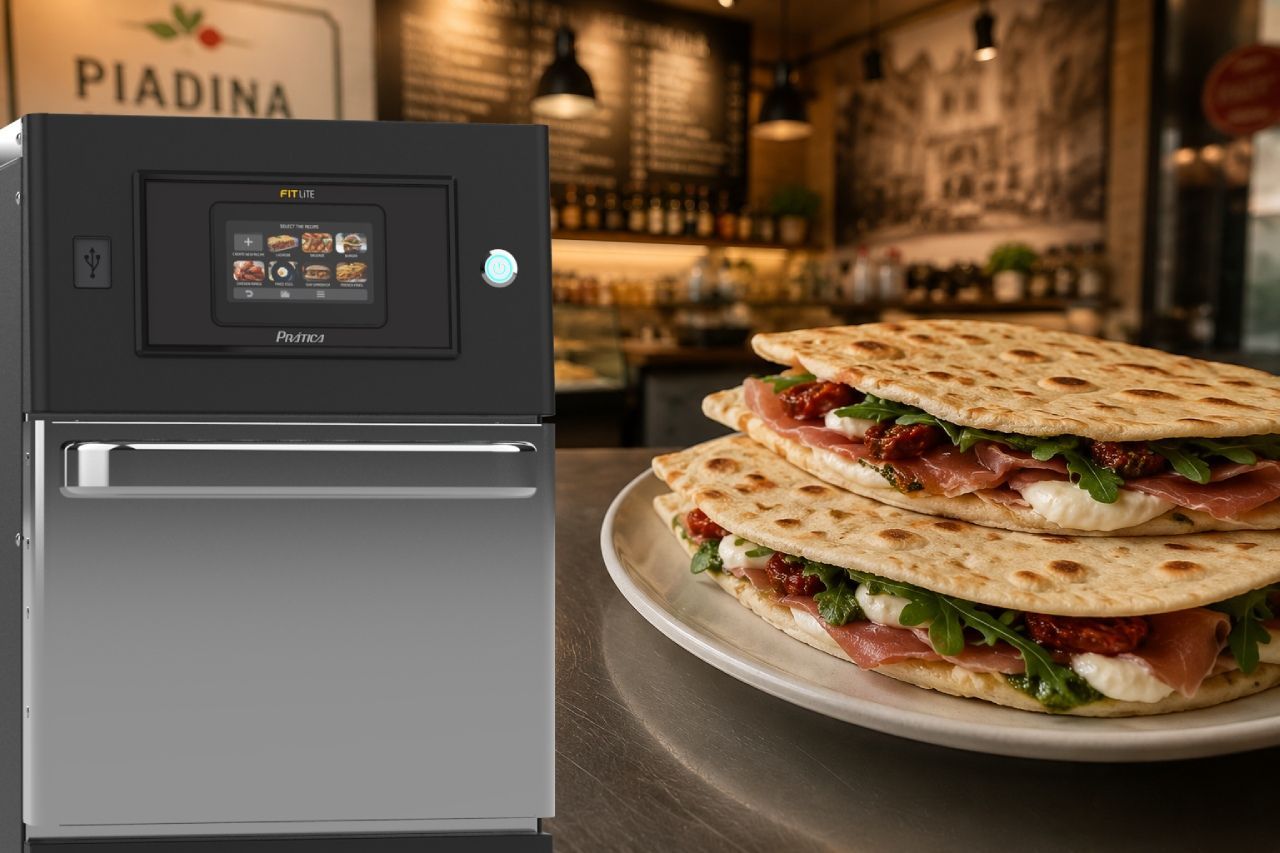
Piadina has become increasingly popular in foodservice for its versatility, balanced flavour profile and adaptability across different menu concepts.
Soft, light and easy to customise, it works well with a wide variety of fillings, from traditional Italian combinations to contemporary grab-and-go options.
Served warm, piadina delivers a combination of crisp exterior texture and soft interior consistency that appeals across cafés, bakeries, convenience stores and quick service operations. Its compact format also makes it suitable for takeaway service and fast-paced preparation environments.
Alongside wraps, tortillas and other flatbread sandwiches, piadina offers operators an efficient way to serve freshly finished products with strong visual appeal and reliable serving quality.
Its structure also responds particularly well to accelerated cooking technologies, allowing sandwiches to be heated rapidly while maintaining texture, aroma and filling integrity.
In this context, Speed Ovens transform an already versatile product into an even more efficient solution for modern foodservice operations.
By combining controlled heating, rapid finishing and repeatable results, these ovens support faster service while preserving flavour, temperature and overall product quality at the point of consumption.
What is piadina?
Piadina is a traditional flatbread from the Emilia Romagna region in northern Italy.
Made with a simple dough and typically cooked on a hot plate, it is commonly folded or rolled around savoury fillings.
Its neutral flavour profile and soft texture allow different ingredient combinations without overpowering the fillings.
From Italian cured meats and cheeses to vegetarian options and breakfast formats, piadina adapts easily to different menu proposals.
Unlike highly fermented breads, piadina supports shorter preparation cycles and efficient finishing processes, which makes it particularly suitable for agile foodservice environments.
Typical flatbread sandwiches in foodservice
Alongside piadina, several other flatbread-based sandwiches have gained relevance across European foodservice due to their operational flexibility and broad customer acceptance.
Wraps
Usually thinner and highly flexible, wraps are commonly used for takeaway meals, grab-and-go counters and lighter menu proposals.
Their structure allows rapid assembly, portability and easy handling during busy service periods.
Tortillas
Traditional in Mexican cuisine, tortillas are frequently adapted for burritos, quesadillas and folded sandwiches in quick service concepts.
Their thin structure responds efficiently to high-speed heating systems.
Pita bread
Pita offers a soft texture and internal pocket suitable for stuffed sandwiches. It is widely used in Mediterranean and Middle Eastern concepts, particularly in operations seeking versatile handheld menu items.
Lavash and thin flatbreads
Lavash and similar flatbreads support a wide variety of fillings while maintaining compact preparation flows and practical service formats.
Why accelerated cooking works well for flatbread sandwiches
Flatbread sandwiches generally require fast finishing, balanced heating and controlled texture development.
Traditional heating methods may increase waiting time or create uneven results between bread and filling.
Excess exposure to heat can also affect moisture retention and visual presentation.
Accelerated cooking technology helps address these points by combining rapid heat transfer with controlled preparation cycles.
For products such as piadina, wraps and tortillas, this allows operators to achieve:
- Warm fillings with stable serving temperature
- Gentle crispness without excessive dryness
- Faster finishing during peak periods
- More predictable preparation results
- Better workflow organisation
- Reduced dependency on manual timing
These benefits become particularly relevant in high-volume environments such as travel retail, cafés, convenience stores, universities and hybrid foodservice models.
How Speed Ovens support sandwich preparation
Speed Ovens combine different heating technologies to accelerate preparation while maintaining product quality.
Depending on the model and configuration, they may integrate microwave energy, impingement air and convection heating into a single cooking chamber.
For flatbread sandwiches, this combination allows rapid heating with controlled browning and balanced texture development.
Cheese can melt evenly while bread maintains structure and fillings remain visually appealing.
Faster service with maintained quality
One of the main advantages of high-speed cooking equipment is the ability to reduce preparation time without compromising serving quality.
Instead of relying on multiple pieces of equipment or longer heating cycles, operators can finish sandwiches within seconds.
This shorter production cycle improves service flow while helping maintain consistent texture, flavour and presentation.
For grab-and-go operations and QSR environments, speed becomes particularly important during peak traffic periods.
More consistency across operations
Standardisation remains essential for businesses operating with multiple teams, shifts or locations.
Programmable recipes and controlled heating parameters help maintain repeatable preparation results throughout the day.
This contributes to:
- Uniform browning
- Stable serving temperature
- Controlled crispness
- Consistent melting
- Repeatable sandwich finishing
Operational consistency also improves customer expectations and supports menu reliability.
Better texture and moisture balance
Holding sandwiches for extended periods may affect texture, moisture retention and overall product appeal.
Accelerated finishing systems help reduce these effects by applying heat quickly and more precisely.
For piadina, this means preserving flexibility while developing a lightly crisp surface.
Wraps and tortillas also benefit from more balanced heating, helping prevent dry edges or overheated fillings.
The final product maintains a fresher appearance and a more pleasant eating texture.
Compact support for modern kitchens
Smaller kitchens and modular foodservice concepts increasingly require versatile equipment capable of supporting multiple menu categories within limited preparation space.
High-speed ovens can support these environments through:
- Reduced equipment footprint
- Simplified preparation flows
- Faster staff adaptation
- Flexible menu integration
- Rapid sandwich finishing
This flexibility supports menu expansion without significantly increasing operational complexity.
Applications across foodservice segments
Flatbread sandwiches prepared with accelerated cooking technology can fit different business models and service formats.
Cafés and coffee shops
Operators can expand savoury offerings while maintaining quick preparation and reduced customer waiting time.
Convenience stores
Grab-and-go products can be heated rapidly at the point of sale, improving perceived freshness and serving temperature.
Hotel foodservice
Rapid finishing supports room service, lobby concepts and casual dining environments.
Universities and corporate dining
High-volume environments benefit from faster preparation cycles and predictable serving standards.
Travel retail and service stations
Locations with continuous customer flow benefit from agile preparation and compact operational workflows.
Menu flexibility and seasonal adaptation
Another advantage of flatbread sandwiches is the ability to adapt fillings according to local preferences, seasonal ingredients and menu positioning.
Operators may work with:
- Mediterranean ingredients
- Regional cheeses
- Grilled vegetables
- Plant-based proteins
- Breakfast combinations
- Premium quick service formats
- Vegetarian alternatives
- Traditional cured meats
This adaptability supports menu renewal throughout the year without major operational changes.
Food safety and controlled preparation
Rapid finishing equipment also contributes to more controlled production routines.
Reducing holding time and standardising heating cycles may support food safety procedures while helping teams maintain more predictable preparation standards.
For businesses managing multiple service periods daily, controlled workflows become increasingly relevant for efficiency and consistency.
A versatile fit for contemporary foodservice
Piadina and other flatbread sandwiches continue gaining space in modern foodservice because they combine portability, versatility and operational simplicity.
When paired with Speed Ovens, these products become even more compatible with the demands of contemporary operations, where preparation speed, serving quality and workflow efficiency all influence customer perception.
For operators seeking agile sandwich preparation with balanced texture, stable temperature and reliable presentation, accelerated cooking technology offers an efficient solution for expanding menus while maintaining controlled kitchen performance.