




How to Choose the Right Commercial Speed Oven
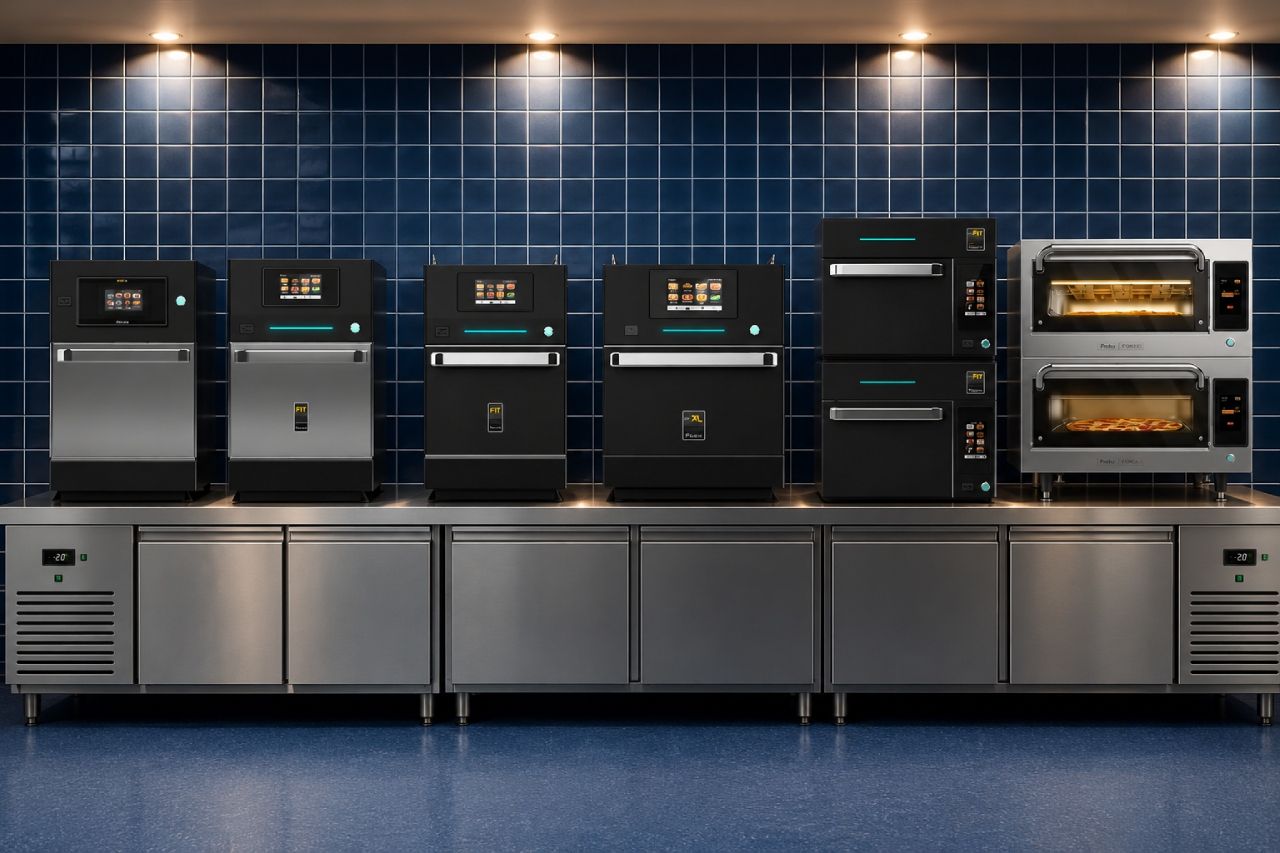
Selecting a Commercial Speed Oven involves much more than comparing cooking speed or purchase price.
The right equipment should support your menu, production model, available space, staffing levels, electrical infrastructure and long-term business objectives.
A Speed Oven that performs well in one operation may not deliver the same results in another.
Before making an investment, evaluate how the oven will integrate into your production process, the products it will prepare, expected service volumes and the installation requirements of your facility.
Matching the equipment to your operational needs from the outset helps improve productivity, optimise energy use and maximise return on investment.
This guide highlights the most important factors to consider when comparing Commercial Speed Ovens for professional foodservice operations.
Match the Oven to Your Business Model
The way food is produced and served should determine the type of Speed Oven you choose.
Every foodservice operation has its own production flow, service pace and menu requirements.
These factors influence cooking capacity, recipe programming, throughput and installation planning.
Across Europe, Commercial Speed Ovens are widely used in:
- Hotels
- Bakery chains
- Independent bakeries
- Cafés
- Coffee shop chains
- Grab-and-go concepts
- Retail foodservice
- Petrol station foodservice
- Railway stations
- Airports
- Contract catering
- Corporate dining
- Healthcare facilities
- Universities
- Visitor attractions
Food Production Models
The production model behind each business is equally important.
A hotel may prepare breakfast, room service and conference catering from a central production kitchen.
A bakery chain may distribute frozen products to multiple stores for bake-off throughout the day.
Retail foodservice operators often finish chilled meals directly at the point of sale to minimise waste and improve availability.
Understanding where food is prepared, stored and finished helps identify the production capacity, cooking programmes and operational flexibility required from the equipment.
Key production models include:
- Cook-to-order
- Cook-chill
- Freeze-to-oven
- Central production kitchens
- Chilled distribution
- Frozen distribution
- Point-of-service finishing
All Prática's Speed Ovens match these workflows improves operational efficiency while supporting food safety throughout the cold chain.
Evaluate Your Menu Before Choosing Equipment
Menu composition has a direct impact on Speed Oven performance.
Commercial Speed Ovens are designed to rapidly reheat, brown, crisp and finish individual portions using a combination of microwave energy and impinged air.
Their versatility makes them suitable for a broad range of foodservice concepts without requiring additional cooking equipment for every application.
Common European menu applications include:
- Croissants
- Danish pastries
- Pain au chocolat
- Toasties
- Paninis
- Ciabattas
- Focaccia
- Baguettes
- Breakfast rolls
- Artisan sandwiches
- Pizza
- Flatbreads
- Quiches
- Savoury pastries
- Sausage rolls
- Pasta bakes
- Jacket potatoes
- Frozen appetisers
- Chilled prepared meals
Performance varies according to product size, starting temperature, moisture content, packaging, toppings and the desired final texture.
Testing representative menu items before purchasing equipment provides a realistic understanding of cooking times, product quality and hourly production capacity.
Size Equipment for Peak Production
Equipment should be selected according to the busiest service periods rather than average daily sales.
Peak-hour demand determines how many cooking cycles the oven must complete, how quickly orders can be served and whether production can keep pace during periods of high customer volume.
When comparing models, evaluate questions such as:
- How many orders require oven finishing during peak periods?
- Which menu items share the same cooking programme?
- How many cooking cycles are required each hour?
- Will seasonal demand increase production requirements?
- Are new menu categories planned?
- Should the equipment accommodate future business expansion?
Actual throughput depends on much more than cooking time alone.
Loading, unloading, recipe programming, product organisation and operator movement all influence hourly output.
Operations with sustained high demand may benefit from stacked Speed Ovens, allowing multiple products to be prepared simultaneously while maintaining the same countertop footprint.
Comparing realistic hourly production instead of minimum advertised cooking times provides a more accurate basis for equipment selection.
Optimise Your Production Workflow
Commercial Speed Ovens deliver the greatest value when integrated into an efficient production system rather than operating as standalone cooking equipment.
In many European foodservice businesses, food preparation is centralised while final cooking takes place closer to the customer.
This model improves operational efficiency, reduces labour requirements and supports consistent product quality across multiple locations.
Menu components are prepared in larger batches, rapidly chilled or frozen, stored under controlled conditions and distributed through the cold chain.
Once an order is received, the Speed Oven completes the final stage by reheating, browning or crisping the product within minutes.
This production model is widely adopted by:
- Hotel groups
- Bakery chains
- Contract catering providers
- Healthcare facilities
- Universities
- Corporate dining operations
- Travel hubs
- Retail foodservice
- Multi-site restaurant brands
By separating food production from final preparation, businesses can standardise recipes, simplify operations, reduce food waste and improve food safety across every location.
Plan the Installation Around Your Kitchen
The installation location has a direct impact on productivity.
High Speed Ovens are compact countertop appliances that fit easily into existing front-of-house service areas and grab-and-go concepts without requiring additional production space.
Their small footprint makes them particularly suitable for urban cafés, bakery shops, hotel lobby cafés, petrol station foodservice and retail environments where available workspace is limited.
Before installation, evaluate:
- Available countertop space
- Operator movement
- Product flow
- Customer-facing preparation areas
- Service clearances
- Cleaning access
- Ingredient storage
- Packaging storage
- Future equipment expansion
Positioning the oven close to the point of service reduces unnecessary movement, shortens service times and improves workflow during busy periods.
Verify Electrical Compatibility
Electrical requirements should be confirmed before purchasing any commercial kitchen equipment.
Commercial Speed Ovens are available with different power ratings and electrical configurations.
Verifying compatibility early helps avoid unexpected installation costs, project delays and operational disruptions.
Key considerations include:
- Voltage
- Single-phase or three-phase supply
- Electrical load
- Circuit capacity
- Dedicated power supply
- Socket configuration
- Manufacturer installation specifications
If electrical upgrades are required, these costs should be included when calculating the Total Cost of Ownership rather than treated as unexpected expenses after delivery.
Installation should always comply with local electrical regulations and be completed by qualified professionals.
Understand Ventless Technology
Many Speed Ovens incorporate catalytic filtration systems that support ventless installation.
Depending on local regulations and equipment certification, this technology may remove the need for a dedicated extraction hood above the oven, simplifying installation and reducing project costs.
Ventless certification applies only to the Speed Oven.
If the operation also has equipment such as fryers, grills or charbroilers, local building regulations and fire safety requirements may still require mechanical ventilation for the cooking area.
Always verify national regulations before planning a new installation or refurbishment project.
Simplify Daily Operation
Ease of use directly affects productivity, staff training and food quality.
Modern Commercial Speed Ovens use programmable cooking profiles that automatically manage microwave energy, impinged air, cooking stages and recipe timing.
This automation reduces manual intervention while delivering repeatable results throughout every service period.
For businesses facing labour shortages, employee turnover or seasonal staffing, automated recipes reduce training time and help maintain operational standards regardless of operator experience.
Prática Speed Ovens also integrate with the exclusive IoK (Internet of Kitchen) platform, enabling centralised equipment management across multiple locations.
Connected users can:
- Update recipes remotely
- Distribute cooking programmes
- Monitor equipment performance
- Install software updates
- Standardise cooking parameters across every unit
Remote management simplifies menu rollouts, improves operational consistency and reduces the need for on-site technical intervention, making it particularly valuable for hotel groups, bakery chains and multi-site foodservice operators.
Labour Efficiency
Automated cooking programmes simplify daily operation and reduce dependence on highly skilled staff.
Pre-programmed recipes minimise training requirements, shorten onboarding and help maintain repeatable results across every shift, even in businesses experiencing labour shortages or high employee turnover.
Higher Throughput
Short cooking cycles increase production capacity during busy service periods without expanding the kitchen or adding extra staff.
Preparing food on demand also reduces holding times, allowing operators to serve freshly finished products while responding more effectively to fluctuations in customer demand.
Energy Efficiency
Prática's Speed Ovens combine microwave energy, impinged air and insulated cooking chambers to shorten cooking cycles and optimise energy consumption.
For businesses facing rising utility costs, faster cooking times can contribute to lower energy usage compared with conventional cooking methods for many menu applications.
Reduce Food Waste
Cook-to-order production helps minimise overproduction and unnecessary food disposal.
Preparing products only when orders are placed improves stock control, extends product availability throughout the day and supports sustainability objectives by reducing waste.
Expand Menu Opportunities
A single Speed Oven can prepare a wide variety of products, allowing businesses to broaden their food offer without investing in multiple cooking appliances.
This flexibility makes it easier to introduce seasonal items, limited-time offers and premium menu options while making efficient use of existing kitchen space.
Maximise Available Space
Compact countertop equipment allows businesses to increase production capacity without enlarging the kitchen footprint.
This is particularly valuable in city-centre cafés, hotels, bakery shops, travel hubs and retail foodservice environments where workspace is limited and expansion is often impractical.
Maintenance and Technical Support
Long-term reliability depends on both equipment quality and manufacturer support.
When comparing suppliers, evaluate preventive maintenance programmes, warranty coverage, spare parts availability, local service networks and technical assistance. These factors directly influence equipment uptime and lifecycle costs.
Common Buying Mistakes
Many purchasing decisions focus primarily on cooking speed or acquisition cost while overlooking factors that have a much greater impact on long-term performance.
Avoiding these common mistakes helps protect the investment and reduces future operating costs.
Ignoring Future Capacity Requirements
Production needs rarely remain unchanged.
Businesses frequently introduce new menu items, increase customer volume, extend opening hours or expand into additional locations.
Selecting equipment with sufficient capacity from the beginning helps avoid premature replacement and supports sustainable business growth.
Selecting Capacity Based on Average Demand
Equipment should always be sized around peak production rather than average daily sales.
An undersized oven may create bottlenecks during busy periods, while oversized equipment increases capital costs without delivering proportional operational benefits.
Evaluating realistic peak-hour production provides a more reliable basis for selecting the appropriate model.
Selecting the Right Commercial Speed Oven
The best Commercial Speed Oven is the one that aligns with your production model, menu, available infrastructure and long-term operational objectives.
When properly integrated into the kitchen, it supports faster service, efficient energy use, repeatable food quality, lower food waste and greater operational flexibility.
Rather than comparing specifications in isolation, assess how each model contributes to productivity, workflow efficiency and the overall performance of your foodservice operation.
Frequently Asked Questions
How do I choose the right Commercial Speed Oven?
Assess your menu, production workflow, peak-hour demand, available space, electrical infrastructure and future capacity requirements.
Equipment should be selected according to operational needs rather than minimum cooking times or purchase price alone.
Do all Commercial Speed Ovens require an extraction hood?
No. Prática Speed Ovens incorporate catalytic filtration and are certified for ventless operation.
However, local regulations and other cooking equipment installed in the same kitchen may still require mechanical ventilation.
Can a Commercial Speed Oven replace conventional ovens?
No. Speed Ovens are designed for rapid cooking, reheating, browning and finishing individual portions.
Conventional ovens remain the preferred choice for high-volume baking, roasting and other large-batch cooking applications.
Can frozen products be cooked directly?
Yes. Many frozen products can be cooked directly using pre-programmed recipes.
Cooking time depends on the product, portion size and selected programme.
Which businesses benefit most from Commercial Speed Ovens?
Hotels, bakery chains, cafés, coffee shops, retail foodservice, travel hubs, petrol station foodservice, contract catering providers and multi-site restaurant groups all benefit from rapid finishing, consistent production and decentralised foodservice operations.
Which features should I compare before buying?
Compare throughput, programmability, recipe management, energy efficiency, installation requirements, electrical compatibility, maintenance requirements, warranty coverage, technical support and the Total Cost of Ownership over the equipment's expected service life.