




Speed Ovens for Food Delivery in Europe
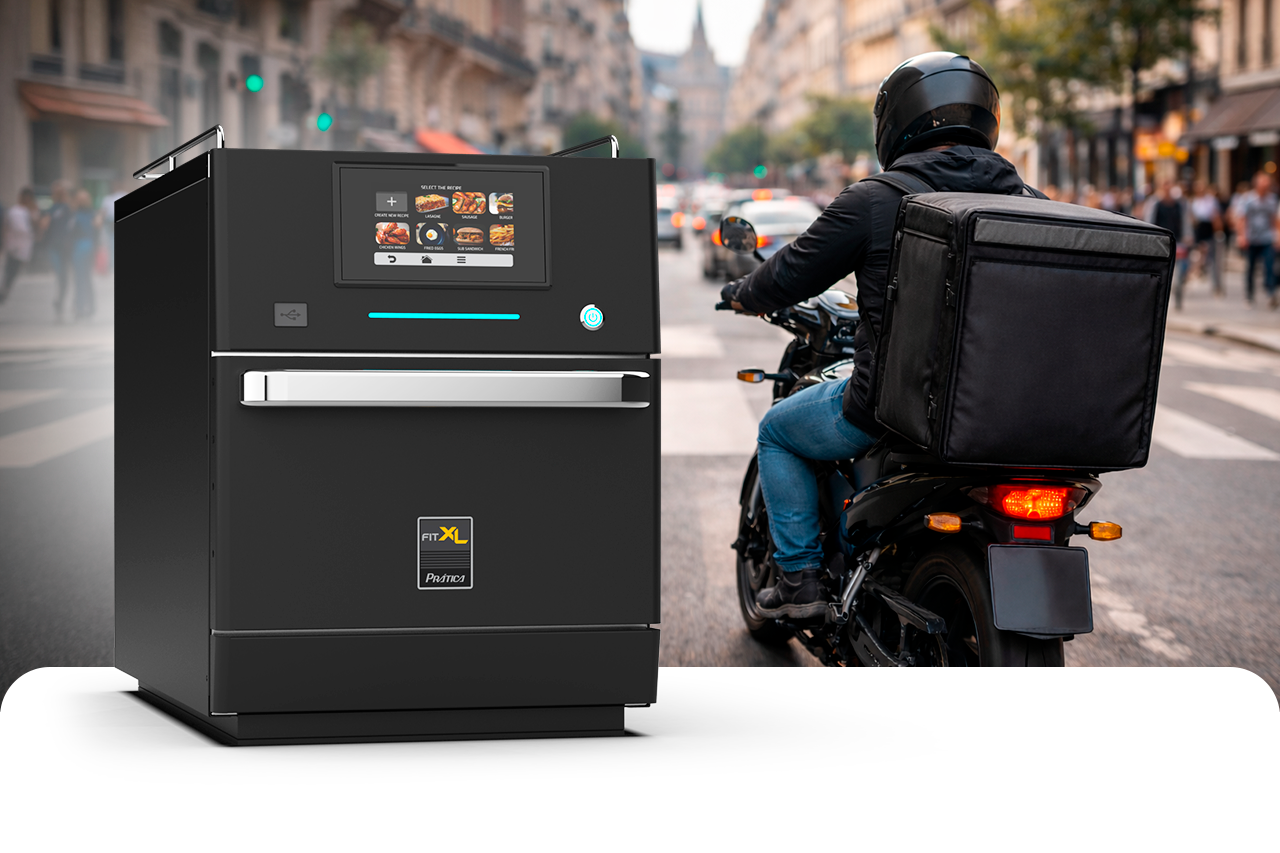
Food delivery in Europe is no longer a secondary revenue stream. It is a primary operating model.
Delivery is expected to be fast. If it is not fast, it loses its purpose.
Consumers order food for convenience, necessity and comfort. But if preparation time is excessive, many would rather dine in than wait at home.
Speed defines value.
The Competitive Shake-Up in Delivery Apps
According to Business of Apps, the global food delivery app market has evolved from simple restaurant listing platforms into complex logistics ecosystems.
Companies now operate full driver networks and integrate groceries and rapid commerce services into their digital infrastructure.
At the same time, market consolidation is intensifying.
Bloomberg reported that
Prosus expects structural changes in Europe’s delivery app landscape following strategic acquisitions, signalling a new phase of competitive restructuring.
The
Financial Times also highlighted geographic expansion as Uber moves into additional European markets, aiming to scale gross bookings significantly.
The European food delivery market is scaling rapidly. Kitchen infrastructure must scale with it.
Digital ordering platforms have transformed consumer behaviour.
Food delivery apps now shape how people access, personalise and evaluate meals in urban environments.
Delivery Speed Starts Inside the Kitchen
Yet delivery performance is not determined by the app interface.
It is determined by cooking time, kitchen workflow and dispatch efficiency.
If preparation slows, digital queues grow.
If digital queues grow, ratings fall.
If ratings fall, revenue declines.
Reducing delivery times begins with high-speed cooking technology.
Why Traditional Commercial Kitchens Struggle with Delivery Scale
Many commercial kitchens continue operating dine-in and delivery in parallel.
As delivery volumes increase, friction becomes inevitable.
Traditional infrastructure was designed for sequential service, chef-led processes and large-format equipment.
It was not optimised for linear, repeatable, high-throughput delivery kitchens.
Operators frequently discover that they cannot serve two masters at once.
Prioritising in-store service delays digital orders. Prioritising delivery disrupts front-of-house experience.
Meanwhile, workforce shortages across Europe demand simplified production systems.
Scaling Production Without Scaling Stress
Kitchens must now produce more with:
• Less space
• Reduced labour dependency
• Lower energy consumption
• Fewer operational complications
• Greater cooking standardisation
High-pressure, heat-intensive environments increase fatigue and inefficiency.
Scaling delivery through conventional equipment often increases stress rather than output.
What Makes Ghost Kitchens Operationally Strong
Ghost kitchens, cloud kitchens and dark kitchens emerged to solve a clear gap in modern foodservice.
As delivery demand increased, many traditional restaurants struggled with high order volumes, limited space and staff shortages.
Delivery-only kitchens remove the front-of-house and focus fully on production.
This approach lowers overheads, streamlines workflows and keeps attention on speed, accuracy and food quality.
These kitchens often operate in small units.
They need equipment that is compact, reliable and simple to use. Consistency is critical, especially when several brands share the same site.
High-Speed Cooking Technology for Delivery-Focused Kitchens
Commercial Speed Ovens meet the demands of delivery service or delivery-only kitchens by combining microwave energy with impinged air technology.
This dual system heats food internally while circulating high-velocity hot air around the product.
The result is rapid heat transfer, controlled temperature management and even cooking results.
For high-volume operations, this translates into shorter cooking cycles, higher throughput and consistent quality across multiple menu items.
Texture retention improves, and chilled products can be regenerated quickly without compromising structure.
Pre-programmed menus simplify training and help maintain food safety standards, while ventless operation supports installation in compact urban spaces.
With this level of performance and process control, delivery-focused kitchens can compete directly with traditional restaurants and fast food kitchens.
They are structured for volume and efficiency.
Equipped with high-performance Speed Ovens, operators can execute varied menus at speed, maintain quality and increase output without expanding their physical footprint.
Compact Footprint for Urban Food Delivery Operations
Urban food delivery kitchens operate under strict spatial constraints.
Commercial Speed Ovens:
• Complement or even replace multiple traditional appliances
• Optimise kitchen workflow
• Fit into Food-to-Go operations
• Enable front-of-house installation
• Support compact ghost kitchen layouts
Space optimisation is directly linked to profitability in high-rent European cities.
Stackable oven configurations further increase production capacity without expanding footprint.
Reduce Delivery Times Through Faster Cooking Cycles
Reducing delivery times is not solely a logistics challenge. It is a production challenge.
High-speed cooking reduces preparation time by shortening cooking cycles while maintaining consistent output.
This leads to:
• Faster dispatch
• Reduced digital food order backlog
• Improved delivery platform ratings
• Higher order turnover
• Increased revenue per hour
In delivery operations, throughput defines competitiveness.
Lower Labour Dependency and Simplified Operations
European operators face persistent labour shortages and high turnover.
Commercial Speed Ovens support lean staffing models through:
• Pre-programmed recipes
• Intuitive touchscreen interfaces
• Repeatable cooking cycles
• Reduced chef-dependent complexity
Delivery kitchens benefit from linear production rather than complex, multi-phase culinary orchestration.
Consistency becomes system-driven.
Ventless Cooking Equipment for Flexible Installation
Ventless commercial ovens with catalytic filtration systems simplify installation.
Benefits include:
• Reduced infrastructure modifications
• Lower capital expenditure
• Faster deployment of delivery-only kitchens
• Increased location flexibility
In many applications, electric commercial ovens also reduce dependency on gas infrastructure.
Plug-and-play installation in suitable electrical configurations accelerates operational readiness.
Energy-Efficient Ovens for High-Cost European Markets
Energy efficiency is critical in Europe’s high-cost energy environment.
Commercial Speed Ovens reduce cumulative energy consumption through:
• Short cooking times
• Reduced heat loss
• Optimised insulation
• Controlled heating cycles
Less idle heat means lower operational costs.
Energy-efficient ovens are not simply environmental decisions. They are financial decisions.
Standardisation Across Multi-Site Restaurant Operations
As delivery chains expand across European markets, standardisation becomes essential.
High-speed ovens provide:
• Repeatable cooking results across shifts
• Identical performance across locations
• Controlled time and temperature management
• Centralised recipe distribution
Through digital integration platforms such as IoK, operators gain real-time data access, operational visibility and remote control.
Customers should never experience inconsistency between sites.
Menu Versatility for Dynamic Delivery Portfolios
Food delivery menus evolve rapidly.
Commercial Speed Ovens accommodate:
• Sandwiches
• Bakery products
• Proteins
• Ready meals
• Desserts
Selected models reach temperatures up to 280°C, enabling proper browning and caramelisation.
Versatility supports menu expansion without increasing equipment footprint.
This scalability allows businesses to optimise delivery operations while diversifying revenue streams.
Food Safety Through Controlled Time and Temperature
Delivery requires precision.
Controlled cooking cycles enhance safety through accurate time and temperature management.
Regeneration of chilled products is faster and more efficient than frozen alternatives, improving consistency and reducing energy use.
Reliable cooking standardisation protects brand reputation in digital marketplaces where customer feedback is immediate.
Delivery in Europe Requires Smarter Kitchen Infrastructure
The European food delivery market continues to expand and consolidate.
Digital ordering platforms, market restructuring and geographic growth confirm long-term structural transformation.
The operational question is clear:
Is your kitchen equipped for high-speed cooking, delivery optimisation and scalable production?