




Speed Ovens and Energy Use: What Professionals Should Know
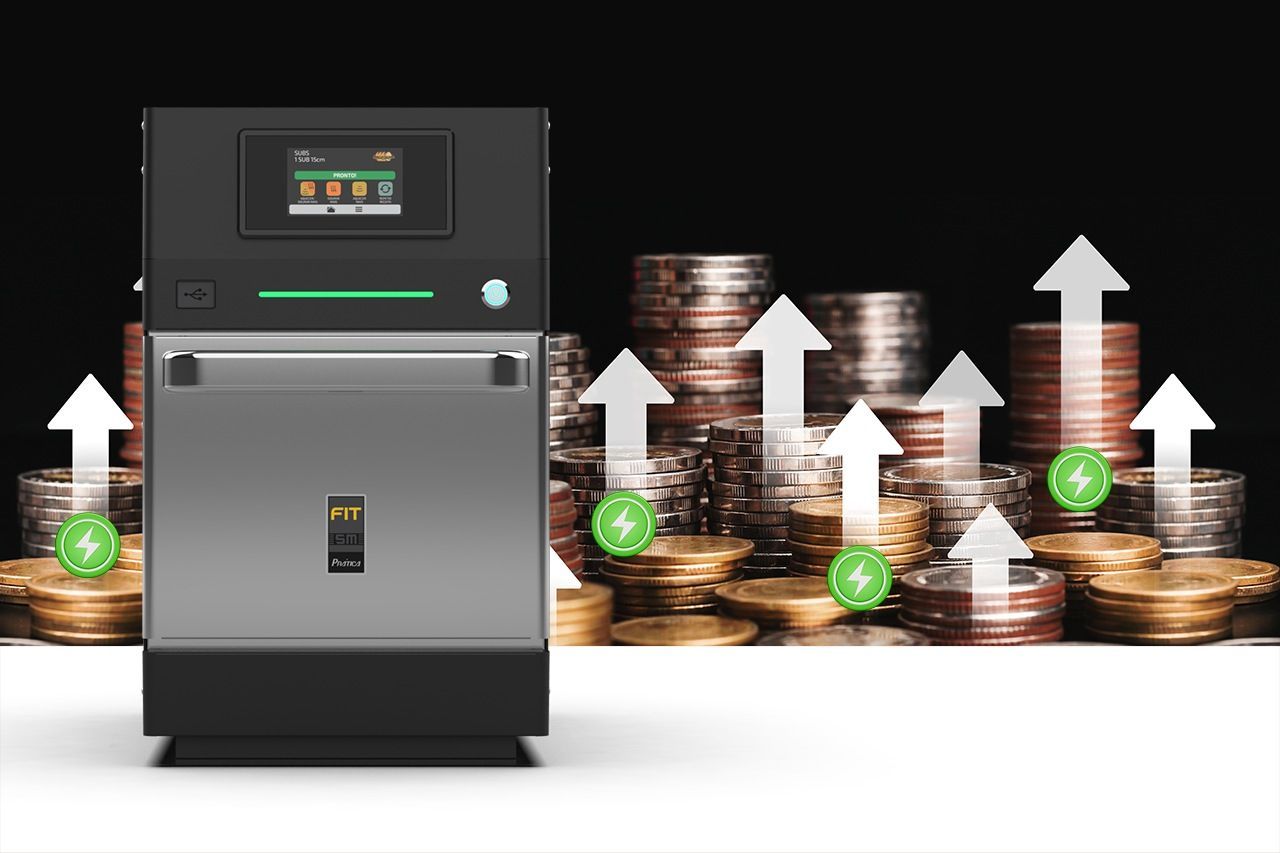
Energy efficiency is no longer a secondary concern in professional foodservice.
With rising energy prices, sustainability regulations, and increasing consumer expectations for quick service, understanding how equipment uses power has become an essential business skill.
For operators, every kilowatt counts — not only in cost reduction but also in maintaining productivity and brand consistency.
Among the innovations transforming the foodservice landscape, Speed Ovens stand out as one of the most efficient technologies available today.
Designed to deliver fast, high-quality results using minimal energy, they balance performance and sustainability with remarkable precision.
Yet not all Speed Ovens are equal: energy performance depends on design, technology, and operational management.
Read on to see how Prática’s Speed Ovens optimise power consumption through intelligent design, rapid thermal cycles, ventless technology, and digital management.
1. Understanding How Speed Ovens Use Energy
Traditional ovens operate with continuous heat to cook and maintain temperature, resulting in ongoing energy consumption even when idle.
Speed Ovens, by contrast, deliver energy in short, high-intensity bursts.
Each model in Prática’s Fit Line combines impinged air (high-speed air jets) with microwave energy to heat and finish food much faster than conventional ovens.
This synergy drastically reduces cooking times while maintaining a compact, well-insulated chamber. The outcome is a notably lower energy cost per portion, offering both environmental and economic benefits.
In addition, precise temperature control minimises unnecessary power use: for example, when set to 260 °C, the heating elements activate only when the chamber temperature drops below the target threshold.
2. Comparing Energy Demand Across Models
Different operations demand different energy profiles.
The FIT Line includes models designed for specific intensities and menu types, while the Forza STi expands the concept to pizza and bakery applications.
The Fit SM is an energy-conscious model ideal for small-scale, refrigerated menu items, whereas the Fit ST, Express, and XL deliver higher thermal power through dual magnetrons and multi-technology heating systems, optimised for fast-paced environments.
The Forza STi, using infrared heating, reaches a higher temperature ceiling (330°C) — perfect for crisp, evenly baked pizza.
3. Design Efficiency and Heat Utilisation
Prática’s engineering philosophy prioritises converting electrical energy directly into effective cooking energy.
Every model in the FIT and Forza lines features:
- Ventless catalytic filtration eliminates the need for costly exhaust hoods, which also consume energy and increase overall power demand.
- Independent control of air and microwave or infrared power, enabling precise adjustment per recipe.
- User-friendly touchscreen control that prevents overcooking and unnecessary re-runs.
- Instant readiness, meaning no energy loss from prolonged preheating.
These combined elements ensure that each kilowatt is used for cooking rather than for maintaining idle heat.
The result is maximum conversion efficiency, reduced energy waste, and consistent product quality.
4. Highly Efficient Insulation: Containing Heat, Saving Energy
An often-overlooked contributor to energy efficiency is thermal insulation — and this is one of the hidden strengths of Prática’s oven design.
Both the FIT Line and the Forza STi are built with highly insulated stainless-steel chambers, engineered to keep heat inside where it belongs.
This advanced insulation:
- Minimises heat loss to the surrounding environment, maintaining stable internal temperatures with less energy input.
- Improves kitchen comfort, as the equipment releases very little residual heat.
- Reduces the frequency of heating cycles, allowing faster recovery times and sustained energy savings.
In many professional kitchens, poorly insulated ovens contribute to ambient heat build-up, which increases the load on air-conditioning systems.
By containing thermal radiation effectively, Prática ovens not only reduce their own consumption but also lower the total energy footprint of the kitchen.
5. How Temperature and Power Translate into Real Energy Use
In professional kitchens, measuring efficiency solely by nominal power can be misleading. What truly determines performance is energy consumed per cycle.
A Speed Oven may seem power-intensive, yet most cooking cycles last under two minutes, resulting in a lower average energy draw per portion.
By comparison, a conventional convection oven with similar wattage, operating for 10 to 15 minutes per batch, can consume up to ten times more energy for the same output.
The Forza STi illustrates this principle well: combining impinged air with bottom infrared heaters, it distributes heat evenly at up to 330 °C, baking a 16” pizza in just two to four minutes.
Through precise air circulation and radiant transfer, thermal energy is utilised far more effectively than in static deck ovens.
This ratio — short time, high efficiency, and low total energy — defines the operational advantage of modern Speed and Pizza Ovens.
6. Connectivity and Smart Energy Management
Each model integrates Wi-Fi for IoK (Internet of Kitchen) management — a cloud-based system that allows remote monitoring, updates, and performance tracking.
Through IoK, operators can:
- Review energy use patterns across multiple locations.
- Adjust recipes and cycle durations remotely.
- Schedule firmware and calibration updates without on-site intervention.
- Detect deviations in power consumption that may indicate maintenance needs.
This data-driven approach transforms energy management from reactive to proactive.
By analysing actual usage data, foodservice operators can align oven performance with operational peaks, reducing energy waste during off-hours and optimising output consistency across units.
7. Installation and Electrical Configuration: Ensuring Efficient Operation
Energy performance depends not only on design but also on correct installation.
All Prática ovens include clear specifications for voltage, frequency, circuit breaker size, and grounding:
- Type D circuit breakers are recommended for stability.
- Outlet distance should not exceed 1.8 m from the unit.
- Rear ventilation is ensured by oven stops that maintain a safe distance between the oven and the wall.
- Grounded, level installation is essential to maintain efficiency and warranty validity.
An incorrectly installed oven can draw excess power, overheat, or experience airflow obstruction — all of which increase energy consumption and reduce lifespan. Proper electrical and spatial configuration ensures that the equipment operates at its designed efficiency levels.
8. Comparing Speed Ovens and Pizza Ovens in Energy Terms
Both Speed and Pizza Ovens achieve thermal efficiency, but through different mechanisms:
- Speed Ovens (FIT Line): Energy bursts from microwaves and impinged air penetrate food rapidly, ideal for short service cycles and diverse menus.
- Pizza Oven (Forza STi): Infrared radiation and high-temperature airflow deliver surface browning and texture for dough-based products.
While their nominal energy consumption is similar, their operational rhythm differs.
Speed Ovens operate in short, on-demand bursts suitable for fast-casual and QSR environments, whereas the Forza STi sustains a steady thermal state for back-to-back baking, maximising output per kilowatt.
In both cases, ventless technology and superior insulation ensure that most of the consumed energy translates directly into cooking performance rather than ambient heat dispersion.
9. Extra Energy-Saving Tips for Speed Ovens
Even the most efficient ovens can benefit from smarter operational habits.
The following practical actions can further reduce energy use without compromising productivity or product quality:
Minimise door openings
Every time the oven door is opened, heat escapes and must be replaced by additional power. A well-structured recipe programme helps avoid unnecessary interruptions and retains chamber heat efficiently.
Use shorter microwave cycles with lower duty percentages
Reducing microwave intensity decreases the load on the magnetron, leading to measurable energy savings while maintaining product quality.
Prefer chilled over frozen foods
Chilled products (0–5°C) require less microwave intensity and shorter cycles than frozen items (–18°C), reducing both magnetron effort and air-heating demand.
Work with smaller, standardised portions
Smaller servings heat faster and require less total power. Larger or frozen portions increase cooking time and energy use proportionally.
Adjust preheating to your operation’s profile
If your products perform well at 260°C, there is no need to preheat to 280°C. Matching the preheat temperature to menu needs avoids unnecessary energy consumption.
Set preheating per recipe
Not every preparation requires maximum chamber temperature. For instance, reheating a croissant at 260°C achieves excellent results without overbrowning or wasting energy.
Reserve high microwave proportions for dense products
Only use high-intensity microwave cycles for items with greater mass or heavy fillings — such as lasagne or thick sandwiches — where deeper penetration is required.
These operational adjustments, though small, can generate considerable energy reductions over time, especially in high-volume or multi-site operations.
10. Energy Efficiency as a Profitability Strategy
Energy efficiency has evolved from a cost-saving measure into a strategic advantage.
In a market where margins are often tight, efficient equipment allows operators to redirect savings into growth areas such as menu innovation or digital management systems.
The FIT Line and Forza STi represent two complementary paths to this goal:
- FIT models enhance service speed and versatility, delivering consistent results with minimal standby energy.
- Forza STi provides high-temperature performance for pizzas and baked goods with excellent energy-to-output conversion.
Both share a ventless design, smart connectivity, and exceptional insulation, which together reduce operational energy demand while maintaining superior food quality.
For operators managing multiple outlets or compact urban kitchens, these attributes translate into tangible ROI: lower utility costs, simplified installation, and improved working conditions for staff.
11. The Broader Impact: Efficiency Beyond the Oven
Beyond direct energy consumption, efficient ovens contribute to an overall reduction in facility power loads.
Ventless technology eliminates the need for large extraction systems, reducing fan energy and HVAC demand.
Improved insulation means less ambient heat, maintaining kitchen comfort and stabilising refrigeration systems nearby.
In modern QSRs, bakeries, and cafés — especially within the Food-to-Go segment — such efficiency gains are critical.
The difference between a poorly insulated oven and a well-designed ventless Speed Oven can amount to hundreds of euros per year in energy savings and improved environmental compliance.
12. Key Takeaways
- Energy performance should be evaluated by energy per portion, not by nominal power.
- The dual-heating technologies of Prática Speed Ovens convert electrical energy into rapid, efficient cooking.
- The Forza STi’s infrared system achieves high-temperature performance with controlled energy distribution.
- Highly efficient insulation prevents heat loss, improving both energy efficiency and operator comfort.
- Ventless catalytic filtration eliminates the need for external hoods, lowering total facility consumption.
- IoK connectivity enables real-time monitoring and optimisation across multiple kitchens.
- Operational discipline — door management, portion control, preheating strategy — enhances the equipment’s intrinsic efficiency.
13. Intelligent Energy for Modern Kitchens
Energy efficiency in professional cooking is not simply a technical specification — it is a reflection of operational intelligence.
The FIT Line and Forza STi embody this principle by turning high performance into measurable sustainability.
Through rapid cooking cycles, superior insulation, ventless technology, and digital management, these ovens allow operators to achieve more with less energy, space, and complexity.
In the long term, this means a kitchen that is not only faster and cleaner but also smarter, more profitable, and environmentally responsible.
For businesses seeking excellence in both performance and sustainability, understanding energy use is not just a technical matter — it is the foundation of operational success.