




Inside the UK’s Move Towards Smart, Compact Speed Ovens
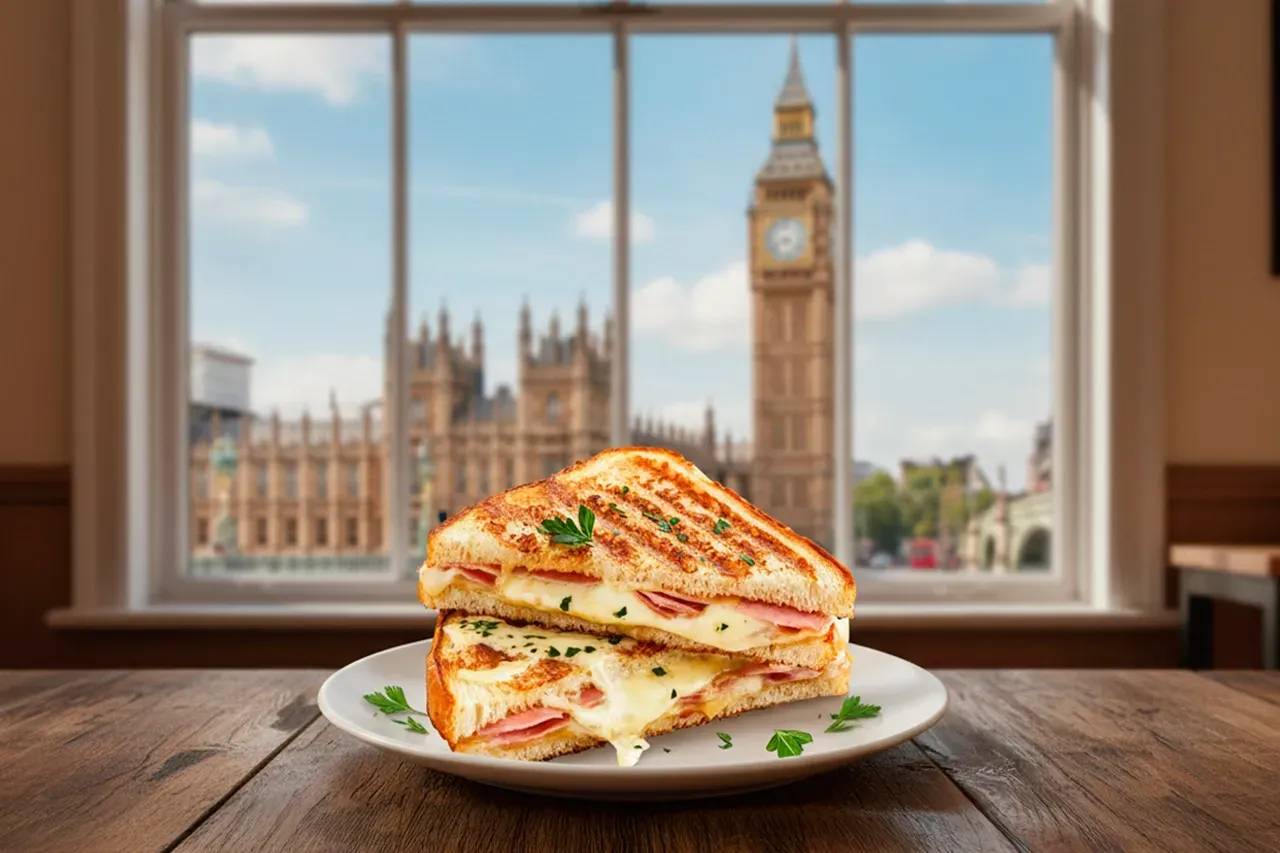
From convenience stores and railway stations to cafés, kiosks, and in-store concessions, the British food-to-go segment has redefined what efficiency means in professional kitchens.
In this landscape, Speed Ovens have moved from being a niche innovation to a central component of modern quick-service operations.
This shift is not simply technological; it is operational, spatial, and economic.
It reflects how businesses are adapting to limited spaces, rising energy costs, and the need to serve fresh, high-quality food in seconds.
Below is a deep look into how the UK market is changing — and why Speed Ovens are now an essential part of that change.
1. The Rise of Food-to-Go Culture
In the UK, the food-to-go channel thrives on speed, reliability, and minimal footprint.
Operators in this segment — from convenience chains and transport hubs to supermarket concessions and express cafés — compete on how fast they can serve, not just on what they serve.
Customers expect hot meals, toasted snacks, and fresh bakery items ready almost instantly.
This expectation drives demand for technology capable of “serve in seconds” performance.
At the same time, space is at a premium. Many of these units operate in less than 10 square metres, where every inch of counter space must generate revenue.
This context makes compact, ventless, and plug-and-play equipment indispensable.
And that is exactly where Speed Ovens have found their competitive edge.
2. Compact Design: The Reduced Footprint Revolution
The phrase “compact footprint” has become a buzzword in British equipment marketing.
The most competitive models highlight depths as slim as 60 cm, allowing installation on narrow counters or under shelves without restricting movement behind the counter.
Manufacturers increasingly refer to “slim depth” or “shallow profile” as proof of compatibility with tight urban layouts.
Smaller width and reduced door swing also allow placement side by side or stacking of multiple ovens — an important advantage for small-format outlets and transport hubs where staff must move efficiently.
In practical terms, the ability to install two units in the same space once occupied by one traditional oven doubles throughput without extra infrastructure.
This spatial efficiency is one of the strongest purchasing arguments in today’s UK market.
3. Plug & Play Simplicity
Another defining characteristic of the UK market is the growing preference for “plug & play” equipment.
Food-to-go operators do not have the time or resources for complex installations involving extraction ducts, plumbing, or special ventilation systems.
Speed Ovens that are ventless, requiring only a standard electrical connection, offer a clear competitive advantage.
Marketing claims such as “ready out of the box” or “zero pipes, just plug in” are not mere slogans — they address real operational pain points.
This plug-and-play philosophy reduces barriers to entry for independent cafés and pop-up concepts, while also simplifying rollout for large chains.
A new site can be operational within hours, not days, a critical factor for brands expanding across high-traffic urban locations.
4. Cooking in Seconds: Redefining Speed and Service
The central promise of a Speed Oven is contained in its name: speed.
But in the UK’s food-to-go market, speed has become the language of competitiveness.
Publications and technical releases now quantify performance in seconds.
Manufacturers publish “quick menu lists” showcasing ready-made cycles for typical British favourites — paninis, sausage rolls, pastries, and breakfast wraps.
Beyond raw speed, the latest models include adaptive cooking systems that automatically adjust power and airflow according to product load and temperature.
The result is consistency without constant supervision — a vital asset in locations where staff turnover is high and training time limited.
5. Remote Connectivity and Network Management
As the UK market matures, connectivity is moving from “nice to have” to “must have.”
Speed Ovens equipped with Wi-Fi or Ethernet connectivity allow operators to:
- Monitor equipment performance across multiple sites.
- Upload or download recipes remotely.
- Receive alerts for maintenance or errors.
- Collect analytics on menu performance and usage patterns.
This is particularly valuable for multi-site operators and franchise networks.
Instead of dispatching technicians to update software or recipes, managers can synchronise menus through cloud-based platforms such as IoK (Internet of Kitchen).
The capability to manage hundreds of units remotely ensures brand consistency, reduces downtime, and streamlines product rollouts across regions.
6. Ventless Operation and Catalytic Filtration
Space constraints are not the only limitation in British operations — ventilation is another critical challenge.
Many sites, especially within shopping centres, heritage buildings, or transport stations, face restrictions on installing external ducting.
To overcome this, Speed Ovens increasingly incorporate catalytic converters and carbon filtration systems.
These systems oxidise smoke, grease, and odours at high temperatures, enabling ventless operation.
Common marketing terms include “double-chamber catalytic filter” or “integrated odour reduction system,” which effectively convey compliance with air quality expectations.
This technology not only saves on installation cost but also simplifies compliance with ventilation standards and requirements for extraction and hygiene.
Even so, operators must still ensure general ambient ventilation, as mandated by occupational safety regulations.
7. Stackability and Space Optimisation
In dense urban environments such as London, Manchester, or Birmingham, even centimetres matter.
Many food-to-go units operate within stations, stadiums, or small retail footprints where every appliance must justify its space.
Compact and stackable Speed Ovens enable vertical expansion — a strategy increasingly visible in the design of high-throughput kiosks.
Two or three ovens can operate in the footprint of one, with independent controls for simultaneous menu items.
This approach is also common in temporary or mobile installations, such as event concessions or university cafés, where modular layouts provide operational flexibility.
8. Intuitive Interfaces and Pre-Programmed Menus
One of the biggest operational hurdles in the food-to-go sector is staff turnover.
Training new employees repeatedly reduces efficiency and increases errors.
To counter this, Speed Ovens now feature visual interfaces with “image-to-cook” icons.
Operators simply touch the picture of the product to start the corresponding cooking cycle.
Pre-programmed menus — often installed at the factory or updated remotely — ensure consistent results without the need for manual configuration.
Sensors automatically adapt heating parameters for load size or initial temperature, maintaining quality even in peak hours.
The result is a process that “any team member can operate with consistent results,” as many equipment manufacturers now highlight.
For large chains, this translates directly into lower training costs and higher customer satisfaction.
9. Energy Efficiency and Cost Awareness
With the UK’s energy costs among the highest in Europe, energy efficiency has become a major selling point.
Speed Ovens are now marketed with improved insulation materials, low standby consumption, and automatic sleep modes that detect inactivity and reduce temperature accordingly.
Manufacturers frequently quantify consumption in kilowatt-hours per cycle, addressing the operator’s primary concern: the real cost of operation.
This focus on sustainability and operational savings resonates strongly with British operators, especially as energy expenses directly affect profit margins.
The combination of shorter cooking times and efficient heat recovery makes Speed Ovens one of the most energy-conscious solutions for fast-service kitchens.
10. Compliance and Ventilation Regulations
Even with advanced catalytic systems, every foodservice environment in the UK must adhere to national ventilation and safety standards.
The Health and Safety Executive (HSE) outlines clear requirements for air extraction, renewal, and the removal of heat and grease from kitchen areas.
Documents such as DW172 (guidelines for commercial kitchen ventilation design) and TR19 (standards for cleaning and maintenance of ductwork) establish strict compliance parameters.
While Speed Ovens simplify local installation by eliminating the need for external hoods, they operate within a broader environment that still demands adequate air circulation.
Understanding this distinction is critical for project planners and franchise developers aiming for full regulatory compliance.
11. The New Competitive Equation
The convergence of these trends — compactness, connectivity, plug-and-play design, catalytic filtration, and energy efficiency — has reshaped how operators evaluate cooking technology.
For years, the UK market prioritised traditional convection and microwave solutions.
Today, the conversation is shifting toward hybrid speed systems that combine microwave energy, impinged air, and radiant heat to produce premium results faster than ever.
In this competitive landscape, success depends not only on how fast a product cooks, but also on how efficiently that speed integrates with layout, workflow, and digital management.
12. Strategic Implications for Foodservice Operators
Speed Ovens are no longer a luxury for high-end chains; they are a practical necessity for any operator seeking agility, scalability, and consistent quality.
For independent cafés and kiosks, compact models with catalytic filtration and simple interfaces reduce the need for trained chefs and complex installations.
For multi-site brands, connectivity and remote management enable standardisation, real-time monitoring, and coordinated updates — key for maintaining brand integrity.
For the broader market, energy efficiency and space optimisation address the growing pressures of operating costs and environmental responsibility.
The result is a technology category that directly aligns with the structural needs of the UK’s evolving food-to-go environment.
13. The Future of the Category
The next phase of market evolution will likely involve:
- Greater integration of platforms for predictive maintenance and analytics.
- Expansion of AI-assisted cooking algorithms for further consistency.
- Improved recyclability and sustainability in component design.
- Enhanced data transparency for energy and performance reporting.
As these innovations mature, Speed Ovens will become even more central to the operation of quick-service formats.
The market is moving towards an ecosystem where every unit — from a railway café to a supermarket concession — can deliver hot, perfectly finished food in seconds, sustainably and reliably.
Speed, Space, and Consistency: The New Priorities of British Food-to-Go
The UK’s food-to-go sector is redefining the parameters of speed, space, and consistency. In this context, Speed Ovens have evolved from optional tools to strategic enablers of modern operations.
Their combination of compact design, ventless operation, remote connectivity, and energy efficiency makes them uniquely suited to the pressures of British quick-service environments.
As operators continue to pursue faster service, simpler workflows, and lower operational costs, Speed Ovens stand at the centre of this transformation — shaping not just how kitchens cook, but how the entire market serves.
See how Speed Ovens reduce training time while boosting consistency and efficiency.