




Can a Speed Oven Make Good Pizza? | Forza STi
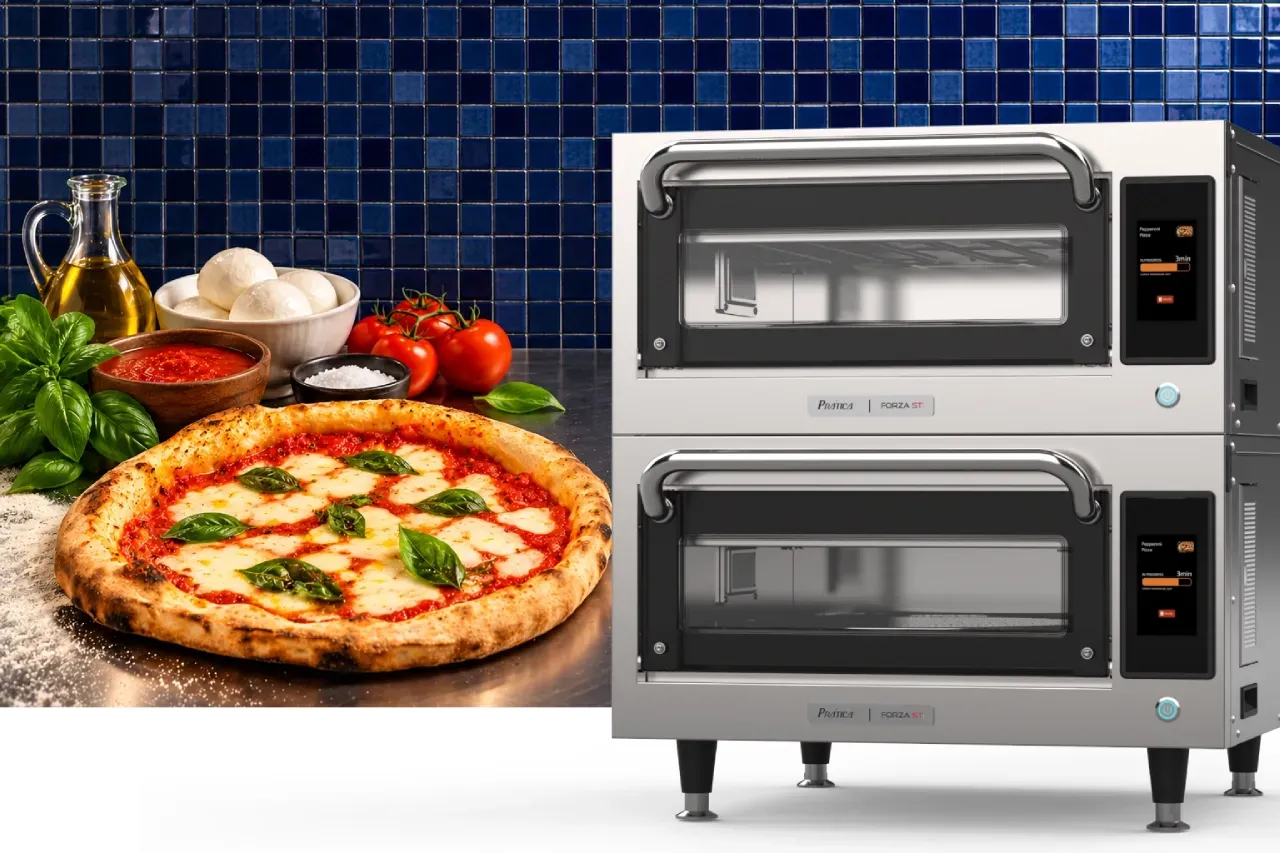
Yes, a Speed Oven can produce good-quality pizza. The result depends on the dough, ingredients and baking conditions, not simply on how long the pizza stays in the oven.
The Prática Forza STi Speed Oven uses high-speed impinged hot air and infrared heating to prepare different pizza styles. Its independent controls for upper and lower temperatures and air speed allow recipes to be adjusted for crust texture, surface colour and topping finish.
From thin Neapolitan-style pizzas to thicker bases with generous toppings, achieving the desired quality requires understanding how each product responds to heat.
What Makes a Good-Quality Pizza?
A well-prepared pizza should be evaluated through its crust, interior, toppings and sensory characteristics. No single texture or degree of browning defines quality across every pizza style.
The underside must be properly baked. A thin base may be crisp, while a thicker dough can have a softer interior. The rim, or cornicione, should have the structure, colour and texture associated with the recipe.
Cheese needs to melt and gratinate as intended, without burning or becoming excessively dry. The toppings should be adequately heated, with enough moisture to remain appetising but not so much that they soften the base.
Aroma, flavour and appearance are equally important. These characteristics determine whether the finished pizza meets the expectations established for the menu.
How Does the Forza STi Control Pizza Baking?
The Forza STi combines high-speed impinged hot air with infrared heating. Unlike microwave-assisted speed ovens, this model does not use microwaves.
It reaches up to 330°C and provides independent adjustment of upper and lower temperatures and air speed.
These controls matter because the underside and toppings have different heating requirements. The base needs sufficient heat to bake throughout, while the upper surface requires the right conditions for cheese melting, gratination and browning.
Air speed also affects surface heating and moisture removal. Excessive airflow or temperature can darken delicate dough before the desired texture develops.
Using the maximum available temperature is therefore not always appropriate. The heating balance should reflect the characteristics of the pizza being prepared.
How Do Baking Settings Change Between Pizza Styles?
Thin Neapolitan-style pizzas and heavily topped pizzas respond differently to the same heating conditions.
For thin dough, excessive temperature combined with impinged air can cause unwanted dark spots. Reducing both upper and lower temperatures helps control this effect. The upper temperature may remain slightly higher when a more pronounced surface colour is desired.
Larger pizzas with thicker bases and generous toppings often benefit from lower temperatures and longer cycles. Their greater thickness and ingredient load require sufficient time for the centre to bake and the toppings to heat without excessive surface browning.
In practical Forza STi applications, a thin Neapolitan-style pizza may take approximately 1 minute and 30 seconds, while a pizza with substantial toppings may require around 3 minutes.
These are examples of different recipes, not universal cooking times. The actual settings depend on dough formulation, size, thickness, toppings and starting temperature.
The same approach applies to mini pizzas, calzones and individual slices, each of which has its own preparation requirements.
Why Does Dough Hydration Affect Pizza Quality?
Dough formulation has a direct influence on crust texture. Flour composition, fermentation, thickness and hydration all affect how the dough behaves during baking.
Very low-hydration dough is particularly susceptible to drying because it contains less water. Exposure to intense heat can make this limitation more noticeable.
The Forza STi accommodates a wide range of pizza doughs, but an appropriate formulation remains essential. A well-developed baking programme cannot restore moisture that the dough lacked from the beginning.
The objective is to preserve the characteristics of the selected style, whether the recipe calls for a thin, crisp base or a thicker crust with a tender interior.
How Do Sauce, Cheese and Toppings Affect the Crust?
Excess tomato sauce can saturate the dough and leave the underside soft. A suitable portion should cover the intended area without adding unnecessary moisture.
This principle applies to pizza prepared in any type of oven.
Vegetables, cheese and other ingredients can also release liquid during heating. Their quantity and preparation influence both the texture of the base and the time needed to finish the pizza.
A lightly topped Margherita, for example, has different heating requirements from a larger pizza loaded with cheese, vegetables and meat.
Ingredients requiring substantial cooking must be appropriately prepared, and the finished product must meet applicable food safety requirements.
Does Faster Baking Mean Lower Pizza Quality?
No. A shorter cycle does not necessarily mean insufficient baking. Quality depends on how effectively heat reaches the dough and ingredients during that time.
High-speed impinged air accelerates heat transfer, allowing the Forza STi to prepare pizzas in minutes. However, speed alone does not establish whether the product is ready to serve.
A browned surface cannot compensate for an underbaked centre. Similarly, leaving a pizza in the oven longer than necessary may dry the crust or overcook the toppings.
Each recipe should be evaluated by the finished product rather than by the shortest possible cooking time.
How Does Speed Oven Pizza Compare with Wood-Fired Pizza?
Wood-fired pizza has distinctive sensory characteristics. Burning wood contributes a smoky aroma, while temperature variations inside the oven can produce more intense colouring in certain areas of the crust.
These features are part of the traditional wood-fired experience and should not be presented as identical to electric baking.
The Forza STi uses controlled electric heating rather than wood combustion. It allows operators to develop the crust texture, colour and topping finish required for their recipes without relying on a wood fire.
The choice between these methods depends on the culinary experience and operating conditions of the establishment. A traditional pizzeria may place particular value on wood-fired preparation, while a hotel or café may need a compact oven with repeatable cooking programmes.
Both approaches should ultimately be judged by the quality of the pizza served.
What Causes Poor Pizza Results in a Speed Oven?
During recipe development, three common sources of problems are excessive temperature, excessive cooking time and variations in the product being prepared.
Specific symptoms help identify what needs attention:
- Dry crust: Check dough hydration, baking time and temperature.
- Excessive dark spots: Review upper and lower temperatures and air speed, particularly with thin dough.
- Soft or wet underside: Check sauce quantity and moisture released by the toppings.
- Browned toppings with an underbaked base: Review the balance between upper and lower heating.
- Inconsistent results: Verify dough thickness, ingredient portions, starting temperature and the selected programme.
Before changing the oven settings, confirm that the product matches the version used during testing. Adjustments should address the cause of the problem rather than compensate for uncontrolled variations in preparation.
How Can Pizza Quality Remain Consistent During Service?
Once a recipe produces the required crust, colour and topping finish, its cooking parameters can be saved on the Forza STi touchscreen or managed through the IoK platform.
The equipment stores up to 1,024 recipes, with as many as eight steps per programme. Most pizza preparations can be completed in a single continuous cycle, although additional stages are available when needed.
Saved settings help different operators reproduce the same heating conditions. They do not replace consistent ingredient portions, dough preparation or product storage.
Staff should use the validated programme for the pizza being served and maintain the product specifications established during testing.
For more detail on developing and validating cooking settings, read our article How to Program a Speed Oven Recipe.
How Can Customers Evaluate Their Own Pizzas in the Forza STi?
Testing the actual pizza intended for the menu provides a more reliable assessment than judging an oven solely by its technical specifications.
Prática works with dealers across several European countries that have demonstration facilities equipped with our ovens. Customers can bring their own products for testing, with support from dealers and chefs where available.
These sessions allow businesses to assess crust texture, colour, cheese gratination, aroma and flavour. They also provide an opportunity to refine cooking settings before introducing a recipe into daily service.
Testing is particularly useful when comparing dough formulations, adjusting heavily topped pizzas or determining whether an existing product can be prepared in a shorter cycle.
Can Businesses Serve Good Pizza Without a Traditional Pizzeria Kitchen?
Hotels, cafés, kiosks and convenience outlets may have limited kitchen space or restrictions on installing wood-fired equipment. These conditions can make conventional pizza production difficult.
The compact Forza STi accommodates pizzas up to 40 cm in diameter, along with smaller formats and individual portions.
It can therefore support pizza service in establishments that do not have a dedicated pizza production area. The product may be prepared from fresh dough or finished from a pre-baked base, depending on the operation.
Customers still expect a hot, appetising pizza with a properly baked crust and well-finished toppings. Meeting those expectations requires suitable ingredients, tested recipes and consistent preparation, regardless of the kitchen format.
Good Pizza Depends on the Product and the Baking Process
The Forza STi provides the temperature and airflow controls needed to prepare different pizza styles, but the oven is only one part of the process.
Dough hydration, ingredient portions, recipe settings and sensory evaluation determine whether the finished pizza meets the required standard. Testing the actual product before service is the most effective way to establish that balance.
To explore professional pizza applications or discuss testing with our European dealer network, discover the Prática Forza STi Speed Oven.
Want to understand how the starting preparation changes baking time and crust texture? Read our article on fresh vs pre-baked pizza in the Forza STi.