




From Cold to Ready: Why Chilled Means Faster Service
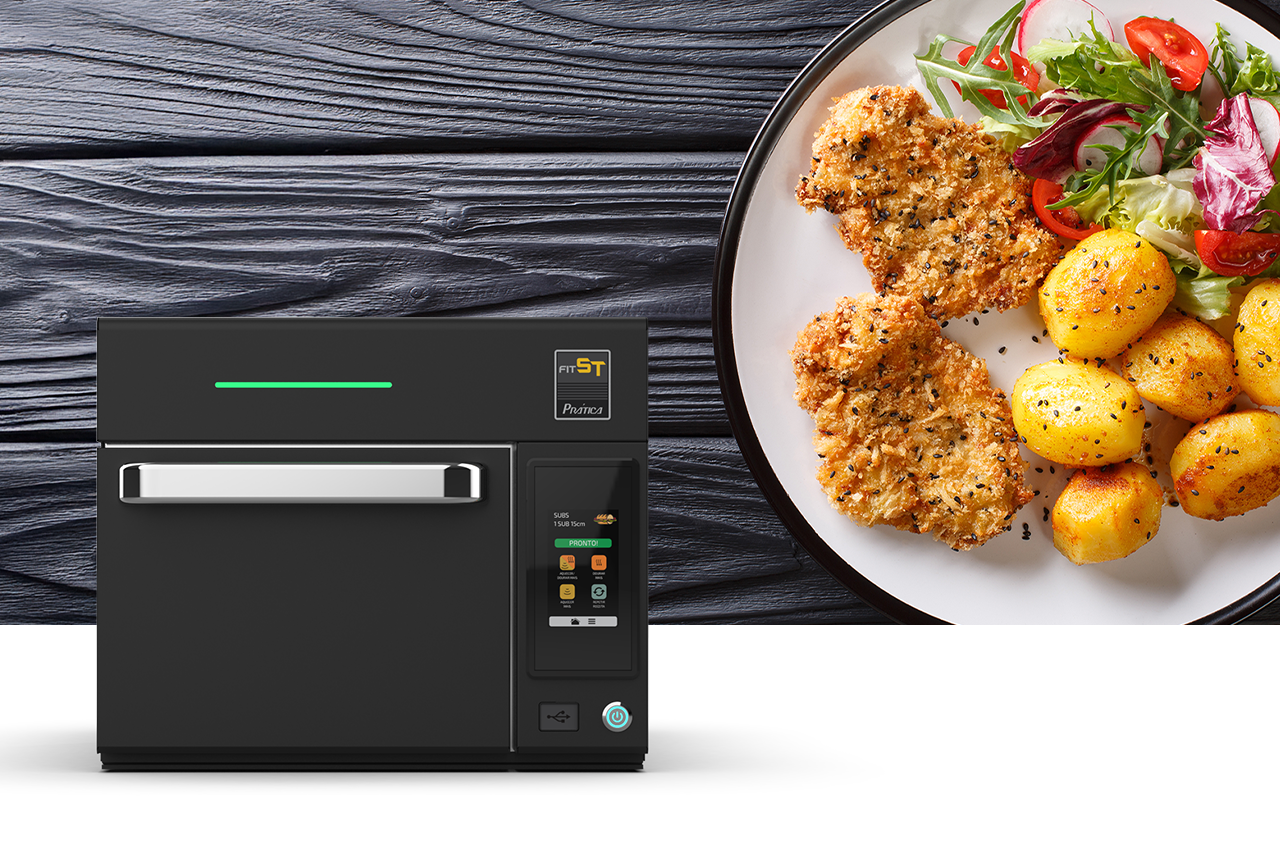
In every professional kitchen, time defines success. Each second gained between preparation and service represents higher productivity, consistent results, and a better customer experience.
One of the main factors influencing speed in food operations is the temperature of food before it enters the oven.
Chilled foods (kept between 0°C and 5°C) reach the ideal serving temperature much faster than frozen ones, directly impacting service efficiency — especially when using professional equipment such as Speed Ovens.
Keep reading to understand how microwave heating works, why chilled foods reach serving temperature faster than frozen ones, and how this knowledge can transform efficiency in your foodservice operation.
How Defrosting Works in Microwaves
Microwave ovens use high-frequency electromagnetic waves to excite the water molecules in food.
The vibration of these molecules generates heat, melting the ice crystals that form during freezing.
Although this is a quick method, it presents limitations and risks when the goal is to preserve food quality and ensure safety.
During the defrost cycle, the oven alternates energy pulses, typically operating at 30–40% of its total power.
This intermittent energy helps prevent the surface of the food from cooking while the centre remains frozen.
However, because microwaves only penetrate about 2–3 cm into the food, heat distribution is not uniform.
The outer layers thaw first, while the interior may remain solid.
Challenges of Microwave Defrosting
Uneven Thawing
Uneven energy distribution often causes parts of the food to begin cooking while others remain frozen.
This is particularly problematic for meat, poultry, and fish, where the core may stay frozen even after the exterior starts to heat.
Microbiological Risk
Partial heating creates areas where temperatures favour bacterial growth (between 5°C and 60°C).
If the food is not cooked and served immediately after defrosting, it may become unsafe for consumption.
Changes in Texture and Moisture
The fast process tends to rupture inner structures, leading to the loss of natural juices.
Meats, breads, and delicate items may become rubbery or dry.
Flavour and Aroma Alteration
Overheating some areas can denature proteins and oxidise fats, producing off-flavours or unpleasant odours.
Limitations Across Different Food Types
Breaded, stuffed, or irregularly shaped products defrost unpredictably, often resulting in inconsistent finishes.
Best Practices to Minimise Issues
- Use the specific “defrost” function for the correct weight.
- Stir or turn the food periodically to improve uniformity, when possible or when it does not make the process unnecessarily complex.
- Use microwave-safe containers and never metallic materials.
- Cook and serve immediately after thawing to prevent contamination.
While these practices can be useful in small-scale operations, professional kitchens require higher levels of speed, consistency, and safety.
Although Speed Ovens rely on microwave energy, their advanced design optimises both time and performance, meeting the demands of modern professional kitchens.
Why Chilled Foods Heat Faster
In foodservice operations, understanding why chilled foods heat faster than frozen ones helps optimise both workflow and product preparation.
Smaller Temperature Gap
Frozen products start at about -18°C, while chilled foods are around 4°C.
Reaching a target serving temperature of 60–70°C requires far less energy and time when starting from a chilled state.
No Ice to Melt
In frozen items, part of the microwave energy is consumed to melt ice — a process known as latent heat of fusion.
In chilled foods, water is already liquid, so the microwave energy is converted directly into heat.
Better Molecular Mobility
Microwaves heat by vibrating water molecules.
In frozen food, these molecules are locked within ice crystals, absorbing energy less efficiently.
In chilled foods, the molecules move freely, making heating faster and more uniform.
More Homogeneous Heat Distribution
Chilled products conduct heat better, reducing cold or overheated spots.
This results in improved consistency and food quality.
Energy Efficiency and Time Saving
Foods kept between 0°C and 5°C heat up faster, consume less energy, and retain texture and flavour better than frozen ones.
These physical principles explain not only heating performance at home but also how professional equipment can deliver consistent speed and precision.
This connection becomes clear when observing how Speed Ovens apply the same science in a more controlled and efficient way.
The Professional Context: How Speed Ovens Work
Although Speed Ovens employ microwave technology, they are far more advanced than standard units.
They combine multiple heating methods — typically impinged hot air, microwaves, and radiant energy — to cook, brown, and finish food in seconds.
However, even with superior technology, the physical principles of heating remain the same: frozen products always require more time and energy.
Using fully frozen foods in a Speed Oven generally increases preparation time and may affect service rhythm and kitchen efficiency.
If the operator needs to open the oven to adjust or reposition items during the process, it can make workflow less fluid and require additional operational steps.
An efficient approach is to design both the product and its assembly so that heating and finishing can be completed within the oven, simplifying the final service step.
The Cook & Chill Concept
Professional foodservice has evolved towards what is known as the Cold Chain, or Cook & Chill.
In contrast to the Hot Chain approach, where food is cooked, kept warm, and served, the Cold Chain keeps food safe and stable throughout its journey.
Here is how it works:
- Food is prepared or partially prepared.
- It is quickly cooled or frozen and packaged.
- It is stored, transported, and distributed in controlled cold environments.
- At the final point of sale, it moves from frozen storage (-18°C) to chilled storage (0–5°C).
- Only then is it heated and finished in the Speed Oven for immediate service.
This system improves food safety, extends shelf life, and ensures quality consistency while enabling faster service, since chilled products reach serving temperature much more quickly.
Operational Tips for Better Results
- Chilled foods are generally recommended instead of frozen ones, as they offer faster and more predictable heating.
- Reduce the size of frozen portions when necessary — smaller quantities heat more efficiently.
- Package items individually for better portion control and flexibility.
- Use Speed Oven programmes specifically developed for each product to maintain quality and consistency.
Why Chilled Foods Improve Efficiency
Recognising the differences between frozen and chilled heating can significantly support operational improvement.
While microwave ovens help explain the science behind it, Speed Ovens take the principle to a professional level, combining advanced technologies for speed, precision, and quality.
By integrating chilled storage into the Cold Chain and developing recipes tailored for Speed Ovens, foodservice operators can accelerate service, minimise waste, and maintain consistency across every unit.
This balance between speed, quality, and efficiency defines the performance expected in modern professional kitchens.